How to Size an Outdoor Kitchen Vent Hood (CFM, Height & Safety)
If you're building a covered or enclosed outdoor kitchen around a built-in gas grill, a vent hood isn't a luxury — it's a comfort and safety essential. Here's exactly how to size one: the airflow (CFM) you need, how high to mount it, and the ventilation rules that keep gas from collecting in your island.
Do you actually need a vent hood outdoors?
- Fully open-air patio: usually not required — smoke dissipates on its own.
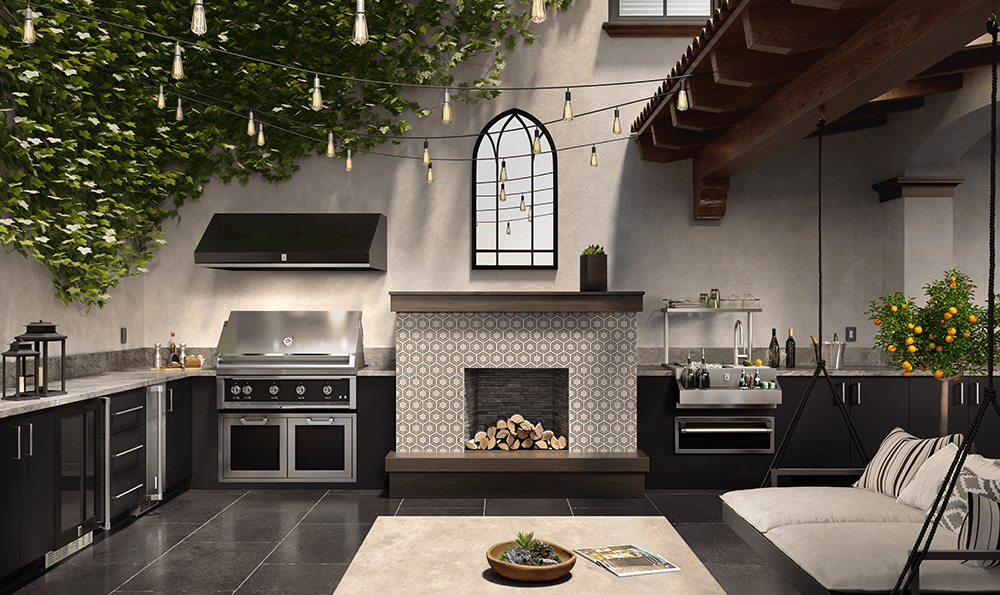
- Covered patio, solid-roof pergola, or any enclosed structure: yes. Smoke, grease, and combustion byproducts need a path out.
- Any island with a gas grill: must have vent panels regardless of an overhead hood (see the safety section below).
The CFM rule: 1 CFM per 100 BTU (1,200 CFM minimum)
The core sizing formula the industry uses: your hood should move at least 1 CFM (cubic foot per minute) of air for every 100 BTUs your grill produces — with a hard floor of 1,200 CFM for any outdoor application. Outdoor grills throw far more heat and smoke than an indoor range, so the minimum is higher.
Worked example:
- A 90,000 BTU built-in grill ÷ 100 = 900 CFM → below the floor, so size up to 1,200 CFM.
- A 60,000 BTU grill plus a 30,000 BTU side burner = 90,000 → same 1,200 CFM floor.

Mounting height: 36–42 inches
Mount the hood 36–42 inches above the cooking surface. Higher and it won't capture the smoke plume; lower and it becomes a heat and clearance hazard. Outdoor hoods sit higher than indoor ones because of wind and higher heat output.
Sizing width and depth
The hood should be wider and deeper than the grill's cooking area so the full smoke plume is captured — match or exceed the grill width and account for its depth.
Gas islands must have vent panels
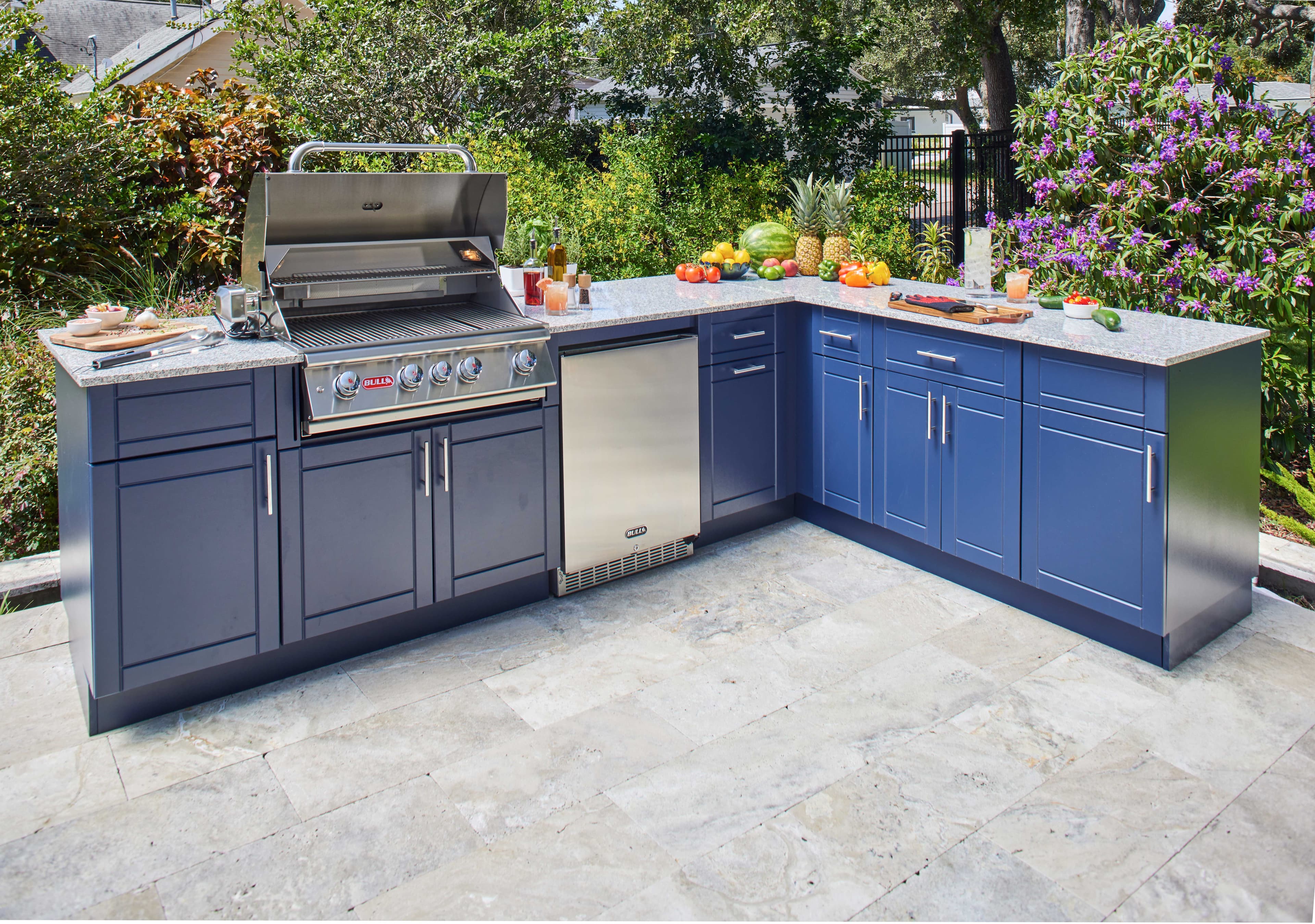
This is the rule people miss: if your island encloses a gas grill — propane or natural gas — it must have vent panels installed. A leak inside a sealed island lets gas accumulate; vent panels let it dissipate. This is separate from the overhead hood and applies even to uncovered islands. Propane is heavier than air and pools low; natural gas is lighter and rises — vent panels handle both.
Ducted vs. ductless
Outdoor hoods should be ducted to the outside — recirculating or ductless setups don't make sense outdoors. Plan the shortest, straightest duct run to an exterior wall or roof.
Shop ventilation
Browse Zephyr outdoor-rated vent hoods sized for built-in grills, and see them alongside our built-in gas grills and outdoor kitchen equipment.
Frequently Asked Questions
What size vent hood do I need for an outdoor grill?
At least 1 CFM per 100 BTUs, with a 1,200 CFM minimum for any outdoor application — so a 90,000-BTU grill needs the 1,200 CFM floor.
How high should an outdoor vent hood be mounted?
36 to 42 inches above the cooking surface.
Do I need a vent hood on an open, uncovered patio?
Usually not for the hood itself — but any island containing a gas grill still needs vent panels.
Why does my gas island need vent panels?
To prevent propane or natural gas from building up inside the enclosure if there's ever a leak.