Do You Need a Vent Hood for a Built-In Gas Grill?
Whether your built-in gas grill needs a vent hood comes down to one question: is it under a roof? There's a clear line — plus a separate safety rule about gas islands that catches a lot of people off guard.
Open-air vs. covered: when a hood is required
- Fully open-air patio: no hood needed — smoke and combustion byproducts dissipate into the open air.
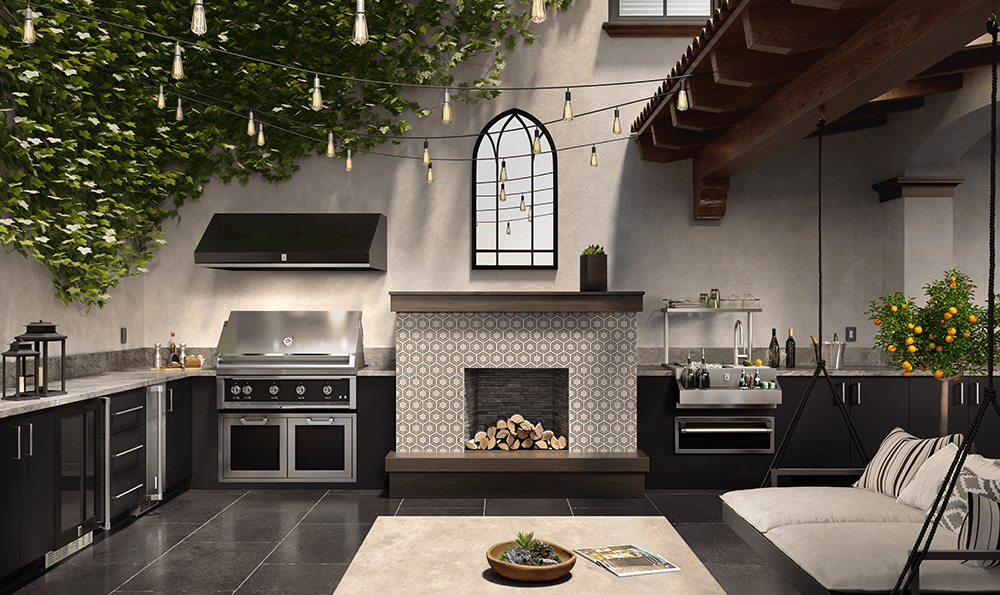
- Covered patio, solid-roof pergola, or any enclosed/semi-enclosed structure: yes. Trapped smoke, grease, and combustion gases need a powered exit, or they collect under the roof and around your guests.
Every gas island needs vent panels — even uncovered
This is the rule people miss, and it's a safety one: any island that encloses a gas grill — propane or natural gas — must have vent panels installed. If a connection ever leaks, gas collects inside the sealed island; vent panels let it dissipate before it can pool. Propane is heavier than air and sinks, natural gas is lighter and rises, so panels are placed to handle both. This is separate from any overhead hood and applies even on open-air islands.
If it's covered, size the hood correctly
For a covered build you'll want a properly sized hood: roughly 1 CFM of airflow per 100 BTUs of grill output, with a 1,200 CFM minimum, mounted 36–42 inches above the cooking surface. We break the math down in our outdoor kitchen vent hood sizing guide.
Shop ventilation
Browse Zephyr outdoor-rated vent hoods and our built-in gas grills.
Frequently Asked Questions
Do I need a vent hood for a built-in gas grill?
Only if the grill is under a roof or in an enclosed/semi-enclosed structure. An open-air patio grill doesn't need a hood — but any gas island still needs vent panels.
What are vent panels and why are they required?
Vent panels are openings in the island enclosure that let a gas leak dissipate instead of accumulating. They're required on any island containing a propane or natural-gas grill, even uncovered ones.
Does propane vs natural gas change the ventilation?
Both need vent panels. Propane is heavier than air and pools low; natural gas is lighter and rises — panels are positioned to clear both.