Ohio Flame: The Honest Guide to America's Hand-Forged Wood-Burning Fire Pits
By Reed · Published September 2026
Updated September 2026. Ohio Flame is the small Ohio-based blacksmith shop that quietly became one of the most-specified American-made wood-burning fire pit brands. Every pit is hand-cut and welded from 1/4-inch domestic steel in Perrysville, Ohio — not a piece of it is imported. This is the honest guide to their Patriot, Liberty, and Artisan series, when each fits, and how to size for real backyard use.
Brand Background
Ohio Flame was founded in 2007 by Chad Fisher, a working blacksmith who was frustrated by the amount of thin, mass-produced sheet-metal fire pits flooding the American market. His answer was to build fire pits the way blacksmiths built them a century ago — from thick American steel, cut and welded by hand, engineered to last decades rather than seasons. The company still operates out of the same shop in Perrysville, Ohio, and every Ohio Flame pit that ships from firepits.com was welded by hand there.
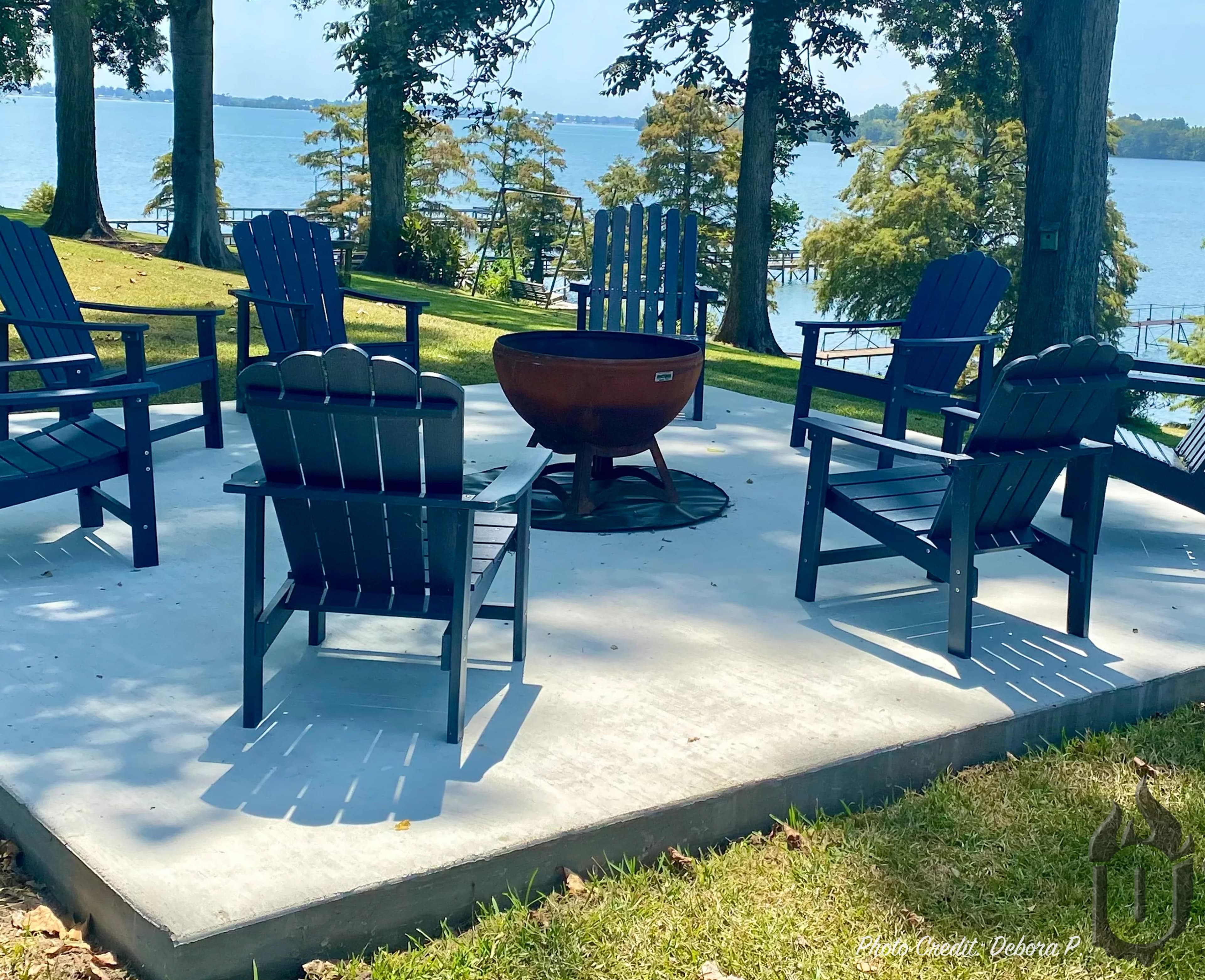
That single-shop, hand-forged approach is why Ohio Flame is not the cheapest fire pit brand in the market and why it’s worth every dollar over the $150 stamped-steel imports at the big-box stores. The 1/4-inch domestic carbon steel Ohio Flame uses is roughly 3-4x thicker than the sheet metal in a typical big-box pit. That thickness is why the pits handle repeated wood fires without warping, why the welds last three decades, and why the raw-steel-to-patina finish reads as intentional design rather than corrosion.
Ohio Flame is also one of the few fire pit brands that publishes real founder-and-shop content on how each pit is made. If you want to see the actual welding of the pit you’re about to buy, that footage exists — which matters for buyers who care about supply chain and want to know they’re paying an American shop for actual American labor, not a marketing story.
The Three Series (and How They Differ)
Ohio Flame’s catalog splits into three tiers. Understanding which is which is how you narrow a dozen SKUs into a shortlist of two.
Patriot Series. The entry model. 36-inch diameter classic bowl silhouette on four short legs, no decorative cutouts, straightforward hand-cut construction. Reads as timeless rather than trendy — this is the pit that will look right in a backyard forty years from now. Best pick if you want a serious, honest fire pit without spending more on aesthetics you don’t need. About $500.
Liberty Series. The volume flagship. Same 36-inch bowl as the Patriot but mounted on a raised pedestal base, available in four base styles that visually swap the personality of the pit: Standard (traditional cylindrical column, reads classic), Curved (sweeping curved supports, reads modern-organic), Angular (triangulated supports, reads industrial-modern), and Hollow (open sculptural base, reads architectural). Pick the base style that matches the patio’s existing design language. About $700-900.
Artisan Series. The design-forward tier. 37-inch bowls with laser-cut decorative panels that create light-pattern projections on the ground and surrounding walls when the fire is lit. This includes the Fire Chalice (curved organic cutouts), Fire Flower (radiating petal cutouts), Lunar (moon and star cutouts), Stellar (starburst cutouts), and the Fire Globe variants (Live Laugh Love and Peace Happiness Tranquility, with word-and-symbol cutouts). Artisan pits double as sculpture during the day and become a light show at night. About $900-1,300.
Wood-Burning vs Gas: Why the Choice Matters
Ohio Flame is wood-burning. That’s the whole point of the brand and it’s worth understanding what you gain and lose vs a gas fire pit like The Outdoor Plus or Prism Hardscapes.
Radiant heat output is significantly higher. A wood fire in a 36-inch pit throws 3-5x the effective warmth of a comparable-diameter gas pit at typical residential BTU. If the fire pit’s primary job is warming exposed seating in cold weather, wood-burning wins by a wide margin.
Sensory experience is completely different. Woodsmoke smell, the crackle of splitting logs, the shifting flame shape as the fire develops. A gas pit is beautiful but its flame is uniform and doesn’t change. Ohio Flame is engineered for buyers who want the actual campfire experience on their patio.
Convenience is lower. A wood fire takes 5-15 minutes to establish, needs tending, and produces ash that has to be cleaned out. A gas fire ignites in seconds and cleans up in zero. If you’ll use the fire pit weeknight-casual, gas is objectively easier. If you’ll use it weekend-ritual, wood-burning is worth the effort.
Installation is cheaper. Ohio Flame is a set-in-place appliance — no gas plumbing, no electrical, no installer required. Delivery is the entire install. A gas fire pit requires a licensed gas fitter and typically $400-1,200 in plumbing labor before it produces flame.
Fuel cost is different. Firewood at $8-15 per bundle vs propane at $25-40 per tank refill or natural gas at $0.50-1.50 per hour of use. Over a season of typical residential use, the cost delta is small in either direction.
The Natural Rust Patina Explained
The single most-asked question about Ohio Flame is whether the raw-steel finish is a defect or a feature. It’s a feature, engineered deliberately.
Ohio Flame ships every pit uncoated. Over the first 6-12 months of outdoor exposure, the 1/4-inch carbon steel develops a rust layer that visually shifts from bright orange in month one, through mottled red-brown by month three, to a stable dark-brown-and-black patina by year one. That final patina is protective — the rust layer seals the underlying steel and stops further corrosion from progressing inward. Every Ohio Flame structural warranty specifically covers pits that have weathered this way.
This is functionally identical to how Corten steel works on The Outdoor Plus fire pits, except Ohio Flame achieves the same result with standard American carbon steel rather than the specialty Corten alloy. The visual outcome is very similar; the material and cost are different.
If you want a permanent finish that doesn’t weather, Ohio Flame does offer high-temperature powder coat on select models (typically the Patriot). But the raw-steel-to-patina finish is the flagship look every design magazine feature actually photographs, and it’s the finish 90% of Ohio Flame owners keep.
Sizing for Your Backyard
Ohio Flame’s 36-37 inch diameter is deliberately the residential sweet spot and covers 90% of buyer scenarios.
A 36-inch fire pit comfortably seats 6-8 people at a 6-8 foot conversation-distance ring around it. The radiant heat throw reaches 4-6 feet in typical fall/winter conditions, which is exactly where seated guests are — close enough to be warm, far enough to not be uncomfortable. This sizing is right for standard residential patios of 12-20 feet in either direction.
For very small patios (under 10 feet in either direction), a 36-inch pit will visually dominate the space and the heat will be uncomfortable at close seating. Consider whether a smaller portable pit fits better — Ohio Flame’s 36-inch is genuinely the smallest they build because they’ve engineered it as the minimum size that produces a real fire experience.
For very large gathering areas (12+ people, open lawn seating, or 25+ foot patios), two 36-inch Ohio Flame pits placed 15-20 feet apart deliver dramatically better seating geometry than one oversized custom pit. Two smaller pits also give you redundancy and let guests self-sort into two conversation groups — better party dynamics than one giant circle around a central fire.
Install and First-Use Notes
Ohio Flame pits are set-in-place. No gas, no electrical, no permits required in most jurisdictions. Delivery to a level patio surface is the entire installation. Four things worth doing right the first time.
Surface protection. The pit will get hot during use and cool slowly overnight. Don’t place it directly on wood decking (even composite decking that says it’s fire-resistant). Concrete, natural stone, pavers, or bare ground are all fine surfaces. If your only surface option is wood, place a masonry fire mat under the pit — these are $80-120 and worth every dollar.
Local burn regulations. Some municipalities restrict open wood burning within city limits or during specific fire-risk months. Check your local burn ordinance before first use. Most suburban and rural jurisdictions allow residential recreational wood fires; some dense urban zones do not.
First-fire seasoning. The first two or three fires in a new Ohio Flame pit will burn slightly hotter than steady-state as any residual manufacturing oils on the steel burn off. Use dry hardwood for the first fires and expect a small amount of smoke from the burning-off — this is normal and stops after the second or third burn.
Ash management. Every 3-5 fires, scoop out the accumulated ash with a metal shovel (Ohio Flame’s own 30-inch fire shovel is engineered for this exact task) and dispose in a metal can, not in trash. Ash can remain hot for 24-48 hours after the fire looks out. Keeping the ash bed below 2-3 inches deep meaningfully improves next-fire airflow.
Who Should Buy Which
Buy an Ohio Flame 36" Patriot if you want a serious, honest, no-frills wood-burning fire pit that will last three decades and look right in any yard. Best entry point in the lineup at about $500. Timeless silhouette that ages beautifully.
Buy an Ohio Flame 36" Liberty (with the base style matching your patio’s design language) if you want the volume flagship — slightly more presence than the Patriot, with a pedestal base that reads more architectural. About $700-900 depending on base style.
Buy an Ohio Flame 37" Fire Chalice, Fire Flower, Lunar, or Stellar if you want the fire pit to double as landscape art. The laser-cut cutout panels project light patterns onto the ground and surrounding walls at night that photograph beautifully. About $900-1,100. Best for design-forward patios and installations where the pit is visible from indoor sight lines.
Buy an Ohio Flame 37" Fire Globe (Live Laugh Love or Peace Happiness Tranquility) if the word-and-symbol cutouts fit your household’s aesthetic. These are the most polarizing pieces in the lineup — buyers either love them or don’t — but they’re the most gift-worthy pits in the catalog. About $1,100-1,300.
Buy the Ohio Flame stainless fire poker and fire shovel alongside any pit. The poker is stainless steel so it doesn’t rust; the shovel is engineered specifically for the geometry of Ohio Flame’s pit floor. About $40-80 each. Both make ash management and log arrangement dramatically easier than using improvised tools.
What to Ask Before You Order
Confirm your patio surface is heat-appropriate. Concrete, stone, pavers, and bare ground are fine. Wood decking is not without a fire mat, and directly on grass creates dead-patch scarring under the pit.
Confirm your local burn ordinance allows residential wood fires. Most do; a few dense urban zones don’t. This is a five-minute call to your city permits office.
Decide whether you want the raw-steel-to-patina finish (default and flagship) or the powder-coated finish (available on some Patriot models). The patina finish is what most Ohio Flame owners keep; the powder coat is right for buyers who explicitly don’t want the rust aesthetic.
If you’re buying an Artisan-series pit for a design-forward install, ask about install orientation — the cutout panels look meaningfully different depending on which panel faces the primary sight line, and Ohio Flame will note the preferred orientation on the shipping label.
Order at least 4-6 weeks before you need the pit in place. Ohio Flame builds to order, and lead times are typically 2-4 weeks in-shop plus shipping. During peak season (September-November), plan on longer.
Frequently Asked Questions
Are Ohio Flame fire pits actually made in America?+
Why is Ohio Flame wood-burning instead of gas?+
What is the natural rust patina and do I need to prevent it?+
What's the difference between the Liberty, Patriot, Fire Chalice, and Stellar series?+
What size Ohio Flame fire pit do I need?+
How much do Ohio Flame fire pits cost and what's the warranty?+
Products & brands in this guide
Related reading
Reed — Reed writes the buying guides at BBQs.com — fifteen years selling and installing built-in grills means the picks here are what we'd actually put in our own outdoor kitchen.