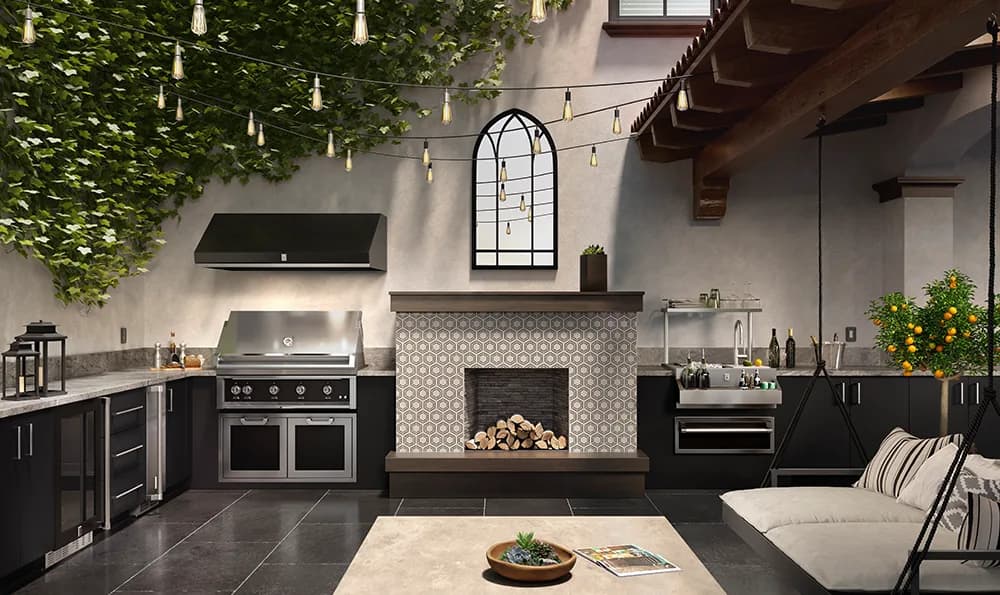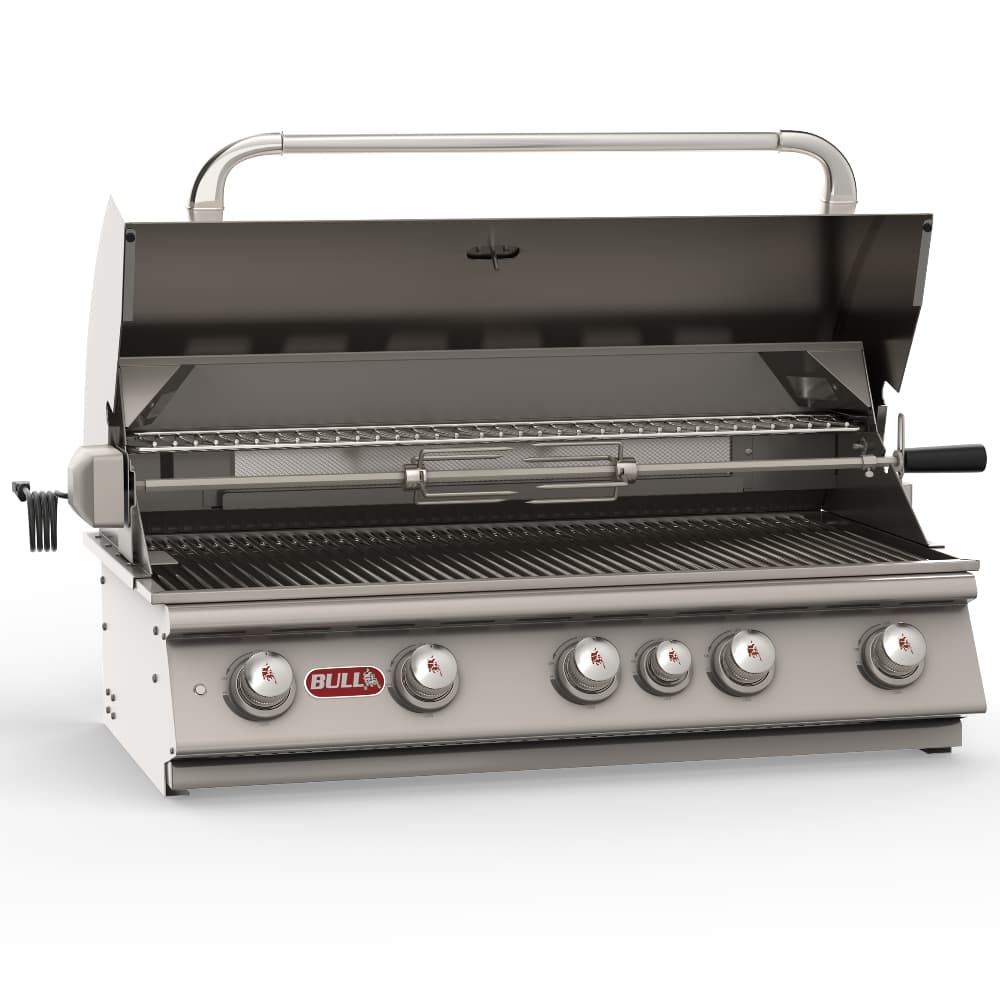
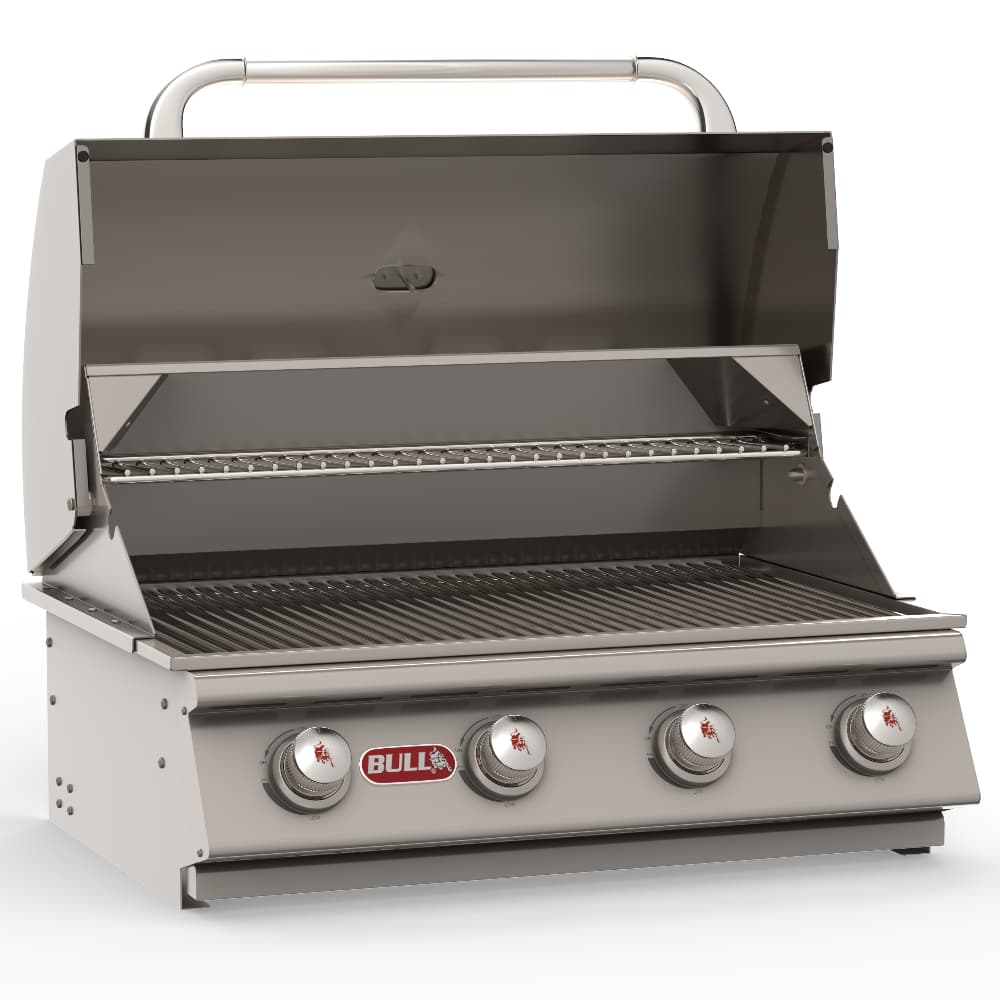
The Bull Brahma is Bull's flagship residential built-in — a 38-inch, five-burner, 304-stainless head made in Chatsworth, California, and priced around $3,789 in natural gas. I've sold and installed a lot of them, and I get asked the same two questions every week: is it worth $950 more than the Angus, and is it a real step-up from a 30-inch four-burner, or just a bigger grill with a bigger sticker. This is the honest dealer take on both — what the Brahma is genuinely built for, where it earns the premium, and where it's the wrong buy.
What the Brahma Is Built For
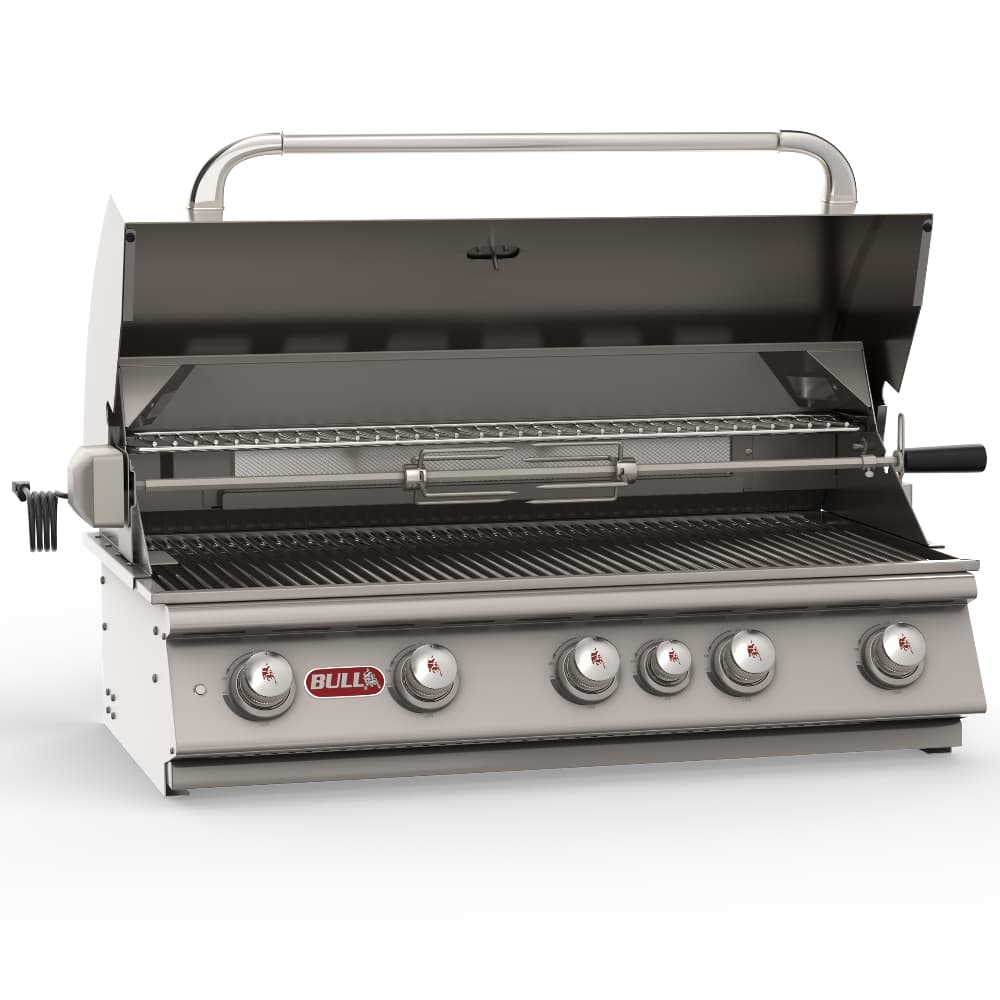
- 75,000 BTU main across 5 burners
- 10K rear infrared rotisserie burner
- 1,020 sq in cooking surface, 5 true zones
- Lifetime warranty, made in Chatsworth CA
The Brahma is Bull’s flagship residential built-in — the biggest, most-BTU’d head Bull ships before you step up to the outdoor-kitchen-scale Steer at 60 inches. It fits a standard 38-inch built-in cutout, runs five main burners at roughly 15,000 BTUs each for 75,000 BTUs across the primary grate, adds a 10,000 BTU rear infrared rotisserie burner for 85,000 total, and delivers approximately 1,020 square inches of cooking surface between the primary grate and the warming rack.
The buyer this grill is built for: someone cooking regularly for six or more people, hosting real dinners more than a few times a year, and wanting enough burner count to run multiple simultaneous temperature zones without compromise. It’s not the right grill for a couple cooking for themselves — the Angus 30-inch does that job at $950 less. It is the right grill for the family that hosts holidays, cooks for three-generation Sunday dinners, and would rather have burner headroom they don’t always use than run out of grate space when it matters.
Bull positions the Brahma as the flagship of the residential line, and after selling both extensively, I agree with the positioning. It’s the ceiling of what most homeowners actually need before you cross into commercial-scale outdoor kitchens.
The Bull Lineup Explained: Steer / Outlaw / Lonestar / Angus / Brahma
Bull’s residential lineup doesn’t telegraph tier position the way Weber’s Genesis / Summit naming does, so here’s the ladder from a dealer who moves all of them. The Lonestar Select is the entry tier — 30 inches, 4 burners, 60,000 BTU main, stainless-rod grates rather than 8mm round, no rear infrared, limited-lifetime warranty. Legitimate grill starting around $1,899. The Outlaw at roughly $2,199 is the value-play 4-burner — same 60K BTU, upgraded warranty over the Lonestar, still no rear IR rotisserie.
The Angus at $2,839 is where the lineup crosses into serious dealer-tier build — 8mm round 304 grates, rear IR burner, cast rotisserie kit included, halogen interior lighting, and the lifetime warranty structure that covers cast bases and housing. It’s the smallest grill in the line that gets the full warranty treatment, and it’s the correct spec for a family of four with occasional weekend guests.
The Brahma (this review) at $3,789 is the 38-inch, 5-burner flagship residential — same 304 build as the Angus, same 8mm grates, same lifetime warranty structure, scaled up with 15,000 more main BTU, roughly 180 more square inches of grate, and a fifth burner that unlocks true 5-zone cooking. Above the Brahma sits the Steer Premium at 60 inches — a 7-burner, dual-rotisserie head built for permanent outdoor kitchens with matching Bull refrigeration and side burners. Steer is the anchor-grill spec for a full outdoor kitchen build and requires a purpose-built 60-inch chase; it’s not a drop-in retrofit. See the full Bull brand page for the complete residential lineup with current pricing.
Build Quality — Same 304 + 8mm Grates as the Angus
Here’s the thing buyers don’t always realize: the Brahma inherits the exact same build spec as the Angus. Same 304-grade stainless steel construction throughout — hood, burner box, structural panels. Same 8mm diameter round cooking grates. Same rust-resistant stainless main burners. Same piezo ignition with flash-tube backups. Same halogen interior lights. Same warming rack construction. Same Angus-tier lifetime warranty on stainless and burners. If you want the full metallurgy argument for why 304 stainless matters on a built-in, see our 304 vs 430 stainless breakdown.
The differences between Angus and Brahma are size and burner count, not materials. Bull doesn’t cheapen the flagship — they scale it up. That’s a philosophy call I respect, because plenty of brands downgrade the metallurgy on their bigger heads to hit a price point. Bull holds the spec constant and you pay for the extra size and burner count.
The 8mm round grates are worth calling out. Most grills at this price point ship 6mm or lighter grates that warp within a few seasons of hard use. Bull’s 8mm round bars hold heat, produce clean sear marks, and I’ve never replaced a set under warranty in this line. They’re heavier to handle when cleaning, but that’s the trade you want.
Warranty Deep Dive: What Bull Actually Covers
Warranty terms are where dealer-tier brands separate from mid-market brands, and it’s where I get the most questions from buyers considering a $3,789 grill. Here’s the current Bull residential warranty on the Brahma, as we’ve actually run claims: lifetime on the main stainless burners, lifetime on the cast stainless housing and cast burner bases, 5 years on the cart and stainless components, 2 years on the valves and manifold, and 1 year on ignition electronics (piezo modules, wiring harnesses, halogen light components). Rotisserie motors are covered for 1 year.
What that structure covers in practice: the two most expensive components of the grill (burners and housing) are covered for the life of the original owner. Everything else is wear-and-repair after year 1 to 5. On the Brahma specifically, we’ve filed burner claims at year 6 and year 11 — both times Bull shipped replacement burners within 5 business days on receipt of a photo and the serial number. That responsiveness is the real operational value behind the warranty language, and it’s where Bull separates from overseas brands whose ‘lifetime warranty’ claims can take 6 to 8 weeks and require you to ship the failed part back at your cost.
Honest weak spot: the 1-year coverage on ignition electronics is where you’ll eventually pay out of pocket. Piezo modules typically die between year 5 and 7 of daily use. Replacement piezo assemblies run $40 to $80 and take about 20 minutes to swap. Bull’s flash-tube backup ignition means the grill remains lightable with a stick lighter even after the piezo fails, so it’s never a lose-the-cook situation — but it’s a real maintenance cost to budget for at the 6-year mark.
75,000 BTU Across 5 Burners — Real Performance Numbers
Brahma primary zone — clears the 100 BTU/sq-in bar that separates real gas grills from big-box specials, with more usable surface than the Angus.
The math that matters on any grill spec sheet is BTU per square inch of primary cooking surface. The Brahma runs 75,000 BTUs across roughly 700 square inches of primary grate — that works out to 107 BTU per square inch. Our target for a serious gas built-in is 90 to 100 BTU per square inch, so the Brahma sits comfortably above the threshold with headroom to spare. See our BTU sizing guide for the full math on why this ratio matters more than raw BTU count.
What that translates to in practice: I’ve clocked primary-grate sear temperatures of 550 to 700F within 12 to 15 minutes of full preheat with all five main burners on high. Direct-heat recovery when you open the lid on a cool evening is fast — the burner load matches the cavity volume properly, so you’re not waiting for the grill to catch back up between batches.
The 5-burner layout also means five independent temperature zones, not just an on/off/on pattern across a smaller head. Every burner has its own control valve, and the zones are actually usable independently — I can hold 250F on the far-left burner for slow chicken, 400F on burners two and three for vegetables, and 650F on the two right burners for a hard sear. That’s multi-zone cooking as it’s supposed to work, not a marketing claim.
The 5-Zone Advantage Over 4
The jump from four burners to five sounds incremental. In practice, it changes what you can cook simultaneously in a way that matters more than the spec sheet suggests. On a 30-inch four-burner grill, when you dedicate two burners to a hard sear and one to a slow-cook zone, you have exactly one burner left for everything else — vegetables, warming, a second protein. It becomes a one-thing-at-a-time cooking flow.
On the Brahma’s five-burner layout, the same setup leaves you two flexible middle burners for parallel work. Four chickens on a slow zone plus four racks of ribs staged through the middle plus a hard sear on the far side is a Sunday cook I’ve done on a Brahma without the grill feeling crowded. That same cook forces you into serial batches on a four-burner head.
“Four chickens on a slow zone, four racks of ribs staged through the middle, and a hard sear on the far side — a Sunday cook the Brahma handles without the grill feeling crowded. A four-burner grill can’t.”
The ceremony cook this really shines on is reverse-sear. You get a true low-heat holding zone (one burner on low) and a true screaming-hot sear zone (two burners on high) with cool zones in between for staging. On a four-burner grill, the low zone and the sear zone are physically adjacent — heat bleeds from one to the other and your reverse-sear becomes a compromise. On five burners with a cool middle, the separation is real.
Infrared Rotisserie — Same 10K IR Bulb as the Angus
The Brahma’s rear infrared burner is the same 10,000 BTU unit that ships on the Angus, and the cast rotisserie kit is included in the box. Bull doesn’t make the rotisserie an upcharge — it’s standard equipment on this tier, and the cast motor is heavy-duty enough to handle whole-turkey and prime-rib loads without complaint.
Rear infrared plus rotisserie is Bull’s answer to Hestan’s trellis burner and Coyote’s ceramic sear — different geometry, same intent. The IR bulb radiates directly to the food from behind rather than heating air from below, which is what makes rotisserie chicken and prime rib genuinely great on this grill instead of just adequate. Skin crisps, drippings self-baste, and you don’t need to babysit temperature the way you would on convection alone.
If you know for certain you’ll never use the rotisserie, Bull sells a Brahma variant without the IR burner for roughly $400 less. My recommendation: keep the IR kit. Even if you use rotisserie twice a year, the ability to run a Thanksgiving turkey or an Easter prime rib on a rear IR burner instead of tying up the oven is worth the flexibility. It also drives resale value if you ever move the grill.
Bull vs Weber vs Napoleon: Where Bull Actually Wins
At the 38-inch, 5-burner built-in tier, the cross-shop conversation gets shorter — very few brands make a 5-burner residential built-in in this footprint. The three legitimate alternatives most buyers compare are Weber Summit (which caps its built-in line at 4 burners, so you’re actually comparing across footprints), Napoleon Prestige Pro at the 500 tier, and Coyote S-Series 36 (the closest apples-to-apples in burner count and price band). Here’s the head-to-head.
| Spec | Bull Brahma 38 | Coyote S-Series 36 | Hestan Aspire 36 |
|---|---|---|---|
| Main BTU (main + IR) | 75K + 10K IR | 70K + 21K IR sear | 70K + 25K IR sear |
| Cooking area (sq-in) | 700 primary / 1020 total | 648 primary / 897 total | 612 primary / 855 total |
| Stainless grade (hood/body) | 304 throughout | 304 throughout | 304 throughout |
| Warranty (burners) | Lifetime | Lifetime | Lifetime |
| Country of origin | Chatsworth, CA (USA) | Bolingbrook, IL (USA) | Anaheim, CA (USA) |
| Price band | $3,789 | $4,899 | $5,999 |
Where Bull wins: the largest primary cooking area of the three (700 sq-in versus 648 and 612), the most usable width (38″ versus 36″), and the lowest price by a meaningful margin — the Brahma is roughly $1,100 cheaper than the Coyote S-Series and $2,200 cheaper than the Hestan Aspire. Where Bull doesn’t win: Coyote’s 21K IR sear burner and Hestan’s 25K trellis IR are stronger dedicated searing platforms than Bull’s 10K rear IR, and Hestan’s welded-corner construction and thicker gauge sits objectively above Bull on build. If searing is your primary use case and budget isn’t a constraint, Hestan is a defensible upcharge. For maximum cook surface at the best price in USA-fabricated 304 stainless, the Brahma wins.
What the Brahma Is NOT
Honest dealer moment: the Brahma is not the biggest grill on the market, it’s not the most feature-loaded, and it’s not the right answer for every luxury outdoor kitchen. Some things the Brahma doesn’t do that buyers occasionally ask about:
It doesn’t have direct all-infrared main burners. If your primary use case is competition-style hard searing on every cook, an all-IR-main grill from a niche brand delivers a different experience. Bull is a conventional-plus-rear-IR philosophy; that’s a design choice, not a limitation, but know what you’re buying.
It doesn’t integrate smart temperature probes or Wi-Fi controls. If app-based temperature monitoring is a must-have, look at brands that build that in from the design phase. Bull is unapologetically analog, which most of our buyers actually prefer for reliability over 15-plus years.
It’s not the massive outdoor-kitchen-catcher a Bull Steer is at 60 inches. If you’re specifying a full outdoor kitchen with matching refrigeration, side burners, and pizza oven, the Steer is the anchor grill and the Brahma is a step down from that scale.
And it’s not a smoker. If low-and-slow smoke is your primary cooking style, pair the Brahma with a dedicated smoker — a Coyote Asado kamado is the natural companion in this price tier. The Brahma will hold 225F on one burner with a smoker box for occasional smoked ribs, but it’s not what the grill is built for.
Also worth naming honestly: the Brahma is fantastic, but it’s not restaurant-grade in the sense that Hestan Deluxe and DCS Series 9 are. Those grills sit a tier above the Brahma on gauge weight, welded construction, and warranty. They also cost twice as much. Bull’s value proposition is delivering 90 percent of that tier at roughly half the price, and the Brahma is where that math is most defensible.
Real Bull Owner Complaints (And What We Tell Customers)
Any honest dealer review has to acknowledge what people don’t love. Here are the three complaints we hear most from Bull owners a year or two in, and what we tell customers considering the Brahma.
Complaint 1: it’s heavy. The Brahma head weighs roughly 185 pounds. Getting it into an island cutout requires two people and pulling it back out for major service is a real project. What we tell customers: this is a feature, not a bug. The weight comes from the 304 stainless gauge and the cast burner bases, which are exactly why the grill lasts 15 to 20 years instead of 7. If you plan to move houses, budget for a professional grill installer at the destination.
Complaint 2: no interior lighting on the lower models. The Brahma has halogen interior lights, but Lonestar Select and Outlaw owners routinely complain about grilling by phone flashlight in fall. What we tell customers: this is one of the real reasons to step up into the Brahma or Angus tier rather than saving money on Outlaw. Halogen isn’t LED-fancy, but it’s bright enough to see grill marks after sundown. Retrofitting lighting into a lower-tier Bull head is not practical.
Complaint 3: painted parts on the cart weather faster than the stainless. On freestanding Brahma variants, the powder-coated cart wheels and lower cabinet panels can chip and rust in coastal environments where the stainless head above them looks factory-fresh 8 years in. What we tell customers: the built-in Brahma (this review) sidesteps this entirely — no cart, just the stainless head dropped into stone. If you’re on the freestanding version within a mile of salt water, plan on repainting the cart parts every 3 to 4 years.
Compared to Bull Angus
| Spec | Angus | Brahma | Outlaw |
|---|---|---|---|
| Burners | 4 | 5 | 4 |
| Main BTU | 60,000 | 75,000 | 60,000 |
| IR Rotisserie | Yes (10K) | Yes (10K) | No |
| Cook surface | ~810 sq in | ~1,020 sq in | ~810 sq in |
| Grate | 8mm 304 rod | 8mm 304 rod | Stainless rod |
| Warranty | Lifetime | Lifetime | Limited lifetime |
| From | $2,839 | $3,789 | $2,199 |
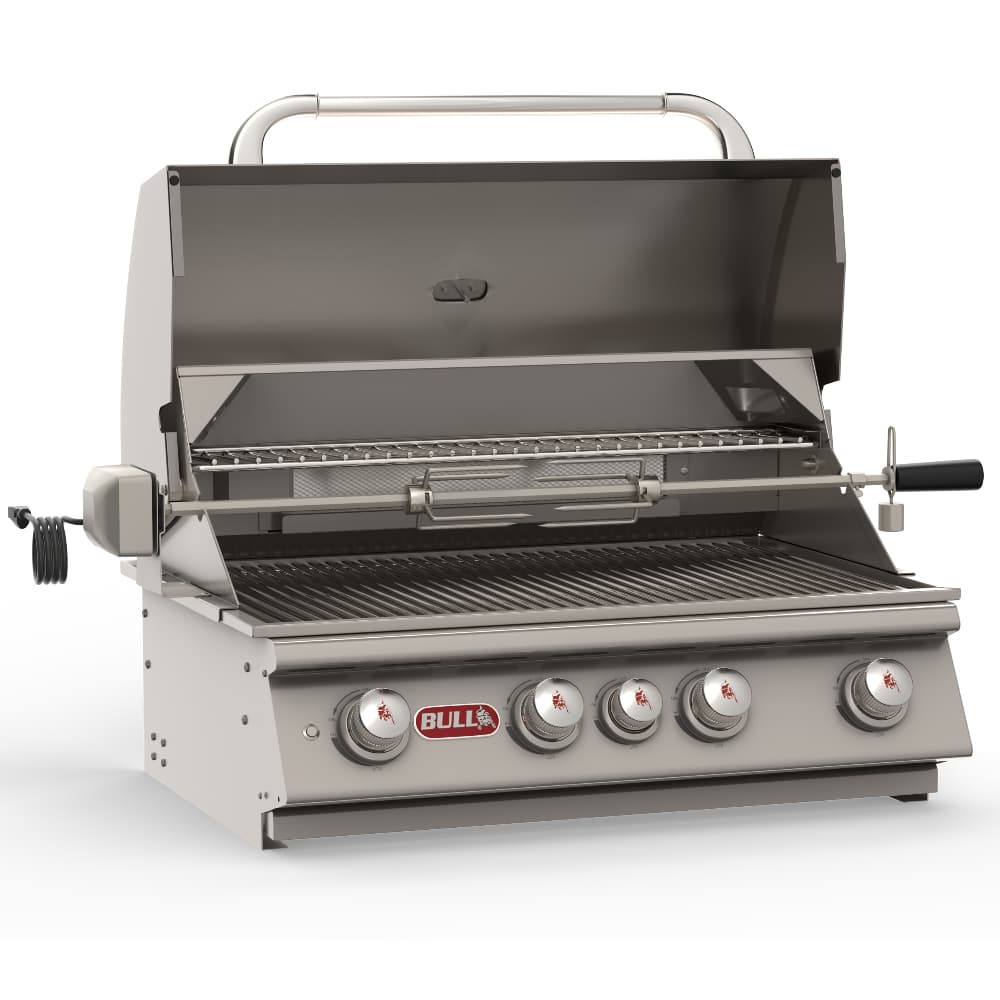
Direct spec comparison: Angus is 30 inches, four main burners, 60,000 BTUs main plus 10,000 rear IR, roughly 840 square inches total cooking surface, at $2,839. Brahma is 38 inches, five main burners, 75,000 BTUs main plus 10,000 rear IR, roughly 1,020 square inches total cooking surface, at $3,789.
The $950 upcharge buys you: eight more inches of width, one additional main burner, 15,000 more BTUs of main-burner headroom, roughly 180 more square inches of cooking surface, the ability to run a true five-zone cook, and the same lifetime warranty as the Angus. Same 304 stainless. Same 8mm grates. Same IR bulb. Same everything except size and burner count.
My recommendation gate: if you regularly cook for six or more people, the Brahma is worth it — the fifth burner and the extra grate area will get used enough to justify the upcharge, and you won’t regret the headroom on the days when you need it. If you’re cooking for two or three most of the time with occasional guests, the Angus is the smarter buy — you’ll never miss the extra burner and you’ll pocket a thousand dollars for the outdoor kitchen budget. Both are the right grill for the right buyer; neither is universally “better.”
Bull Brahma Install Requirements — What Contractors Actually Need
This section is written for the general contractor, mason, or outdoor-kitchen installer framing a chase for the Brahma. Get these five spec points right and drop-in day is uneventful.
Cutout dimensions. Standard 38-inch built-in cutout — roughly 38.25″ wide by 22″ deep by 10″ tall for the head insertion. The head drops in from above and rests on the cutout lip. Frame the interior chase to at least 40″ wide by 24″ deep to give service clearance behind the manifold. Bull publishes exact millimeter dimensions in the current owner’s manual — always verify against the specific model year rather than trusting an older spec sheet.
Combustible clearances. Minimum 6″ from the sides of the grill head to any combustible material (wood framing, composite decking, stained cedar cladding). Minimum 24″ vertical clearance from the top of the closed hood to any overhead combustible. If the island framing uses metal studs and cement board, these clearances are easily met. Wood-framed islands with cedar cladding need careful spacing and often benefit from a heat-shield insert.
Gas line size. 1″ black iron from the meter to the grill for the full 85,000 BTU total load. 3/4″ line will run the Brahma but sizes tight — starvation risk in cold weather at max load on runs over 25 feet. Terminate with a shutoff valve inside the island cavity, accessible without disassembling the grill head, and use a stainless flex connector for the final connection to the manifold.
Electrical. Halogen interior lighting requires 120V power. Rough in a weatherproof GFCI receptacle inside the island cavity during framing — retrofitting through finished stone costs $300 to $500 and involves core-drilling. If skipping interior lighting, no electrical is required.
Ventilation. Hood is optional for uncovered patio installs. If the grill is enclosed under a solid roof, awning, or covered patio, an outdoor-rated vent hood sized to the grill footprint is required — 42″ minimum for a 38″ grill, roughly 1,200 CFM extraction, mounted 36″ to 42″ above the cooking surface. See our vent hoods sizing guide for the full install spec and the code language most jurisdictions enforce.
Installation Notes
A few things to sort out with your contractor before the Brahma arrives on site. First: the built-in cutout is a standard 38-inch dimension, so any properly framed 38-inch chase will accept the head without modification. Confirm the cutout depth and rear clearance from the current Bull spec sheet — clearances have been consistent across recent Brahma production, but always verify before framing.
Second, gas line sizing. At 85,000 BTU total draw, we recommend a 1-inch gas line from the meter to the grill, especially on runs longer than 25 feet. Three-quarter-inch line will run the grill, but you’re sizing tight and can starve the burners in cold weather at full load. It’s cheaper to size correctly during install than to retrofit later — spend the extra fifty dollars on 1-inch pipe.
Third, ventilation. If the Brahma is going into an enclosed or semi-enclosed structure (covered outdoor kitchen, screened patio), a vent hood sized for the 85K BTU load is required — this is a code issue in most jurisdictions and a safety issue in all of them. Open-air installs on a back patio don’t need a hood. Confirm your install condition before ordering.
Fourth, electrical. The halogen interior lights need a nearby GFCI receptacle. Not a big load, but plan for it during rough-in so you’re not fishing wire through finished stone later.
Get those four items right during framing and rough-in, and the Brahma drops into place cleanly on install day. Bull’s dealer network is good about answering spec questions in advance — pull the current install manual before your contractor breaks ground, and there are no surprises. Ready to spec one for your build? Browse the full built-in grill category to cross-shop the Brahma against its siblings and competitors.
Frequently Asked Questions
Are Bull BBQ grills any good?+
Where are Bull grills made?+
Bull vs Weber Summit — which for a built-in?+
How long does a Bull grill last?+
What's the Bull warranty actually cover?+
Bull Angus vs Bull Brahma — which for a family of 4-6?+
Can I add rotisserie to the Brahma later?+
Do I need a vent hood over a Bull built-in?+
Is the Bull Brahma worth $1000 more than the Angus?+
How many people can the Bull Brahma cook for?+
Do you need a bigger gas line for the Brahma?+
Can the Bull Brahma smoke meat?+
Products & brands in this guide
Related reading
Reed — Reed writes the buying guides at BBQs.com — fifteen years selling and installing built-in grills means the picks here are what we'd actually put in our own outdoor kitchen.