Modular vs Custom Outdoor Kitchens: When Each Approach Wins (2026)
By Reed · Published November 2026

Updated November 2026. The outdoor-kitchen question splits into two camps the minute someone starts pricing: drop in a prefab modular island for $9,000-$14,000 and be grilling in a month, or hire a mason for a full custom build at $35,000-$80,000 and wait a season. Neither is the right answer for everyone. Here's the honest dealer framework we use when BBQs.com customers ask which one fits their yard — the 5 decisions that actually pick the winner.
Why this decision is harder than it looks
The Google Trends data behind this article tells a specific story: searches for “outdoor kitchen modules” and “modular outdoor kitchen” are up 22 percent year-over-year combined, pulling 14,800 monthly searches as of August 2026. “Outdoor kitchen modular units” is up 69 percent. Something shifted — buyers who five years ago would have hired a mason are now asking whether there's a package they can drop in a weekend. The honest answer is sometimes yes, sometimes no, and the SERP top-3 for these queries all treat “modular” like a product category rather than the decision it actually is.
We sell both. We ship the Bull Core prefab islands for people who want to be grilling in 3 weeks, and we ship the Hestan GMBR built-ins that go into custom masonry islands 10 weeks later. That means we have no incentive to push you toward either answer — we just want you to pick the one that matches what your yard actually needs.
Decision 1: Your budget band tells you the answer 70 percent of the time
Three honest price bands we see on nearly every quote we build:
| Budget band (installed) | Approach | What you get |
|---|---|---|
| Under $25K | Modular, 100% of the time | Bull Core, Coyote Prefab, or Summerset modular — complete grill + side burner + storage, prepared pad |
| $25K-$40K | Hybrid | Modular shell + a specific premium grill head (Hestan, Alfresco, Bull Brahma) the modular line doesn't bundle |
| $40K-$80K | Custom, 90% of the time | Mason-built island, stone or stucco cladding, 3-4 appliances, pergola or hood in most cases |
| $80K+ | Custom, always | Covered pavilion, pizza oven, prep sink, under-counter refrigerator, often a bar extension |
The $25K-$40K hybrid tier is the one most people miss. If your budget lands here, you're usually not getting the custom-built kitchen you're picturing — you're getting a modular shell with an upgraded grill head dropped into it. That's a legitimate answer. It costs 40 percent less than full custom, ships in half the time, and the grill performance is identical because it's the same grill either way.
Decision 2: Your timeline is probably not negotiable
Real-world math from our install calendar:
Modular timeline. Order on day one. Pad prep in week one (3-5 days of masonry labor, 5-7 days of concrete cure). Factory ships week two. Install day lands week three. Usable grill by day 21-28, or roughly 3-4 weeks door to door.
Custom timeline. Design + permit: 1-2 weeks. Footing pour + cure: 2 weeks. Masonry framing: 2-3 weeks. Stone cladding + counter fabrication: 2-3 weeks. Appliance fit + gas plumbing + electrical: 1-2 weeks. Buffer for a back-ordered finish or weather delay: 1-2 weeks. Realistic total: 8-16 weeks from signed contract to first steak.
Modular vs custom — real timeline from order to usable grill
If you're past March and want to be grilling by Memorial Day, you're a modular buyer whether that fits your aesthetic or not. If you're past June and want it ready for Labor Day, same. The timeline forces the choice more often than the budget does.
Decision 3: Your pad situation decides the install cost
The single biggest surprise on a modular-vs-custom quote: the pad itself.
Modular islands sit on pavers, flagstone, or a modest 4-inch concrete slab. If you already have a patio pad that's level within half an inch across the footprint, the modular install cost is roughly $500-$1,500 for plumbing + gas + electrical rough-in and set. Total project tops out around $18,000-$25,000 for a Core-tier modular on an existing pad.
Custom builds need a proper concrete footing — poured below frost line (24-36 inches in most of the US), reinforced with rebar, cured for 7-10 days before masonry crews can frame on it. That footing alone runs $3,000-$8,000 before anyone lays a single stone. If your yard doesn't already have one, you're looking at $4,000-$10,000 extra just to prepare the site.

Decision 4: Your resale horizon matters more than people think
Rough rule-of-thumb from three outdoor-kitchen contractors we partner with: at sale time, a well-built custom kitchen recovers 50-65 percent of its install cost. A modular kit recovers 15-25 percent. The gap is perception — appraisers read masonry as permanent construction, prefab as removable patio furniture.
“If you're moving within 5 years, modular is the honest call. If this is a forever-house patio, custom pays you back.”
On a $50,000 custom build, that's roughly $25,000-$33,000 of recovered value. On a $20,000 modular, it's $3,000-$5,000. In absolute dollars the custom owner is more than $20,000 ahead at sale, but they also spent $30,000 more up front. The math only works if you're actually there long enough to use the kitchen weekly for 10-plus years.
Decision 5: The appliance mix you want may force the answer
Modular packages are locked at factory spec. The Bull ODK Core ships with a Bull Angus 30-inch grill and a Bull outdoor refrigerator. The Premier Q Core steps up to a Brahma 38-inch and adds double drawers. Coyote and Summerset modular lines work the same way — pre-selected grill + pre-selected appliances.
If the specific appliance mix you want exists inside a modular package, great — buy the package, save 40 percent, ship in 3 weeks. If it doesn't — you want an Aspire 36-inch built-in, a dedicated pellet smoker, AND a built-in pizza oven on the same island — you're in custom territory, or the hybrid tier above. No modular line bundles that combination.
The modular side: our three recommended Core kits
Bull Core is the modular line we've shipped the most of — the Timber Tough composite shell holds up in coastal and mountain climates, the appliances are all name-brand (Bull Angus grill, Bull side burner, Bull outdoor refrigerator), and the delivery crates ship complete so install day is one afternoon, not three.


The custom side: three built-in grill heads worth building around
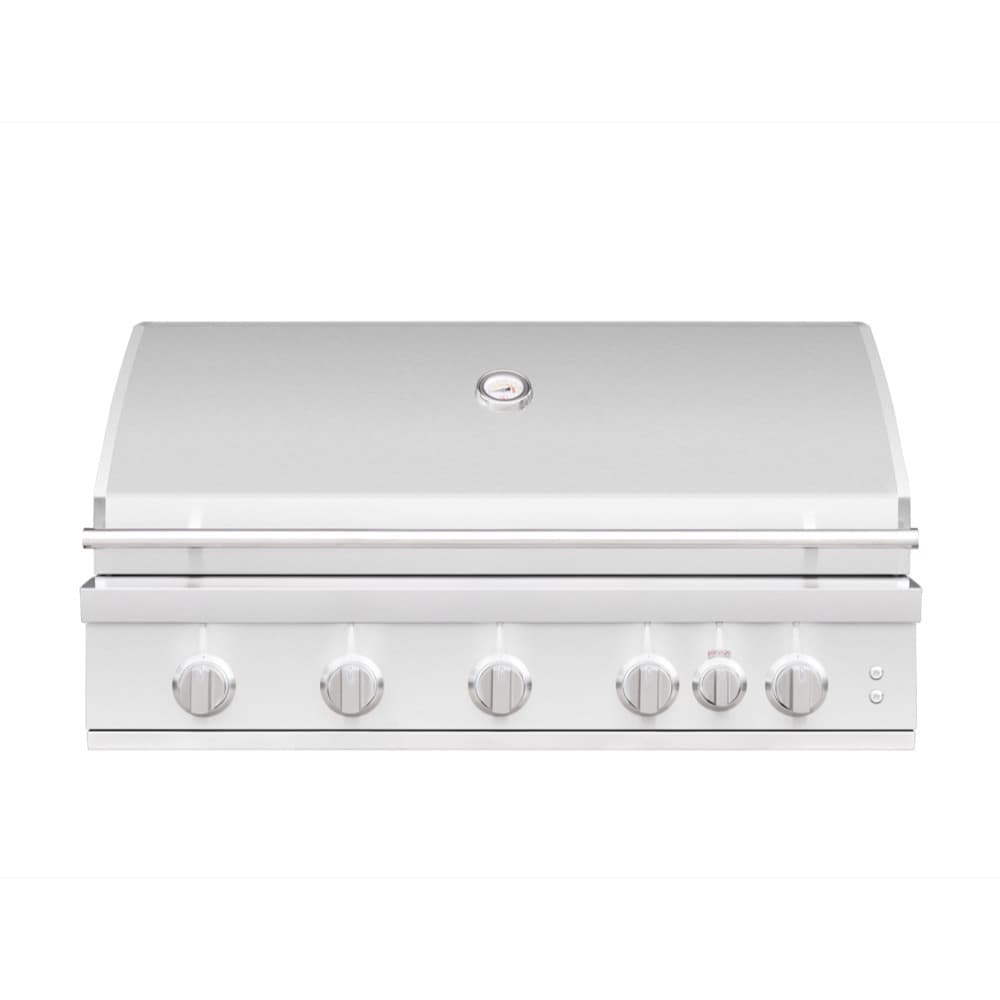
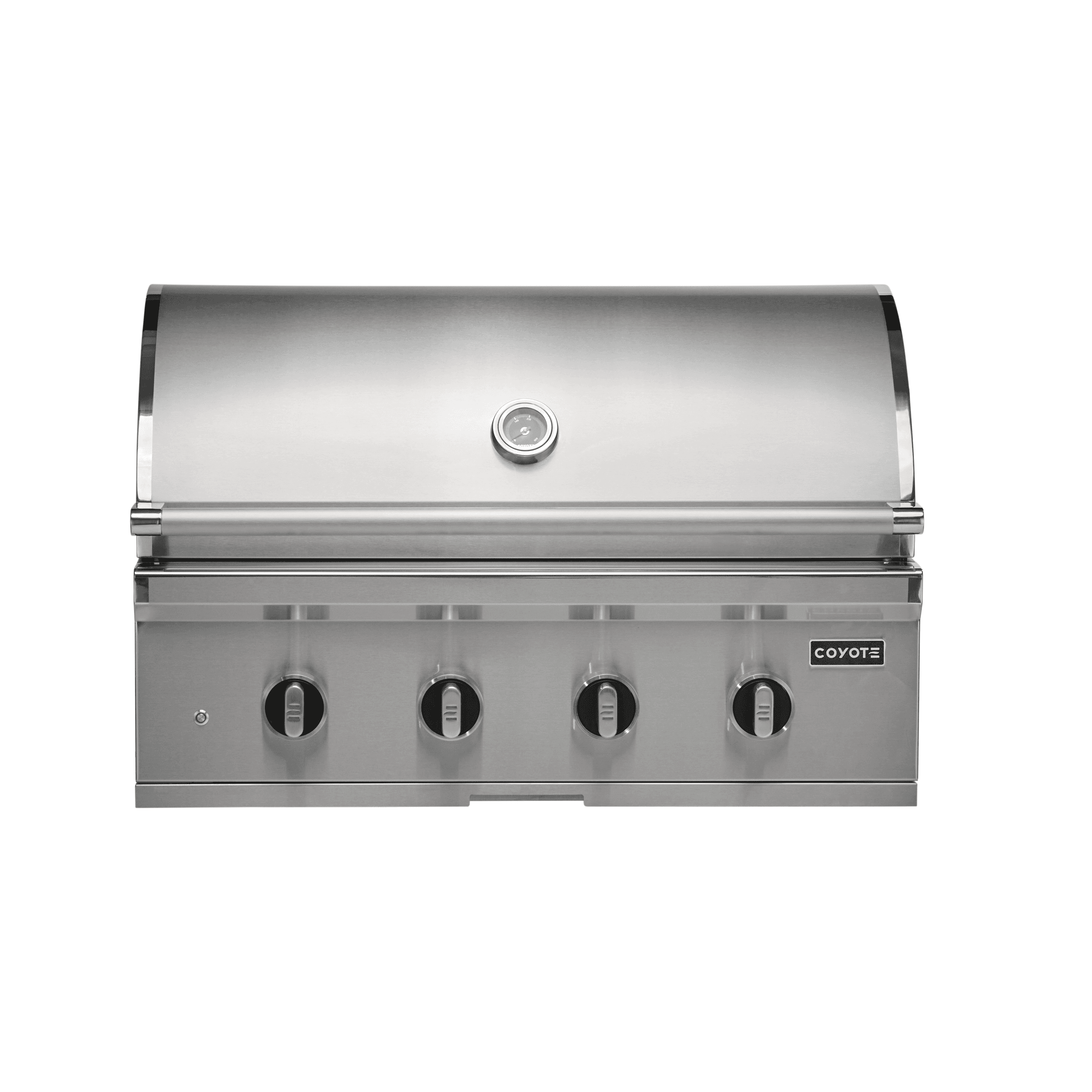
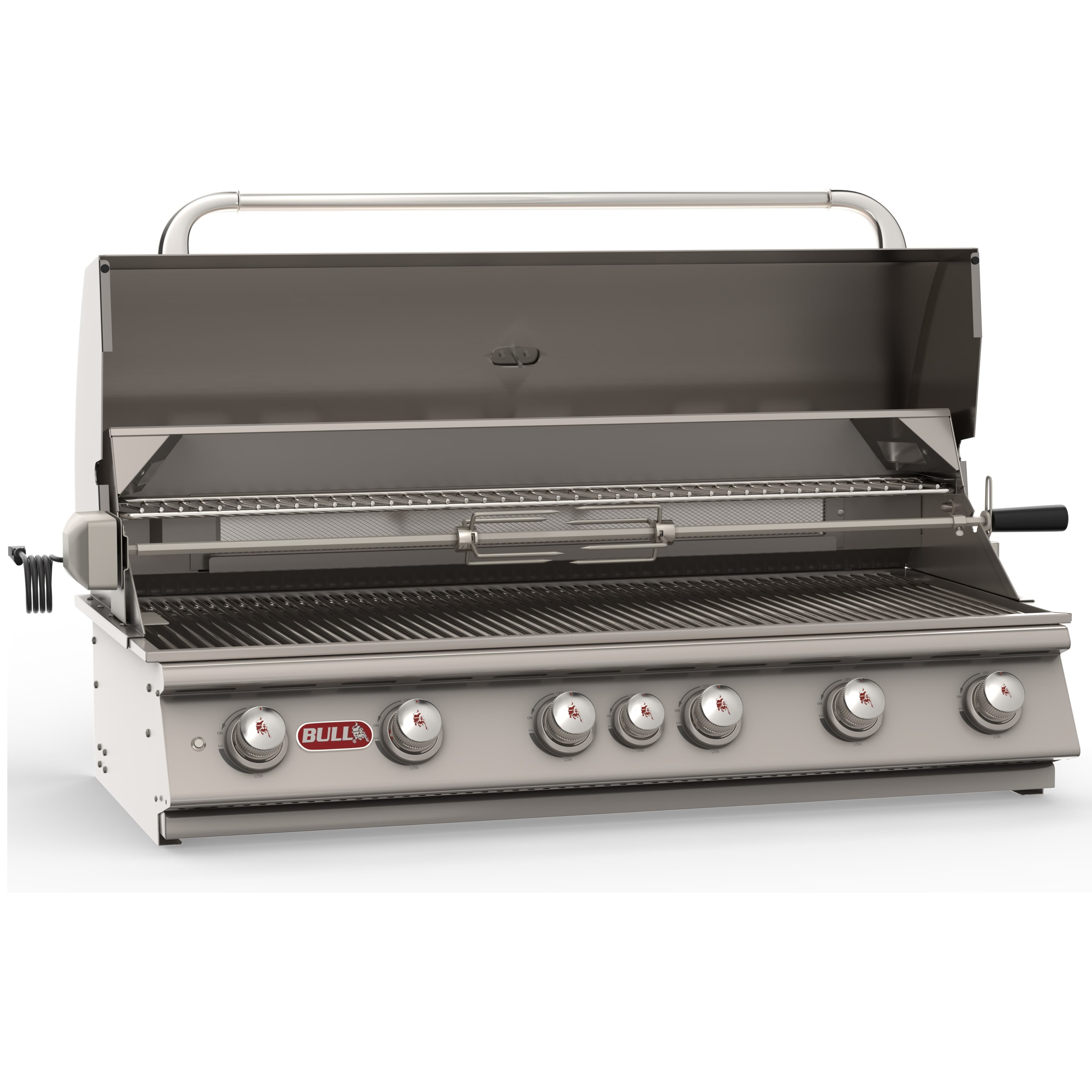
Three built-in grill heads that are worth the custom-masonry premium in 2026. Each one does something no modular-line grill does — made-in-USA stainless fabrication and a 5-burner 40-inch footprint (Summerset Sizzler Pro 40), lift-assist hood ergonomics (Coyote CL), or 6-burner zone capacity (Bull Diablo at 46 inches) — and each one justifies the extra 8 weeks and 40 percent cost bump a custom build requires. If your spec leans infrared-sear luxury, see the full Hestan Outdoor vs Aspire guide for the fourth option that belongs in this conversation.
The hybrid play: modular shell, custom grill
The underrated $25K-$40K move: buy a Bull ODK Core shell for $9,999, remove the included Angus grill, and drop in a Aspire by Hestan EB36 ($3,895) or a Coyote CL 36 ($2,599) in its place. You get modular timeline, modular pad flexibility, modular price — plus the premium grill-head performance the modular line doesn't include. The swapped-out Bull Angus resells through our certified-used program for $1,800-$2,200, so the net upgrade cost is under $2,000 for a materially better grill.
The reason more people don't know about this: nobody selling modular kits talks about swapping the grill, because it reduces the kit's margin. Nobody selling custom-built kitchens talks about modular shells, because they're trying to sell you a $50K build. We sell both, so we'll tell you.
What this means for your yard
Run the five decisions above against your actual situation. If three or more land in the modular column, buy a Bull Core package and be grilling in 3 weeks. If three or more land in the custom column, hire a mason and expect a season. If you're split 2-3, the $25K-$40K hybrid is probably the right answer — modular shell, upgraded grill head, best value on the market.
We're happy to work through the quote both ways if you're on the fence. Call, text, or just drop into the contact page and ask for Reed.
Frequently Asked Questions
What is the difference between a modular and a custom outdoor kitchen?+
How much does a modular outdoor kitchen cost in 2026?+
Can you convert a modular outdoor kitchen to a custom one later?+
How long does it take to install an outdoor kitchen?+
Which outdoor kitchen holds its value better when you sell the house?+
Can you put a modular outdoor kitchen on pavers instead of a concrete pad?+
Are prefab outdoor kitchen islands any good, or are they cheap?+
Related guides
BBQ Island Kits: Pre-Built vs Custom-Built Outdoor Kitchens — the deeper dive on prefab island kits specifically — brand-by-brand quality tiers, shell materials, and what to look for on the rust-out failure mode.
Bull Angus vs Bull Diablo: When the 46-inch 6-Burner Beats the 30-inch — if you've decided on a Bull grill for the modular or hybrid build, this is the size-and-zone-count call.
Hestan Outdoor vs Aspire by Hestan: How the Two Hestan Lines Differ — the hybrid tier's most popular grill-head upgrade — which Hestan line fits your custom spec.
Products & brands in this guide
This Season
Shop the season
Black Friday 2026
Black Friday Grills
Deepest markdowns of the year on built-ins, carts, and high-BTU gassers.
Shop Black Friday →Holiday 2026
Holiday Grill Deals
Gift-ready grills and accessories that still beat Christmas.
Shop Holiday Deals →Thanksgiving 2026
Thanksgiving Grilling
Ideas to keep the turkey outside and the oven free for pies.
Read the Guide →Related reading
Reed — Reed writes the buying guides at BBQs.com — fifteen years selling and installing built-in grills means the picks here are what we'd actually put in our own outdoor kitchen.