Blackstone 36" vs 28" Griddle: Which Size Fits Your Cook Style?
By Reed · Published November 2026
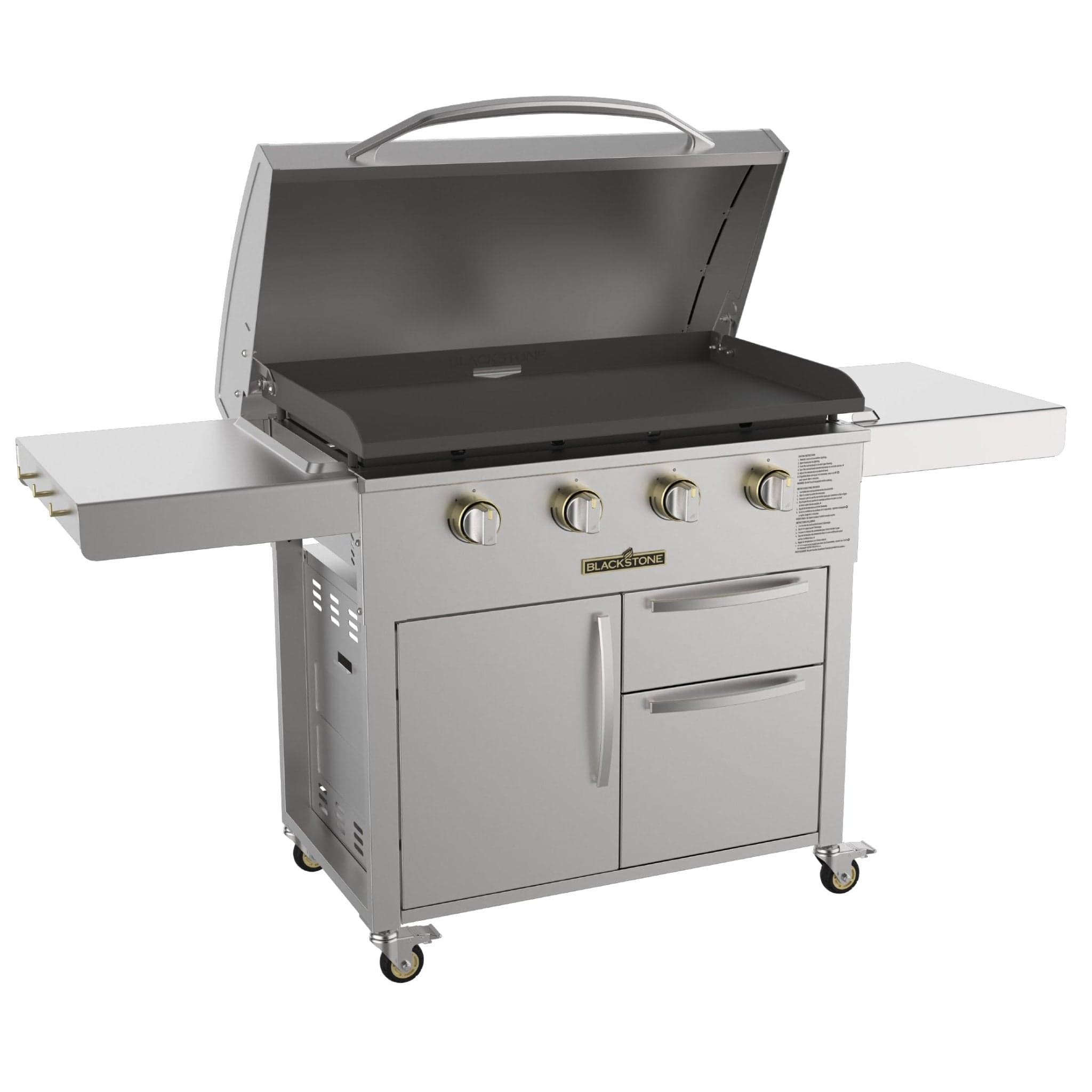
Updated November 2026. The honest answer to "which Blackstone griddle size do I buy" is almost never "the biggest one you can afford." It is a math problem with three variables: how many people you cook for in one batch, how much counter space you have, and how fast you need it ready. This piece runs the numbers so you can pick before you buy.
TL;DR. Buy the Blackstone Select 36" with Cabinet if you regularly cook for 8 or more, have 55" or more of clear counter space, and plan to pre-heat. Buy the Blackstone Select 28" with Cabinet if you cook for 4 to 6, have a tight patio, or want faster cold-start heat-up. The 28" also wins on BTU density. Ignore the 22" unless you’re an RV / boat / balcony cook.
The Three Questions That Pick the Size
Most online comparisons for the Blackstone 36 vs 28 lean on vague phrases like “consider your family size.” That’s useless. Here are the three concrete questions we ask every customer who calls the shop:
1. How many people do you need to feed in ONE batch? Not over the course of an evening — in a single cooking pass, start to finish, before the first people start eating. If the number is 7 or less, you’re a 28 buyer. If it’s 8 or more, you’re a 36 buyer. Everything else downstream of this question is secondary.
2. What’s your clear counter space, measured with a tape? Not what you think you have. Actually measure. The Select 36" freestanding needs 62" of clear counter with the side shelves out — that’s wider than most patio bar builds. The Select 28" needs 52". If you don’t have 55" of straight counter with no obstructions, the 36 won’t fit the way the side shelves need to open.
3. How often do you cook on a plan vs cook on a whim? Pre-planned cooks (Saturday night, invited guests) favor the 36 because the extra 2 to 3 minutes of pre-heat time doesn’t matter. Spontaneous cooks (kids are hungry now, decide at 6:15, eat by 6:45) favor the 28 because faster warmup matters a lot when the appetite clock is already running.
Counter Footprint — Real Inches, Not Marketing
| Measurement | Select 36" with Cabinet | Select 28" with Cabinet | Difference |
|---|---|---|---|
| Overall width, shelves folded | 42" | 32" | 10" more on the 36 |
| Overall width, shelves open | 62" | 52" | 10" more on the 36 |
| Overall depth (front to back) | 28" | 27" | Negligible |
| Overall height, lid closed | 36" | 36" | Same |
| Cooking surface width | 36" | 28" | 8" more cook surface |
| Cooking surface depth | 21.5" | 17" | 4.5" more cook surface |
| Cooking surface area | 768 sq in | 470 sq in | +298 sq in (63% more) |
| Cabinet/cart weight | ~200 lb | ~160 lb | +40 lb |
| Starting price (Cabinet/Select) | $2,499 | $1,999 | +$500 |
| Starting price (open cart/entry) | $999 | $799 | +$200 |
The Select 36 needs 10 more inches of clear counter width than the Select 28, folded or open. That 10 inches is the difference between fitting between two posts on a standard patio bar (54" between posts is common) and not fitting.
Burgers-Per-Batch Math (The Actual Decider)
Sizing a griddle by “sq inches” is abstract. Sizing it by “how many burgers in one pass” is what actually matters when a crowd shows up hungry. Here’s the real math:
A smash burger patty uses roughly a 4" by 4" footprint (16 sq in) when you count the space you need between patties for the spatula to get under. A proper sear also wants about 20% headroom so you’re not flipping on top of other patties. Call it 24 sq in per smash patty, with room to work.
| Batch item | Select 36" capacity | Select 28" capacity | Select 22" capacity |
|---|---|---|---|
| Quarter-pound smash patties (one pass) | 28 to 32 | 18 to 22 | 10 to 12 |
| Teppanyaki hibachi plates (one pass) | 6 adults | 4 adults | 2 adults |
| Fried rice (20-min cook for) | 10 to 12 adults | 6 to 8 adults | 3 to 4 adults |
| Pancakes (6-inch diameter) | 16 at once | 10 at once | 6 at once |
| Full breakfast (eggs + bacon + hashbrowns, mise en place) | 8 to 10 people | 5 to 6 people | 2 to 3 people |
| Smash + veggies + buns toasting simultaneously | Yes, 4 zones | Tight, 3 zones | No, 2 zones |
The 4-zone pattern is where the 36 earns its price. On the 36 you can run smash heat on the left two burners, sear temperature for proteins on the middle two, warm-hold on the right two, and have a cool corner for buns and butter melt-in. On the 28 you get three zones; one of them has to multi-task. On the 22 you’re doing everything serially.
Who Should Buy the Select 36
Buy the Blackstone Select 36" Cabinet at $2,499 if any of these apply: you regularly cook for 8 or more in one batch, you entertain weekly or host game-day crowds, you run a full breakfast spread where eggs + bacon + hashbrowns + pancakes all happen at once, you want the 4-zone cooking pattern, or you’re a two-cook household (you and a partner working the griddle together).
Also buy the 36 if you have 120V power at the patio and the Select 36 Air Fryer Combo at $2,999 interests you — the air fryer side only exists on the 36 platform, not the 28. That’s a built-in-only reason to step up to the larger size.
Who Should Buy the Select 28
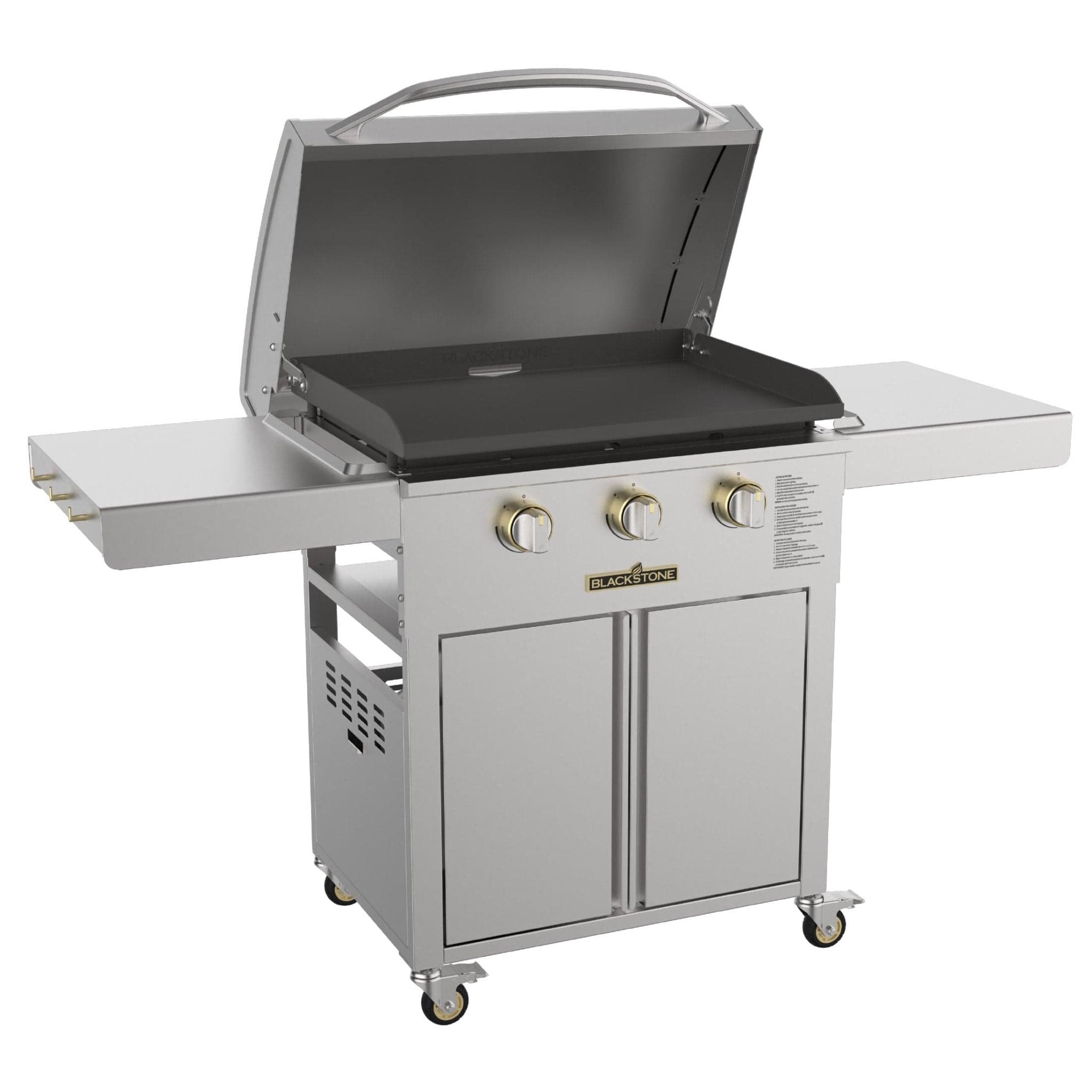
Buy the Blackstone Select 28" Cabinet at $1,999 if any of these apply: you cook for a household of 3 to 6, your patio has less than 55" of clear counter space, you cook on short notice more than on a schedule (the faster warmup actually matters), you want the Select stainless-cabinet build quality at a lower price point, or you need to move the unit through a standard 36" doorway (the 28 cart passes, the 36 cart does not).
The 28 also wins on BTU density — 96 BTU per square inch vs the 36’s 78 BTU per square inch. That means the 28’s plate hits sear temperature faster and holds it under load better. For home cooks who prioritize smash-burger char and steak sear over mass throughput, the 28 is actually the better cooking tool. The 36 wins on capacity; the 28 wins on intensity.
The 22" Wild Card — Portable Tier Only
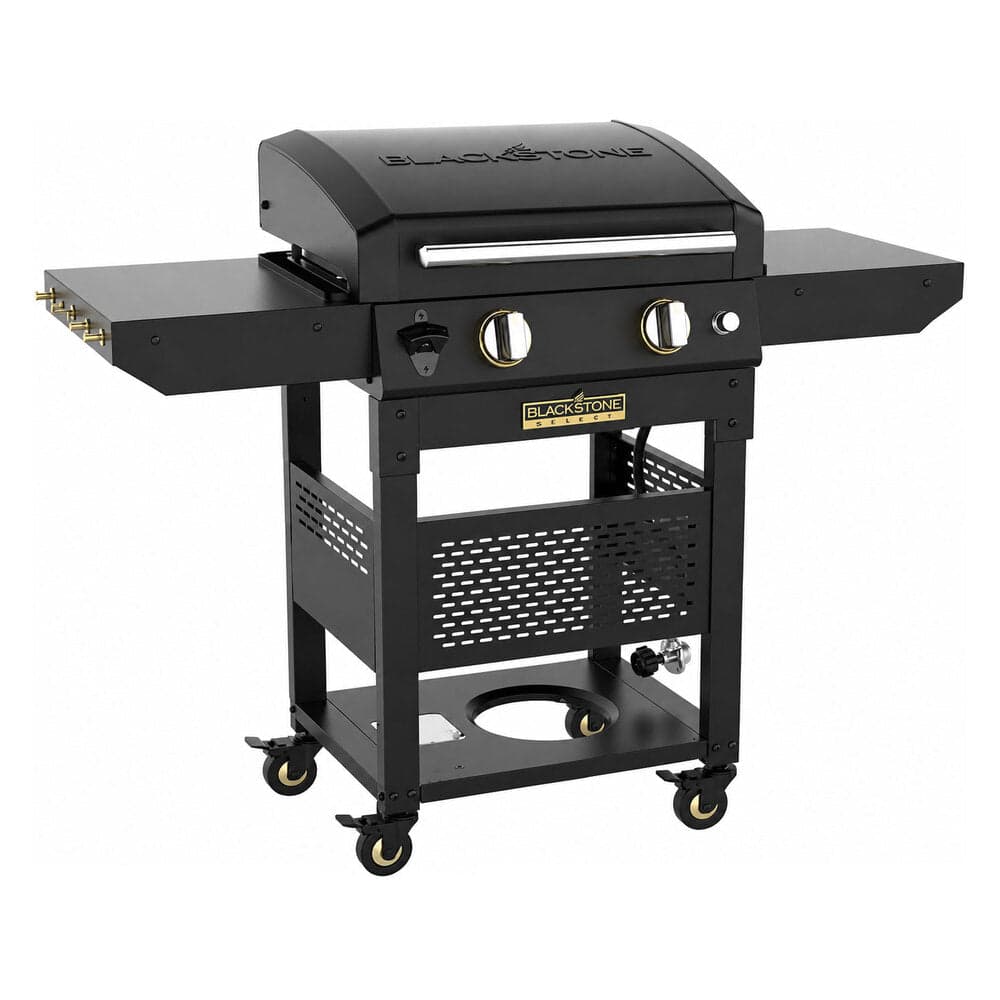
The Blackstone 22" on Cart at $599 is a different conversation. It’s a 2-burner, 260 sq-in cooking surface designed for portable use — RVs, boats, apartment balconies, tailgates, camping trips. At home, for a household of 3 or more, it’s undersized. Cooking a family breakfast on a 22 means two batches of pancakes while the first batch cools. That’s a kitchen appliance problem, not a design-choice problem.
If portability is the entire use case and space is at a premium, the 22 is correctly sized. If you’re deciding between the 22 and the 28 for home use, go to the 28 every time. The $200 extra and 6 extra inches of surface width is the best money in the Blackstone lineup.
“The 28 is the sleeper pick. Most people reflexively buy the 36 because bigger-feels-better, then discover the 28 would’ve fit the patio better, warmed up faster, and seared harder. The 36 is correct when you’re actually cooking for 8+ at a time. Everyone else should take a hard look at the 28 first.”
Entry Tier vs Cabinet Tier at Both Sizes
You can get both the 36 and the 28 at a lower price point if you give up the 304 stainless cabinet. The entry tier Blackstone 36" on Open Cart is $999, and the Blackstone 28" on Open Cart is $799. Same rolled-steel cooking plate, same H-style burners, same BTU output — the only difference is the powder-coat open cart vs the stainless cabinet. For a complete breakdown of when the cabinet upgrade is worth the $1,500 delta, see our dedicated Select vs Original comparison. The size decision here applies the same way to either tier.
Price Ladder — Every Size at Every Tier
The full size-and-tier price ladder on BBQs.com right now:
| Size | Entry tier (Cart) | Cabinet tier (Select) | Sq in cook | Batch capacity |
|---|---|---|---|---|
| 22" | $599 | (not offered) | 260 | 10-12 smash patties |
| 28" | $799 | $1,999 | 470 | 18-22 smash patties |
| 36" | $999 | $2,499 | 768 | 28-32 smash patties |
| 36" Air Fryer Combo | n/a | $2,999 | 768 + 2 fryers | 28-32 patties + wings |
Final Dealer Answer
If you called the shop and asked which Blackstone size to buy without any context, the honest answer is the Select 28" Cabinet. It covers the widest range of real households, fits almost every patio, warms up fast, and sears hard. The reflex to buy the 36 is driven by marketing, not usage.
If you told me “we host 10+ people every couple of weeks and we have the counter space,” the honest answer flips to the Select 36" Cabinet. The 4-zone capacity and the 28-32 patty throughput are real advantages at that use case, and they pay off every time you host.
If you told me “it’s going on the RV,” the honest answer is the 22 on cart. For every other use case, the 22 is a kitchen-appliance problem waiting to happen.
For the full Blackstone lineup see the Complete Blackstone Buyer’s Guide, or browse the whole Blackstone brand page. If you’re cross-shopping against other flat-top griddle brands, see The Best Outdoor Griddles of 2026.
Frequently Asked Questions
How many burgers can a Blackstone 36" cook at once vs 28"?+
What is the actual counter footprint difference?+
Is the BTU output per square inch different between the 36 and 28?+
Does the 36 take longer to heat up than the 28?+
Can one person comfortably cook on a 36-inch surface?+
Is the Blackstone 22-inch worth considering instead?+
Products & brands in this guide
This Season
Shop the season
Black Friday 2026
Black Friday Grills
Deepest markdowns of the year on built-ins, carts, and high-BTU gassers.
Shop Black Friday →Holiday 2026
Holiday Grill Deals
Gift-ready grills and accessories that still beat Christmas.
Shop Holiday Deals →Thanksgiving 2026
Thanksgiving Grilling
Ideas to keep the turkey outside and the oven free for pies.
Read the Guide →Related reading
Reed — Reed writes the buying guides at BBQs.com — fifteen years selling and installing built-in grills means the picks here are what we'd actually put in our own outdoor kitchen.