The Complete Chicago Brick Oven Brand Guide (2026): Every CBO Model, Ranked
By Reed · Published October 2026
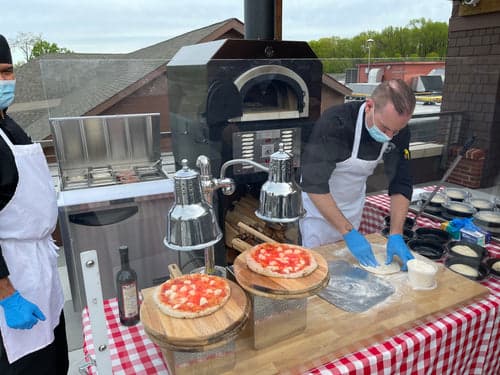
Updated October 2026. Chicago Brick Oven's residential 500 / 750 / 1000 line is the de-facto American pizza-oven standard — wood-fired or Hybrid gas-wood, 2-inch cast refractory, 900°F in 20 minutes on gas. The CBO-500 Countertop at $4,699 is the entry; the CBO-750 Hybrid Countertop at $8,599 is the serious-cook pick; the CBO-1000 DIY Kit at $8,499 is the restaurateur-at-home build. Every model is cast in Illinois with a 10-year dome warranty. This is the hub.
What this guide is (and what it isn’t)
I run the pizza-oven category at bbqs.com. We’ve been shipping Chicago Brick Oven ovens into American outdoor kitchens for enough years now that the customer questions have a pattern — and it’s always the same three questions in the same order. Which model fits my patio? Should I pay the Hybrid premium? And is CBO actually worth 10x what an Ooni Koda costs?
This article is the hub that answers those three questions, maps every current residential SKU onto a single matrix, and funnels you to the deeper reviews we’ve already written. If you’re here for the hands-on CBO-500 teardown, read the CBO-500 Review. If you’re here for the CBO-750 breakdown, that’s the CBO-750 Review. If you want the shorter brand-story version with the Illinois backstory, start on the original brand guide. This piece is the lineup-wide decision tree.
CBO Hybrid models hit full pizza temperature in 20 to 25 minutes on gas alone — Neapolitan-style cooking without the 45-minute wood warmup.
The three sizes, in one sentence each
CBO-500 — 27-inch dome, one 12-inch pizza plus a side at a time, families of 2 to 4, wood-only, Countertop or DIY Kit.
CBO-750 — 34-inch dome, two 12-inch pizzas simultaneously, households of 4 to 8, wood-only or Hybrid gas-wood, available in every configuration CBO makes (Countertop, Built-In Kit, Freestanding, Mobile, Tailgater trailer).
CBO-1000 — 42-inch dome, three 12-inch pizzas simultaneously, buyers hosting 10+ or running a serious outdoor kitchen build, DIY Kit only (no Countertop or Hybrid variant exists at the 1000 size). This is the oven buyers choose when the pizza oven is the architectural centerpiece of the patio.
Every current CBO residential model, with prices
Below is the complete residential lineup as of October 2026, straight from our Medusa catalog. Prices are the base configurations we stock; finishes and freight bump the number depending on your choice and your ZIP code.
| Model | Dome / Cooking Area | Fuel | Install Type | Price (base) |
|---|---|---|---|---|
| CBO-500 Countertop | 27 in · 550 sq in | Wood-only | Drop-in | $4,699 |
| CBO-500 DIY Kit | 27 in · 550 sq in | Wood-only | Mason build-in | $2,999 |
| CBO-750 Countertop | 34 in · 950 sq in | Wood-only | Drop-in | $5,399 |
| CBO-750 Hybrid Countertop | 34 in · 950 sq in | Wood + NG/LP | Drop-in | $8,599 |
| CBO-750 DIY Kit | 34 in · 950 sq in | Wood-only | Mason build-in | $3,399 |
| CBO-750 Hybrid Built-In Kit | 34 in · 950 sq in | Wood + NG/LP | Mason build-in | $7,299 |
| CBO-750 Hybrid Freestanding | 34 in · 950 sq in | Wood + NG/LP | Rolls into place | $10,399 |
| CBO-750 Mobile | 34 in · 950 sq in | Wood-only | Rolls into place | $7,099 |
| CBO-750 Tailgater Trailer | 34 in · 950 sq in | Wood-only | Towable trailer | $13,099 |
| CBO-750 Hybrid Tailgater | 34 in · 950 sq in | Wood + NG/LP | Towable trailer | $18,599 |
| CBO-1000 DIY Kit | 42 in · 1,450 sq in | Wood-only | Mason build-in | $8,499 |
The decision tree (actually useful)
Walking a customer through CBO over the phone, I ask four questions in this order. They settle the model in about two minutes.
1. How many people do you cook for in a normal week?If the answer is 2 to 4, the CBO-500 is sized right — a second pizza round adds 90 seconds, which is nothing. If the answer is 4 to 8 or you host regularly, step up to the 750 so you can run two pizzas side-by-side. If the answer is “we throw neighborhood parties and I want to feed 10 to 15 off the oven,” the 1000 is the right box.
2. Are you willing to tend a wood fire mid-cook?Wood-only ovens need an active fire operator — someone feeding splits every 10 to 15 minutes to hold dome temperature across a long cook. If you’ll enjoy that role, buy wood-only and save the Hybrid premium. If you want to pour drinks and have the oven cook itself, buy Hybrid. The Hybrid’s gas burner holds the dome at 700°F all night with zero wood management; add a log when you want the smoke character and leave it alone when you don’t.
3. Is this going into a permanent outdoor kitchen, or do you need it to move?A permanent build takes a DIY Kit or a Countertop drop-in. If the oven needs to move — summer kitchen in Michigan, winter garage storage, or you’re catering off the back of a truck — pick the Freestanding, Mobile, or Tailgater configurations. The Tailgater on a trailer is genuinely the best party rental purchase we sell to small catering operations.
4. Who’s doing the install?If you’re not willing to hire a mason or spend a weekend mortaring refractory parts together, buy the Countertop — it drops onto a rated counter or the CBO steel stand and connects to a gas line in an afternoon. If you’re already doing a stone-veneer outdoor kitchen build, the Built-In Kit integrates into the architecture and looks the way the brand photos look. The DIY Kit is a real construction project; the Countertop is not.
Where the Hybrid actually earns its keep
The Hybrid upgrade is about $3,000 more on the Countertop tier ($5,399 wood-only vs $8,599 Hybrid). It’s the single most-debated line item in the CBO catalog and the one buyers most often regret skipping.
Here’s the math from a hundred-plus customer calls. Wood-only owners cook on their oven an average of 2 to 3 times per month. Hybrid owners cook 6 to 10 times per month. Same oven, same households — the only variable is warmup time. A 20-minute Hybrid warmup fits in a weeknight. A 45-minute wood warmup doesn’t. If you spent $5,000+ on an oven and only fire it 24 times a year, that’s $200+ per cook before you count the groceries.
The Hybrid also solves the second-pizza-round problem. Wood-only ovens coast through round one at peak temperature, then the dome drops 50 to 100°F while you build a second fire. Hybrid holds the dome steady on the gas burner, which means pizzas four through eight look the same as pizzas one through three.
Our honest guidance: if you’ll cook 5+ times a month, buy Hybrid. If this is a weekend ritual and the fire-tending is part of the appeal, buy the wood-only CBO-750 Countertop and save the $3,000 for firewood and a side-table.
“Wood-only owners fire the oven 2 to 3 times a month. Hybrid owners fire it 6 to 10 times a month. Same oven, same households — the 20-minute Hybrid warmup is the only variable that changes.”
Install cost reality — the Kit math
The CBO-500 DIY Kit lists at $2,999 and the CBO-1000 DIY Kit lists at $8,499. That’s the refractory shell. It is not the installed oven. Here’s what the realistic finished number looks like for an outdoor-kitchen build in Illinois, Texas, or Florida pricing I’ve seen in the last 12 months.
| Line Item | CBO-500 Kit build | CBO-1000 Kit build |
|---|---|---|
| Refractory oven kit | $2,999 | $8,499 |
| CMU base (block + rebar + pour) | $800 to $1,500 | $1,200 to $2,200 |
| Mason labor (3 to 5 days) | $2,000 to $4,000 | $3,500 to $6,500 |
| Stucco or stone-veneer finish | $1,500 to $3,500 | $2,500 to $5,000 |
| Chimney termination + cap | $400 to $800 | $500 to $1,000 |
| Gas line (if Hybrid) | $400 to $1,200 | n/a (no 1000 Hybrid) |
| Realistic installed total | $8,100 to $13,000 | $16,200 to $23,200 |
That’s why we steer most residential buyers to the Countertop or the Freestanding Hybrid — the all-in number is close to a Kit build but you don’t spend a month staring at a pile of refractory parts in your side yard. For buyers who are already doing a $40,000+ outdoor kitchen build, the Kit numbers disappear into the project budget and the integrated built-in look is worth the extra effort.
The Mobile, Freestanding and Tailgater variants (CBO-750 only)
CBO builds four non-standard configurations on the 750 chassis that don’t get much coverage on the brand’s own site but matter a lot for the right buyer.
CBO-750 Mobile ($7,099) — the 750 refractory core mounted on a heavy-duty wheeled steel base with a wood storage bay underneath. Wood-fired only. Rolls into position for a party and rolls back under cover between uses. The pick for buyers with a cover-your-patio-in-winter climate (Northeast, Midwest) who want to garage-store the oven November through March.
CBO-750 Hybrid Freestanding ($10,399) — the top-of-line residential CBO. Same 34-inch Hybrid dome, same gas burner, but mounted in a finished freestanding steel cabinet with the control panel and wood storage integrated. Looks like a serious piece of outdoor equipment the day it arrives. No construction project required.
CBO-750 Tailgater Trailer— the 750 Hybrid or wood-only on a DOT-rated towable trailer with a prep counter, wood storage and chimney. Available in four finishes (Stainless Steel, Copper Vein, Solar Black, Silver Vein) at $13,099 for wood-only or $18,599 for the Hybrid Tailgater. This is a working mobile pizza business in a box — we’ve shipped them to catering operators, tailgating syndicates with real budgets, and one Illinois buyer who wanted to tow his pizza oven to his cabin every weekend.
Where CBO sits vs the rest of the pizza-oven market
The pizza-oven category has gotten crowded. Ooni, Gozney, Alfa Forni, Forno Bravo, Fontana Forni, Mugnaini and a dozen imported names all target overlapping buyers. Here’s how I actually position CBO against each one on a sales call.
vs Ooni and Gozney— different category entirely. Ooni Koda 16 is $599 and ships pre-assembled with a propane burner; it’s a tabletop oven that lives on your patio and gets stowed in a shed. CBO is a cast refractory oven weighing 400 to 1,500 pounds, built to live outside for 20 years. If your budget is under $1,500 and you want to try wood-fired pizza, buy Ooni. If you want the oven to anchor your outdoor kitchen, buy CBO. We sell both — they’re not competing for the same wallet.
vs Forno Bravo— the closest comparable. Both are American-made (CBO in Illinois, Forno Bravo in California), both offer DIY refractory kits with Hybrid options, both target the permanent-outdoor-kitchen buyer. CBO’s advantage is the broader residential lineup — the Countertop, Mobile, Freestanding and Tailgater configurations give buyers who don’t want a Kit a real alternative. Forno Bravo leans harder into the commercial-pizzeria segment. For a residential buyer, CBO is the easier recommendation.
vs Alfa Forni and the Italian imports— Alfa and Fontana ship beautiful, pre-finished Italian ovens with gas-only and Hybrid options in the $4,000 to $9,000 range. The dome thickness tends to be thinner (1.5 inches vs CBO’s 2 inches), which means less heat retention and faster recovery drop between pizzas. For buyers who prioritize aesthetics and faster delivery, Italian imports are a legitimate pick. For buyers who prioritize thermal performance and warranty terms, CBO wins.
What makes CBO different (the three things that actually matter)
I’ve ordered, installed, and troubleshot enough pizza ovens to know which spec claims matter on paper and which ones matter in year three.
2-inch cast refractory.Most competing ovens use 1-inch or 1.5-inch domes to cut shipping weight. CBO’s 2-inch dome stores more heat, holds temperature longer between pizzas, and keeps cooking for 4 to 6 hours after the fire dies down (bread, roasts, braises). On a weeknight this means you fire the oven once at 5pm and still bake sourdough at 10pm using the residual heat.
10-year dome warranty, serviced from Illinois.Dome cracks are the one failure mode pizza ovens actually suffer. CBO’s 10-year coverage on refractory is the strongest in the category. Just as important — the service network is in-country. A CBO oven delivered in 2026 is still parts-serviceable in 2041. Imported ovens often become disposable the moment a refractory section cracks because no domestic parts network exists.
Residential-plus-commercial manufacturing. CBO ovens are used in pizza restaurants that cook 200 pies a night. That commercial-grade engineering gets delivered in every residential unit — a backyard CBO cooking 10 pizzas a weekend is operating at 5 percent of its design envelope. The build quality shows up in year seven, not year one.
Honest downsides I tell every buyer
CBO isn’t the right oven for everyone. Three real downsides worth stating out loud.
Price floor.There is no sub-$3,000 CBO. Ooni Koda 16 is $599. Gozney Dome is $1,499. If your budget is under $3,000 and you want authentic wood-fired cooking, CBO isn’t your brand — buy an Ooni Karu 16 and enjoy it. CBO starts making sense at $3,000+ when you’re comparing it to other serious category entries.
Weight and footprint.The CBO-500 Countertop is 500 pounds assembled. The CBO-750 Freestanding is 1,100 pounds. The CBO-1000 Kit finished is 1,500+ pounds on the pour. Your outdoor-kitchen base has to handle the structural load, and if you’re on a wood deck that may mean reinforcement. Measure twice. Our 2026 pizza oven roundup has footprint-vs-price comparisons across the whole category for buyers who need something lighter.
Lead time. CBO ships from Illinois and freights nationally. Standard lead on in-stock Countertop finishes is 1 to 2 weeks. Hybrid configurations and the Freestanding run 3 to 5 weeks. Tailgaters are build-to-order at 6 to 8 weeks. If you need a pizza oven on your patio for a party next Saturday, order the Countertop in Stainless Steel (always the fastest-moving finish) or buy an Ooni.
Which guide to read next
If this hub narrowed it down for you, these are the next stops.
Decided on the 500 but want the hands-on review before you order? Read the CBO-500 Review. Decided on the 750 and want the full configuration breakdown? Read the CBO-750 Review. Still cross-shopping CBO against other brands in the category? Our Best Outdoor Pizza Ovens of 2026 ranks the whole field. Want the shorter brand-story version with the Illinois backstory? Start on the original brand guide. Ready to shop? Browse the full Chicago Brick Oven collection or the broader outdoor pizza ovens catalog.
What to confirm before you order
Four quick checks that save returns and conversion-kit charges.
Confirm the finish. The CBO-500 and 750 Countertop ship in four finishes — Stainless Steel, Copper Vein, Solar Black, Silver Vein. Copper tends to be the longest wait at 3 to 5 weeks. Stainless Steel is nearly always in stock.
Confirm the gas type on Hybrid orders. Natural gas and liquid propane are not interchangeable without a conversion kit. Match the oven to the gas service that will be on-site.
Confirm the chimney termination plan on DIY Kits. Local code governs clearance to combustibles, height above roofline, and cap style. Pulling the inspection requirements before you pour the hearth saves rework.
Register the warranty within 30 days of delivery. The 10-year refractory coverage requires online registration to activate. It’s a 2-minute step most buyers skip and regret in year eight.
Frequently Asked Questions
Is Chicago Brick Oven worth it compared to Ooni or Gozney?+
CBO-500 vs CBO-750 — which should I buy?+
What's the actual price range for a Chicago Brick Oven?+
Do I need a Hybrid or will wood-only be fine?+
What else can I actually cook in a Chicago Brick Oven?+
What's actually in a CBO DIY Kit vs the Countertop?+
How long does a CBO last, and what's the warranty?+
Can I buy a CBO Hybrid and run it on propane instead of natural gas?+
Products & brands in this guide
Related reading
Reed — Reed writes the buying guides at BBQs.com — fifteen years selling and installing built-in grills means the picks here are what we'd actually put in our own outdoor kitchen.