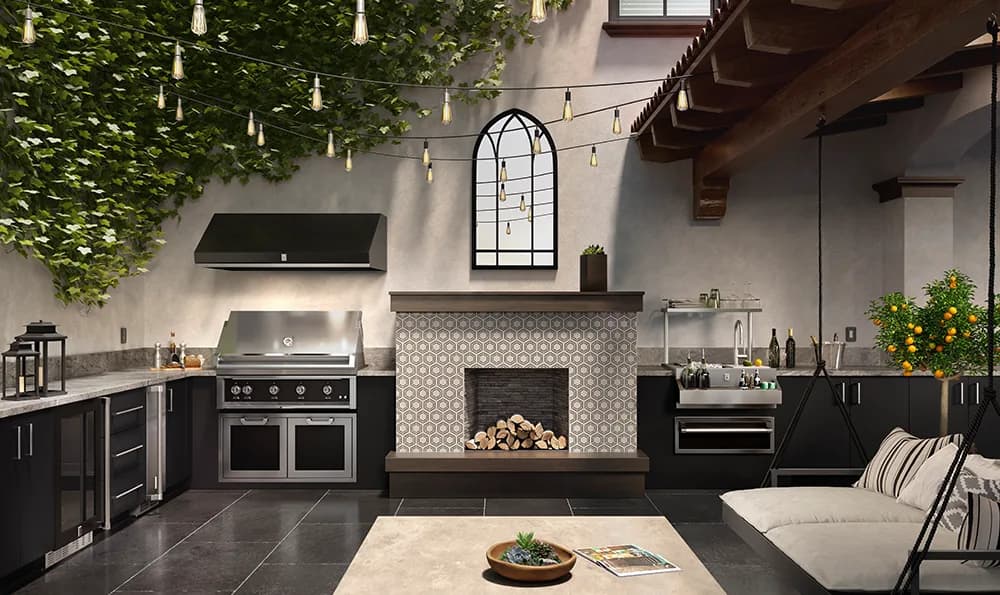
A hibachi grill, in the strict Japanese sense, is a small cast-iron or clay fire bowl filled with lump charcoal — the word literally translates to fire bowl. In American usage, hibachi means one of two very different things: that traditional charcoal box, or the flat-top griddle cooking most people see at a teppanyaki restaurant. Both belong under the same search term, and both have real places on a patio, but they solve different problems and cost very different money. Here is the dealer version of the answer, without the marketing gloss.
What a Hibachi Grill Actually Is
The Japanese word hibachi (火鉢) translates directly to fire bowl. For most of its history it was a household heating device — a rounded ceramic or cast-iron vessel filled with lump charcoal, sat in the middle of a room to warm hands and boil tea water. Cooking over one was incidental, not the point. When American GIs came home from Japan in the late 1940s and started using the word to mean any small portable charcoal grill, the definition drifted a long way from its origin.
Today the word covers two distinct products. The first is the traditional Japanese charcoal box — small, portable, unlidded, meant for high-heat small-batch cooking over glowing coals. The second is the American flat-top griddle experience marketed as hibachi in restaurants and by big-box retailers. Both are legitimate, both sell well, and both are what someone might mean when they type hibachi grill into a search bar. We’ll take them one at a time.
The Hibachi History: From Kamado Cooking to American Steakhouse
The hibachi lineage runs through more than a thousand years of Japanese domestic life. The oldest surviving hibachi vessels date to the Heian period (794 to 1185), when nobility used shallow bronze fire bowls filled with wood-charcoal embers to warm hands, boil tea, and heat small rice dishes. By the Edo period (1603 to 1868) the hibachi had become a household fixture across every class — the round ceramic hibachi for common families, the elaborate lacquered nagahibachi for merchant homes with a built-in drawer for tea utensils. The word was heating equipment first, cooking equipment second, for most of its history.
The cooking specialization arrived through parallel traditions. The kamado — a heavy clay oven — was the primary Japanese cooking vessel for centuries, and its ceramic heat-retention principles are what the modern American Big Green Egg and Kamado Joe descend from. Alongside it, the konro grill emerged as a purpose-built high-heat yakitori cooker in the 19th century, using diatomaceous-earth ceramic walls to hold binchotan charcoal at 1000°F+ for hours. When American GIs stationed in postwar Japan brought the word hibachi home in the late 1940s, they used it loosely for any small Japanese charcoal grill — a linguistic simplification that stuck.
The final drift happened in 1964, when Rocky Aoki opened the first Benihana in New York and marketed teppanyaki flat-top cooking as hibachi to an American audience that already recognized the word. By the 1980s hibachi in American English meant either a small charcoal box or a chef-in-front-of-you flat-top griddle, depending on context. Both meanings are now correct in the US market, even though only the first is correct in Japan.
Traditional Japanese Hibachi
A real Japanese hibachi is closer to a candle than a grill. It’s typically 12 to 18 inches long, 6 to 10 inches wide, no lid, cast iron or clay body, and a stainless or nickel-plated grate sitting an inch or two above a shallow bed of charcoal. You light a handful of lump — traditionally binchotan, the dense white-oak charcoal that burns for hours without smoke — and cook directly over the coals.
The two purpose-built cooking cousins to the household hibachi are the konro grill (rectangular, ceramic-lined, engineered specifically for yakitori) and the shichirin (round or oval, portable, tabletop). Both are what serious Japanese cooking sends you toward when you outgrow the household fire bowl. All three run around 150 to 250 square inches of cooking area — a fraction of a full-size grill — and cook small skewered items at very high heat for very short times.
If you’ve seen a chef in Tokyo turning yakitori sticks over glowing white coals in a narrow ceramic box, that’s a konro. If you’ve seen a small cast-iron pot with a wire grate serving grilled shrimp at a Japanese izakaya table, that’s a shichirin. Both get called hibachi in casual English. Neither is technically wrong. If you want to source real Japanese versions, we cover where to buy them further down — the short answer is Konro Grills, Korin, and Bincho are the three US importers that consistently carry the authentic hardware.
American Hibachi and Teppanyaki Style
The Benihana experience — chef in front of you, big flat steel surface, gas flame under it, onion volcano — is teppanyaki, not hibachi. Teppan means iron plate; yaki means grilled. The confusion goes back to the 1960s when the first teppanyaki chains in the US marketed themselves as hibachi because the word was already familiar to American diners from post-war culture. By the 1980s the two words were interchangeable in American English, even though they describe completely different cooking hardware.
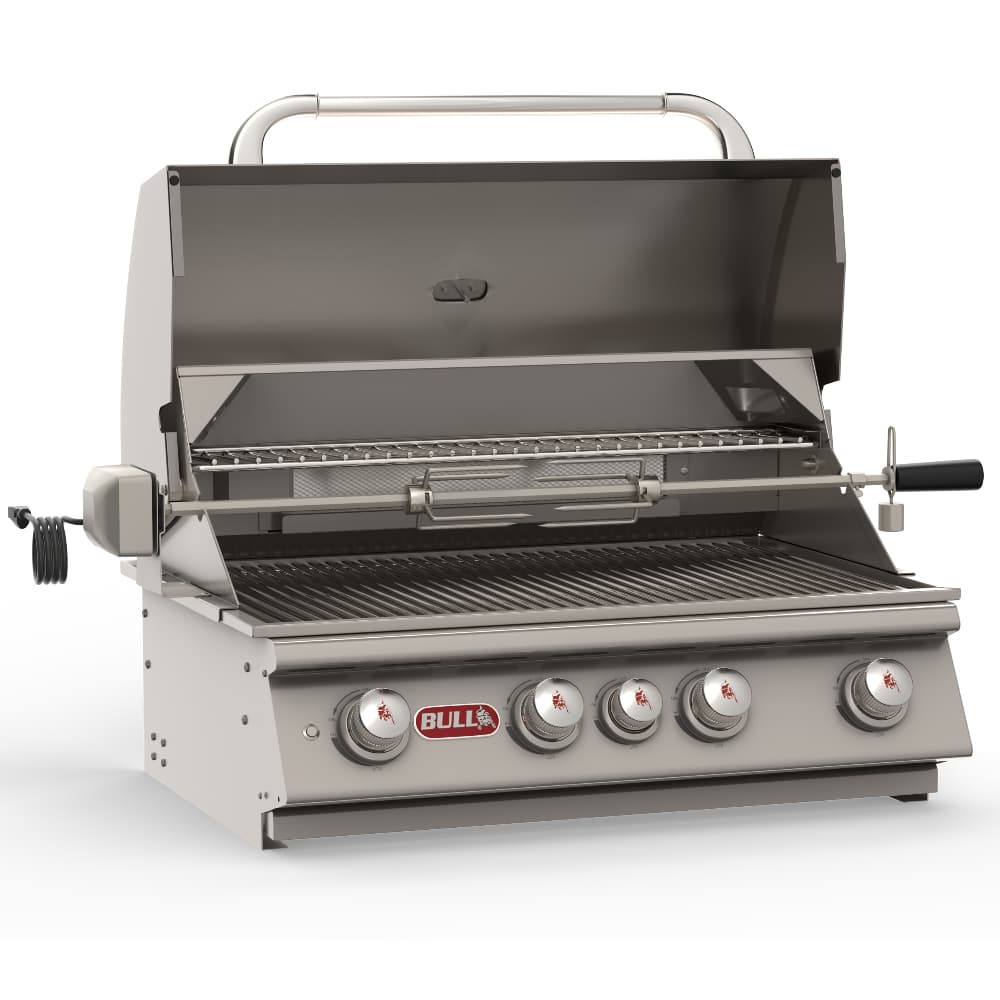
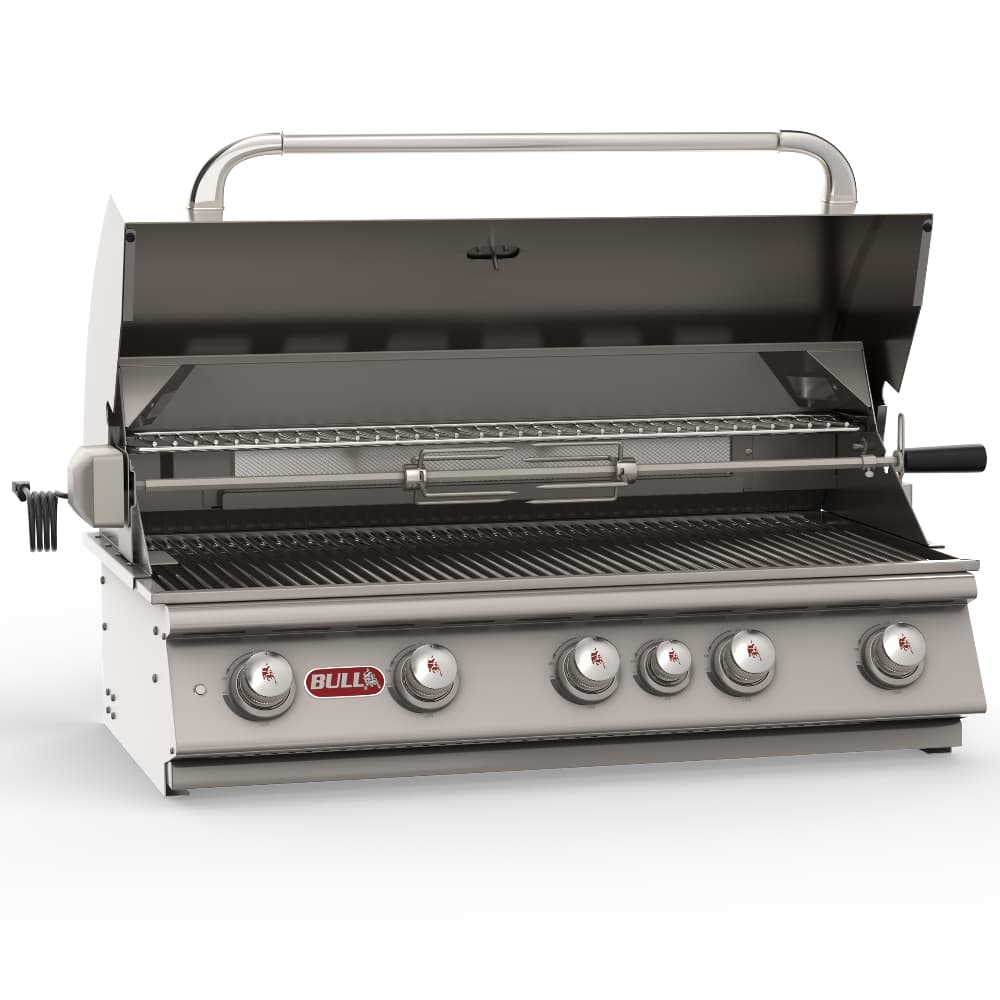
When someone today says they want a hibachi grill for the backyard and they’re thinking about fried rice, hibachi shrimp, and eggs cooked side-by-side on a flat surface, they want a teppanyaki-style flat-top griddle. Freestanding versions are dominated by Blackstone in the American market. Built-in versions come from Bull, Hestan, Coyote, Twin Eagles, and several other premium brands as either a full griddle head or a griddle-plate insert that drops onto the grates of a regular gas grill.
If you want the American teppanyaki flat-top experience built into a proper outdoor kitchen, this is where we'd start most buyers — a 30 or 38-inch built-in Bull with a cast-iron griddle-plate insert added on.
Hibachi Cooking Techniques: What Makes It Different
What separates hibachi cooking from every other grill technique is the combination of very high radiant heat, very short cook times, and very small portion sizes. A traditional konro over fully lit binchotan runs 800 to 1200°F at grate level — hotter than a pizza oven and roughly double what a premium gas grill can produce. The proteins that suit this heat are small, thin, and salt-forward: chicken thigh cubes on skewers, ribeye slices no thicker than a half-inch, whole shrimp, shishito peppers, shiitake caps.
The technique itself is closer to griddle work than to standard American grilling. You don’t close a lid, because there isn’t one. You don’t use indirect heat, because there isn’t space for it. You lay the food on the grate, count seconds, flip once, and pull it. A 1-inch ribeye seared over binchotan takes roughly 3 minutes total — 90 seconds a side — and picks up more crust in that time than the same steak would on a gas grill in twice as long.
Temperature control on a hibachi is done by moving the food, not by adjusting the fuel. Every serious konro has a hot zone (directly over the densest coal bed) and a cool edge (over the sparse or spent coal at either end). You start proteins on the hot zone for the crust, then finish them at the edge if they need another minute to reach temp. It’s a technique closer to how a professional chef uses a plancha or a wok burner than how a suburban dad uses a gas grill — and if you’ve never cooked this way, expect a learning curve of a few dinners before it clicks. For a deeper primer on getting the most out of your charcoal fuel, see our guide to using lump charcoal without wasting half the bag.
Popular Hibachi Recipes You Can Cook at Home
The classic American hibachi menu that Benihana codified in the 1970s is a small set of easy-to-execute dishes designed to be cooked in front of the diner in under 15 minutes. All of these translate perfectly to a backyard flat-top or a proper konro:
Hibachi ribeye — 1-inch ribeye sliced into 4-inch strips, seared 3 minutes per side on a 700°F flat-top or 90 seconds per side over binchotan. Finish with a mound of caramelized onions and a pat of garlic butter. Yum-yum sauce on the side.
Yakitori chicken thigh — 1-inch cubes of boneless skinless thigh on soaked bamboo skewers, salted 15 minutes ahead, seared over hot charcoal 90 seconds per side, brushed with tare (soy, mirin, sake, sugar reduction) at the end. This is the single most iconic konro dish in Japan.
Hibachi shrimp — Peeled shrimp tossed in butter and garlic, thrown on the hot surface, flipped as soon as they curl (about 60 seconds), pulled the moment they turn opaque. Overcook by 30 seconds and they turn to rubber, so this is a wristwatch dish, not a rest-and-forget one.
Fried rice — Day-old rice pushed to the hot side of a flat-top with an egg cracked directly onto the steel next to it. Scramble the egg, fold the rice into it, sprinkle green onion and a soy-butter glaze. This one is the reason most Americans buy a flat-top in the first place.
Grilled zucchini and onion — Half-inch slabs of zucchini and thick rings of yellow onion, hit with oil and salt, laid on the grill for 3 minutes per side. Simple side that carries the whole hibachi meal.
Shishito peppers over binchotan — Whole shishitos tossed with a whisper of oil, blistered directly on the grate for 90 seconds per side until the skin puffs and chars. Finish with flake salt and a squeeze of lemon.
Hibachi vegetables (broccoli, mushrooms, carrots) — Cut small enough that they cook in under 5 minutes, tossed with sesame oil and soy, pushed around a hot flat-top with a spatula. The garlic goes on last so it doesn’t burn.
Wagyu tataki — This one is konro-only, not for the flat-top. A whole ribeye or hanger steak seared 30 seconds a side over binchotan for a hard crust and a nearly raw interior, sliced thin, dressed with ponzu and grated daikon. As close to a restaurant omakase experience as home cooking gets.
Hibachi vs. Konro vs. Yakitori Grills
Three Japanese grill types get lumped under hibachi in casual English, and understanding the differences matters if you’re actually shopping. The hibachi proper is the round or rectangular household fire bowl — small, decorative, meant primarily for heating rather than serious cooking. The konro is the ceramic-lined rectangular grill purpose-built for yakitori — heavier walls, better heat retention, sized to fit skewers laid across the top. The yakitori grill is a marketing term the US market uses for narrow konro-style grills specifically sold for skewer cooking; there isn’t a Japanese distinction between the two.
For a home cook shopping for the traditional-Japanese experience, buy a konro. A 12 to 18-inch konro runs $150 to $600 depending on origin and quality, holds 800 to 1000°F at grate level, and will outlive you if the ceramic doesn’t crack. Skip the shichirin (round tabletop version, cute but too small for real meals) unless you want a one or two-portion tabletop novelty, and skip anything sold as decorative-only hibachi (unlined cast-iron bowls without a proper cooking grate).
The one exception to the konro-first recommendation: if you specifically want the yakitori bar-stool experience of skewer-cooking at a low counter, a proper narrow yakitori konro (roughly 20 inches long by 4 inches wide) is a specialized tool worth owning as a dedicated skewer grill. Kinka, Noto Roji, and Fujitake all make excellent narrow yakitori konros in the $200 to $500 range.
Best Uses for a Traditional Hibachi
A charcoal hibachi or konro earns its keep on small-batch high-heat cooking: yakitori chicken thigh skewers over binchotan, small cuts of wagyu or hanger steak seared for 90 seconds a side, thick-cut vegetables like shishito peppers or shiitake caps, single-serving proteins for one or two people. The lack of a lid is the point — you’re cooking over radiant coal heat, not roasting in trapped hot air.
Portability is the other real advantage. A 15-pound cast-iron konro fits on a balcony table, packs into a car trunk for a campsite, and stores in a small closet. Anyone in an apartment or condo where a full-size grill is impossible has a good reason to own a hibachi. It cooks food nothing else in that footprint can cook.
Best Uses for a Flat-Top or Teppanyaki Style
A flat-top is a completely different tool and does completely different things well. Fried rice, hibachi chicken and shrimp, breakfast for eight (eggs, bacon, pancakes, hash browns simultaneously), and smashburgers are the killer applications. The solid surface conducts heat evenly, retains grease as a cooking medium, and lets you push a spatula across the whole surface without dropping anything through grates.
A 36-inch Blackstone runs about 720 square inches of griddle surface — enough to feed 12 to 15 people breakfast in one round. A 30-inch built-in griddle head from Bull or Coyote lands closer to 450 square inches and integrates into a full outdoor kitchen. A griddle plate insert — the roughly $150 to $300 accessory that drops onto the grate of an existing gas grill — turns a 30-inch grill into a hybrid grill/griddle in about 90 seconds and is where we’d start most buyers before they commit to a dedicated flat-top head.
Setting Up an Outdoor Hibachi Station
The physical setup matters more than most first-time hibachi buyers realize. The traditional Japanese cook squats or sits at floor height with the konro on a low tatami stand; the American backyard equivalent is roughly 30 to 34 inches of counter height, matching a standard patio table. Anything shorter forces you to bend over glowing coals for the whole cook, which is uncomfortable and unsafe. Anything taller and the sightline over the coal bed is wrong — you can’t see when the crust forms.
The surface under the hibachi has to be heat-safe. A concrete paver, a poured slab, a heavy stone slab, or a purpose-built grill mat rated to 500°F+ all work. Do not put a hibachi directly on a wooden deck, a plastic table, an untreated stone tile, or any painted metal surface — the underside of the hibachi hits 300 to 400°F during a cook and will scorch or ignite any of the above. If you’re on a deck, budget $80 to $150 for a proper high-temp grill mat sized to at least 6 inches larger than the hibachi footprint on all sides.
The fuel storage matters too. A 20-pound bag of binchotan or lump charcoal has to stay dry — a sealed metal bin with a tight lid is the standard solution. A single cook consumes 1.5 to 3 pounds of fuel, so a 20-pound bag covers 6 to 12 dinners. Keep the bag under cover between cooks, not on the ground; wet charcoal is the number-one cause of frustrating hibachi ignition failures.
The tool kit is short but non-negotiable: a chimney starter or electric coal lighter (never use lighter fluid on binchotan — the residue taste is unforgivable), long-handled tongs for repositioning coal, a stiff wire brush for the grate, a snuffer lid or metal bucket for extinguishing coals, and a heavy pair of leather grill gloves. Total tool budget: $80 to $150. Everything past that is optional. For a deeper look at whether to leave the lid open or closed on grills that have one, see our real dealer answer on open-lid vs closed-lid grilling — the reasoning applies directly to why hibachi is always open-air.
Hibachi Safety and Ventilation
Every hibachi safety failure we’ve seen comes from one of three mistakes: cooking indoors, cooking too close to a wall or overhang, or misjudging where the coals go once the cook is done. All three are avoidable with basic discipline.
Indoor cooking is off the table. A charcoal hibachi generates carbon monoxide the entire time coals are lit — not just when the fire is smoky. There is no version of a charcoal hibachi that is safe to run inside a house, a garage, an enclosed patio, a sunroom, or a tent. This is not a hedge; it’s a real annual fatality statistic. The only hibachi-style cooking that belongs indoors is an electric or gas teppanyaki flat-top installed under a commercial-grade ventilation hood.
Outdoor clearances matter. Keep a hibachi at least 10 feet from any structure wall or roof overhang, at least 3 feet clear on all sides of the unit, and away from anything the coals could ignite if a piece rolled out (dry grass, wood mulch, plastic patio furniture). The heat radiated off a fully lit konro is significant enough to soften vinyl siding at 5 feet, so err generously on clearance if you’re near a house wall.
Coal disposal is the last-mile risk. Binchotan and lump charcoal stay hot enough to ignite paper or dry leaves for 8 to 24 hours after the cook is done. Never pour spent coals into a plastic trash bin, a paper bag, or a wooden bucket — the fire won’t start until you’ve gone to bed. The correct move is to snuff the coals in place under a metal snuffer lid, or transfer them to a sealed metal bucket, and let them cool for a full 24 hours before disposal. The reusable-binchotan trick works precisely because of this — you’re not throwing coals out, you’re saving them for next weekend.
Kids and pets need a bigger perimeter than you think. A 30-inch high hibachi with 900°F coals is at exactly toddler face-height. Set the cook area up with a physical barrier — a folding fence, a rope-and-post divider, or just a rule that the paver square around the hibachi is a no-kids zone until the coals cool. Same rule applies to dogs, and doubly so to cats that jump on anything at any time.
Hibachi Style Comparison Table
| Style | Fuel | Temp | Best For | Price Range |
|---|---|---|---|---|
| Traditional hibachi (shichirin) | binchotan charcoal | 800–1200°F | small portions, high-heat sear | $80–$400 |
| Konro | binchotan / bincho | 800–1000°F | yakitori, kebabs | $150–$600 |
| American teppanyaki flat-top | propane / nat gas | 400–700°F | large groups, fried rice, veg | $300–$3,000 |
| Kamado (BGE, Bull) | lump charcoal | 200–800°F | versatility beyond hibachi | $600–$3,000 |
| Standard gas grill | propane / NG | 400–700°F | day-to-day, larger cuts | $400–$4,000 |
The comparison above is the single most useful thing to internalize before you buy anything. Most hibachi disappointments trace back to a buyer expecting one row’s hardware to do another row’s job. A traditional hibachi will not cook a brisket. A gas grill will not put char on a yakitori skewer. A kamado will not deliver the theater of a flat-top hibachi dinner. Pick the row that matches what you actually cook, and the buying decision is easy.
Hibachi vs Grill vs Griddle vs Kamado
A traditional konro hibachi gives you enough surface for skewers and single-serving proteins. A 36-inch built-in gives you roughly 4x that.
The four cookers get compared constantly and each solves a different problem. A traditional charcoal hibachi is small, portable, unlidded, and runs 700°F-plus at grate level from lump charcoal — best for skewers and quick-sear proteins. A conventional gas grill runs 350 to 700°F under a closed lid across roughly 400 to 600 square inches — best for burgers, chicken, ribs, and general backyard cooking with indirect zones available.
A flat-top griddle — teppanyaki style — is a solid steel surface with no grate gaps, typically 500 to 700 square inches, running gas heat evenly across the plate. Best for anything that would fall through grates: fried rice, hash browns, smashburgers, eggs, pancakes, and every hibachi-restaurant dish. A kamado is the fourth animal: heavy ceramic egg-shape, lidded, holds temperature for 8 to 20 hours on a single load of lump charcoal, and does low-and-slow smoking better than any other backyard cooker. If a kamado sounds like the better fit and you want a version from a brand we actually carry, look at the Bull BBQ ceramic kamado lineup — same principle as a Big Green Egg or Kamado Joe, roughly two-thirds the price.
The four are not substitutes for each other. Serious cooks often own two of them. The mismatch we see most often is a buyer picking a small hibachi expecting it to replace a full grill — it can’t. It cooks four skewers at a time, brilliantly, and that’s the whole job. For a broader look at your all-charcoal options, our best charcoal grills guide compares kamados, traditional kettles, and konro-style hibachis side by side with real prices.
Where to Buy a Real Japanese Hibachi in the US
We’ll be upfront: we don’t carry authentic Japanese konro or shichirin grills. Our lineup is American-market gas grills, built-ins, and outdoor kitchen hardware from Bull, Coyote, Hestan, and similar. If you want a genuine Japanese hibachi imported from Japan, the three US retailers that consistently carry them are:
Konro Grills (konrogrills.com) — the most focused US importer of Japanese ceramic konro grills, ranging from small tabletop shichirin at $80 up to full 24-inch professional konros at $800+. Ships directly from a US warehouse; expect 5 to 7 day delivery.
Korin (korin.com) — long-established Japanese chef supply based in NYC. Carries konros, shichirin, binchotan charcoal, yakitori tools, and specialty Japanese cookware. If you want the New York restaurant-supply pedigree, this is the source.
Bincho (binchocharcoal.com) — specialty importer of binchotan white oak charcoal from Wakayama and Kishu prefectures, plus a curated selection of konro-style grills and yakitori tools. The best US source for real Japanese binchotan specifically.
If you want the flat-top teppanyaki experience instead — the fried-rice, hibachi-chicken, chef-with-a-spatula version most Americans actually mean — that’s where we can help. A built-in griddle head, a full outdoor kitchen with a griddle station, or a griddle-plate insert that drops into a standard gas grill all live in our wheelhouse. Browse our full grills and smokers catalog to see the current inventory, or jump straight to the built-in Bull lineup that most hibachi-style flat-top buyers land on.
Should You Buy a Hibachi (or Something Else)
“A hibachi is unmatched for balcony or apartment portability, but it’s a bad primary grill for a suburban patio.”
Here’s the honest dealer version. For most patios, a proper built-in or freestanding gas grill plus an optional griddle plate covers 95 percent of the cooking a hibachi would do — with more capacity, better temperature control, and a lid for the days you want indirect roasting. If you already have or plan to have a full-size grill, adding a small charcoal hibachi as a second cooker for yakitori nights makes sense. Making the hibachi your primary grill does not, unless you cook for one or two people almost exclusively.
The buyer for whom a traditional hibachi is unambiguously the right answer: apartment or condo dweller with a small balcony, a rooftop patio, or an HOA that forbids permanent grill installations. In those situations nothing else works as well, and a $200 to $400 konro will cook better yakitori than any $2,000 gas grill on the market. For the suburban backyard, though, a hibachi is a supplement, not a solution.
What We’d Recommend Instead For Most Shoppers
For 95 percent of the people who type hibachi grill into a search bar and land on a page like this, the honest recommendation is a real built-in gas grill or a Bull cart-mounted freestanding grill in the $1,500 to $3,500 range, plus a griddle plate insert for the flat-top cooking they thought they wanted a hibachi for. That combination covers everything from smashburgers and hibachi chicken to indirect ribs and brisket — cooking a hibachi structurally cannot do.
If you got here searching for a hibachi and you have a real patio, this is what we'd steer you toward — a proper built-in that handles hibachi-style cooks plus everything else.
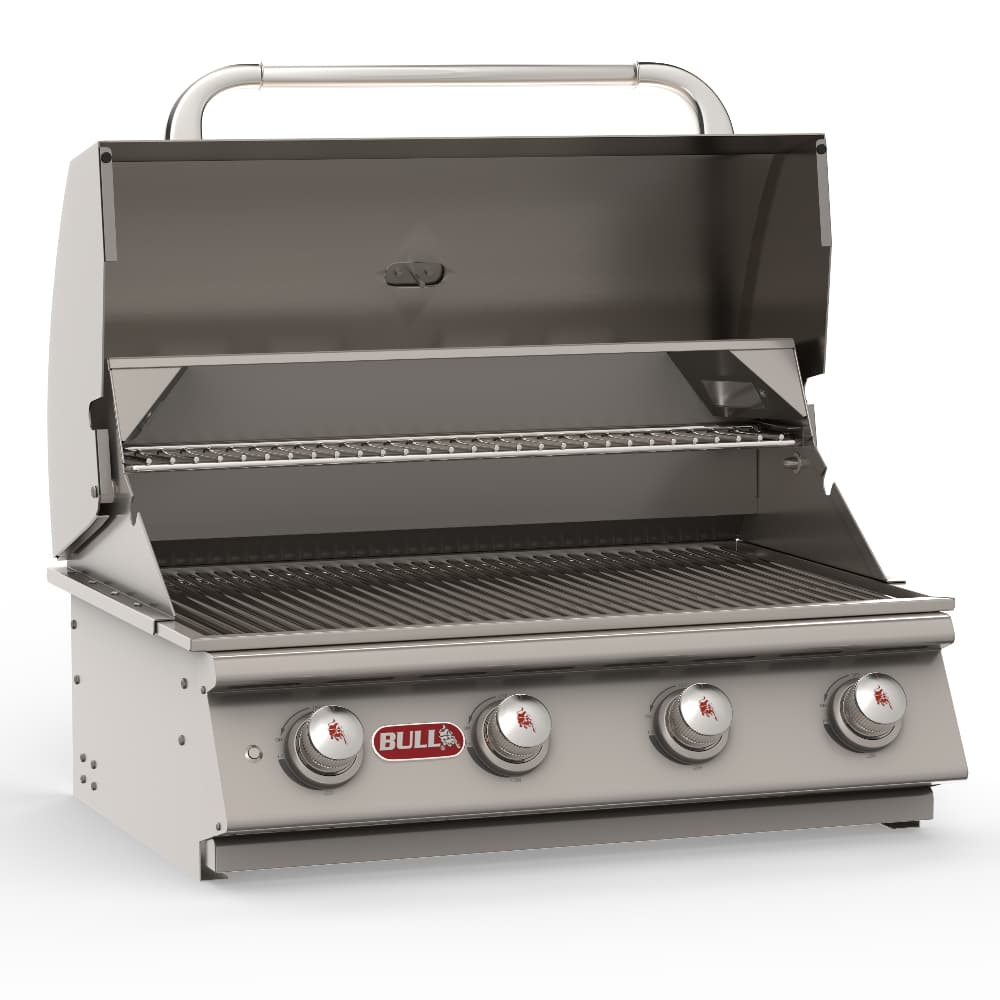
The Bull Steer or Angus cart grills at 24 and 30 inches respectively are our default starting points — same burner engineering as their built-in counterparts, on a cart with side shelves and a propane tank storage. Add a cast-iron griddle plate ($150 to $250 depending on size) and you have the flat-top surface without giving up the grill. If the buyer genuinely wants only the yakitori-and-skewers use case, then a Japanese-made konro is a beautiful, permanent purchase. But most of the search intent here is really for a versatile outdoor cooker, and that’s a grill, not a hibachi.
Frequently Asked Questions
Is a hibachi grill the same as a Japanese grill?+
What's the difference between hibachi and teppanyaki?+
Can you use a hibachi grill indoors?+
What kind of charcoal is best for a hibachi?+
Are hibachi grills worth it?+
What's the best hibachi grill brand?+
What temperature does a hibachi reach?+
How long does binchotan charcoal last?+
Can I cook hibachi indoors?+
What are the best sides for hibachi?+
Hibachi vs kamado — which for a first-time buyer?+
Where do I buy real hibachi charcoal?+
How much does it cost to have a hibachi grill setup at home?+
Is hibachi the same as Korean BBQ?+
Products & brands in this guide
Related reading
Reed — Reed writes the buying guides at BBQs.com — fifteen years selling and installing built-in grills means the picks here are what we'd actually put in our own outdoor kitchen.