Weber Spirit Alternatives: The Built-In and Freestanding Grills Worth Comparing
By Reed · Published August 2026
We sell Bull, Coyote, Hestan, and about a dozen other grill brands. We do not sell Weber. That does not stop people from asking us the same question every week: is the Weber Spirit the right grill, or should I step up? Here is the honest answer from someone who has installed hundreds of both sides. The Spirit is a genuinely good grill for the money and Weber’s customer service is the best in the business. It is also built to a price point that shows the moment you cross-shop it against a Bull Steer, a Coyote C-Series, or a Hestan Aspire. Below is where the Spirit wins, where it loses, and what to buy instead if you are ready to spend a little more.
Who the Weber Spirit Is Actually For
The Weber Spirit II E-310 is a 3-burner freestanding gas grill in the $500 to $700 range. It is Weber’s entry-level line, sitting a step below the Genesis and two steps below the Summit. On a small deck or a townhouse patio it is genuinely hard to beat at that price. The grill lights first time every time, the porcelain-coated cast iron grates hold heat reasonably well, and Weber’s app-based troubleshooting and part-shipping is legitimately the best in the industry. If something breaks, you have a replacement part in three days. Nobody else in the business moves that fast.
The Spirit is the right grill for someone who cooks once or twice a week, wants a name they trust, is not planning to build an outdoor kitchen, and does not want to think about their grill again for 8 to 10 years. That is a real customer and Weber serves them well. If that is you, buy the Spirit and stop reading. This article is for the shopper on the fence — the one who saw the Spirit’s spec sheet, then noticed a Bull or a Coyote at a similar-ish price and is trying to work out what the extra money actually buys.
“The Weber Spirit is a good grill built to a price. The question is whether you want a grill built to a price or a grill built to last twenty years.”
The Spirit’s Real Limits
Three things separate the Spirit from what sits on top of it. First, the body is painted cold-rolled steel with a porcelain lid, not stainless. That looks fine in year one. By year four or five, the paint on the cart legs starts pitting, and if you live within thirty miles of salt water the whole exterior begins to rust. Weber knows this. It is why the Genesis line uses 304 stainless on the exterior — because they had a decade of Spirit warranty claims on cart rust before they figured it out.
Second, burner BTU per square inch of grate. The Spirit II E-310 puts out 30,000 BTU across 424 square inches of primary cooking space. That works out to about 71 BTU per square inch. It is enough to get to searing temperature but the recovery time when you open the lid is slow, and cooking for more than six people at once will expose the ceiling. A Bull Steer 3-burner in the same footprint puts out roughly 84 BTU per square inch. A Coyote C-Series 28-inch, closer to 90. That difference is what you feel when you drop eight burgers on the grill and the temperature does not tank.
Third, warranty terms. Weber’s Spirit warranty is 10 years on the burners, 5 on the grates, 5 on the flavorizer bars, and 5 on the frame. That is fair for the price band but it is short compared to what the premium brands offer. Bull’s Steer warranty is lifetime on burners and grates. Coyote’s C-Series is lifetime on burners, grates, and housing. Hestan is lifetime on essentially everything. If you plan to keep the grill for 15 years, warranty math starts to matter.
Coyote C-Series 28-inch burner density vs Weber Spirit II E-310. The difference is what you feel when eight burgers hit a hot grill and the temperature does not drop.
Bull Steer: The Like-for-Like Alternative
If you like the Spirit’s format — 3-burner freestanding, small enough for a townhouse patio, not built into anything — the Bull Steer is the closest equivalent that is built to a genuinely higher standard. It runs in the $900 to $1,100 range, so roughly $300 to $400 more than a fully-optioned Spirit II. What you get for that extra spend: a real 304 stainless exterior instead of paint, thicker cast stainless burners with a lifetime warranty, heavier cast iron grates with a lifetime warranty, and about 15 percent more BTU per square inch of grate.
The Steer is not a fancy grill. It does not have a rotisserie, it does not have interior lighting, and the assembly is more involved than a Spirit’s — Bull’s carts ship in a bigger box with more hardware. What it is, is the honest upgrade path for someone who wants a Spirit-shaped grill they will not have to replace in 8 years. In an oceanfront market like Florida or the Carolinas we recommend the Steer over the Spirit almost every time for exactly that reason.
Coyote C-Series 28″: The Step-Up That Changes the Category
Once you are willing to spend north of $1,500 the conversation stops being about the Spirit at all. The Coyote C-Series 28-inch is a fundamentally different grill. Full 304 stainless construction inside and out. Ceramic infrared searing burner option. Heavy stainless cooking grates that are dishwasher safe. Lifetime warranty on the burners and grates. Built in the United States.
The C-Series is available as a built-in for outdoor kitchen islands or on a matching Coyote cart for freestanding use. On a cart it runs roughly $2,400. Built-in, about $2,000. That is three to four times the price of a Spirit and the honest answer is you are not getting three to four times the cooking. What you are getting is a grill that will still look and cook like new in year 20, when the Spirit is on its third set of burners and its second replacement cart. If you plan to stay in your house that long, Coyote math works out. If you are planning to move in three years, the Spirit is the right call.
If a real outdoor kitchen is on the horizon, the Bull built-ins are the honest step up from a freestanding Spirit — see the full lineup.
Hestan Aspire: When Budget Flexes
The Hestan Aspire is the premium alternative for a shopper who has decided the Spirit is not enough grill and wants the nicest thing in the category without going full commercial. The Aspire 30-inch runs in the $3,500 to $4,500 range on a cart. Every burner is a proprietary Diamond Cut design that puts out more even heat than any tube burner we have tested. The grates are heavy square-bar stainless. The lid is 20-gauge 304 stainless with dual walls. Warranty is lifetime on essentially everything.
The Aspire is not a grill you cross-shop with a Weber Spirit. It is a grill you buy when you have already talked yourself out of the Spirit, looked at the Bull Steer, looked at the Coyote C-Series, and decided you want the best example of the category. If that is where you have landed, the Aspire is the answer. It is also the grill that will still be worth real money on the used market in 15 years — the only one on this list where that is genuinely true.
Built-In vs Freestanding: The Trade Spirit Shoppers Miss
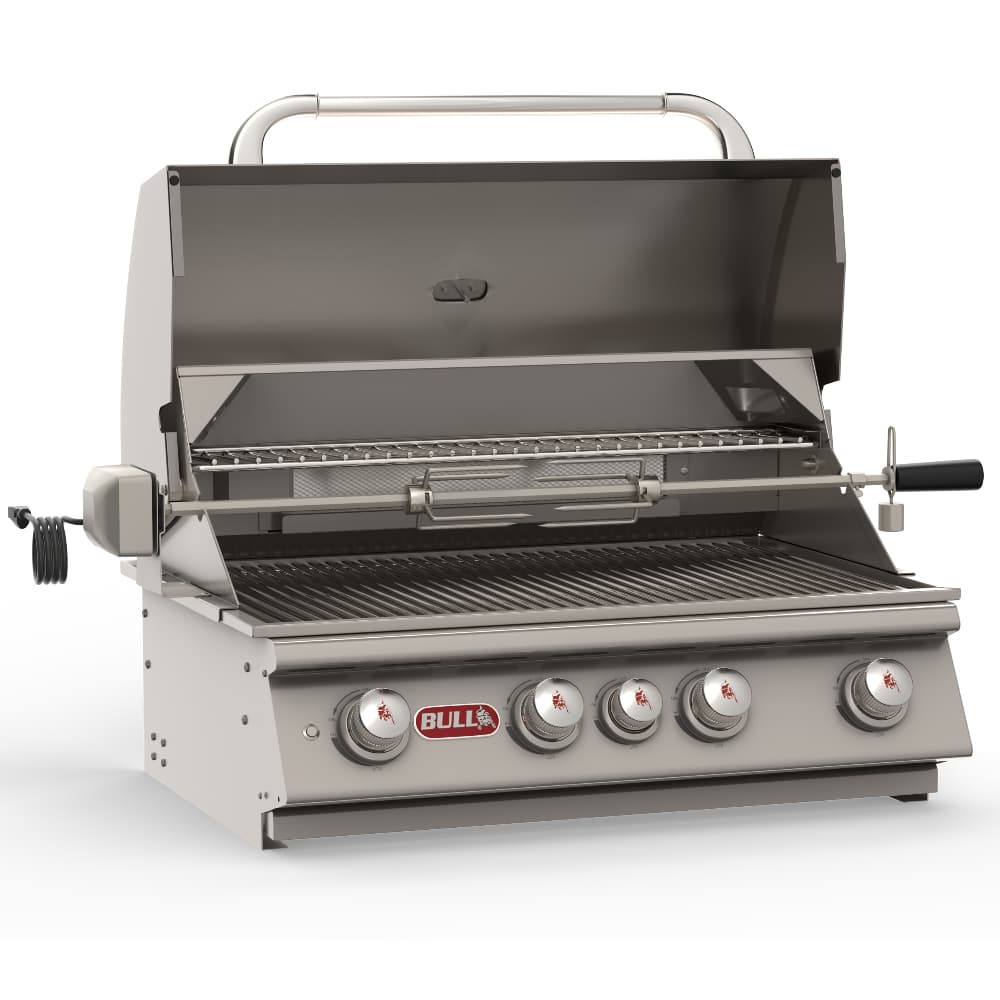
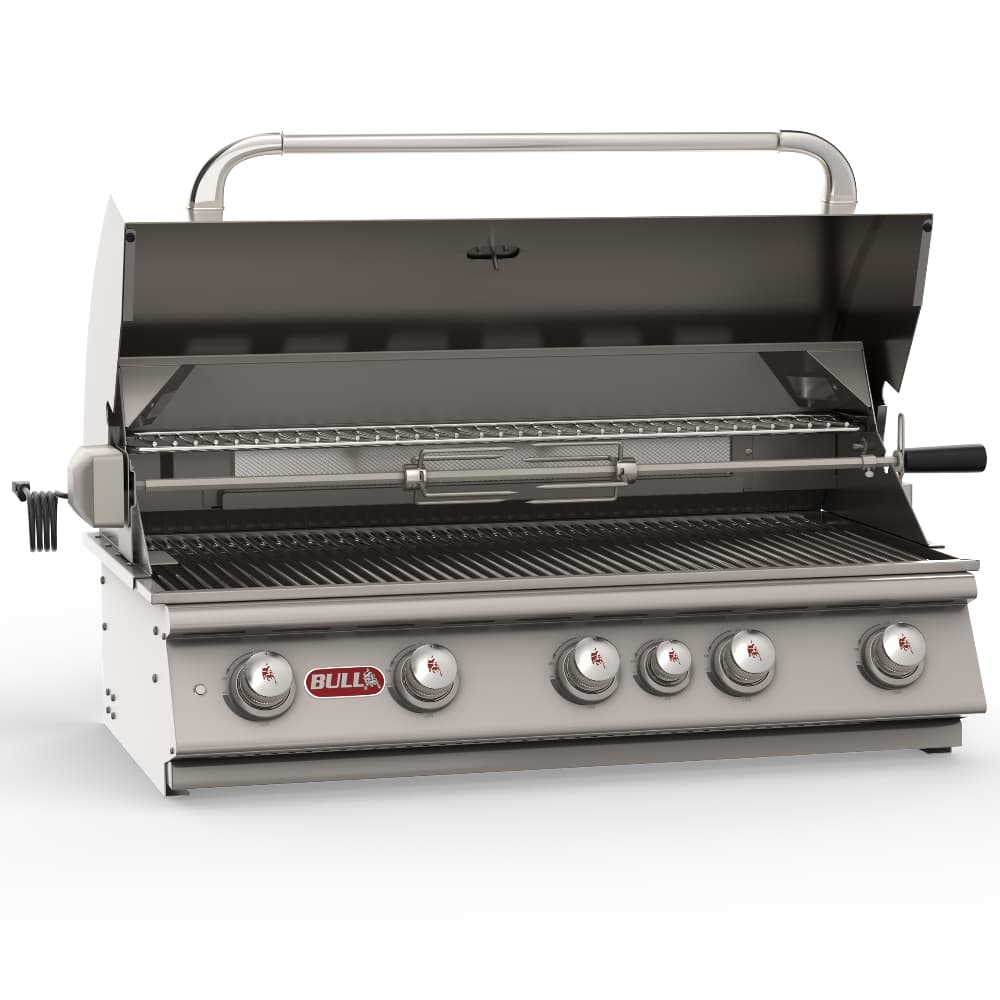
Most Spirit shoppers never seriously consider a built-in. That is a mistake for a specific segment of them. If you are already planning to pour a concrete pad, build a stone island, or run a gas line to a new patio location, the price gap between a freestanding Spirit and a comparable built-in Bull Angus or Coyote C-Series is much smaller than it looks on paper. You are already spending on the island. The grill drop-in is the cheap part.
Built-in also adds real resale value to a home in a way that a rolling gas cart does not. A finished outdoor kitchen with a Bull or Coyote built-in shows well in listing photos and contributes to a buyer’s willingness to pay. A Weber Spirit on a cart is treated as furniture that leaves with the seller. If you own the home and plan to stay, the built-in path is often the right one. If you rent, or you plan to sell inside three years, stay freestanding and let the Spirit be the Spirit.
The Verdict
Buy the Weber Spirit if you want a solid mid-tier grill from a brand with the best customer service in the industry, you cook once a week, and you are not building a permanent outdoor kitchen. It will serve you well for 8 to 10 years and you will not regret the money. Buy the Bull Steer instead if you want the same shape and format but built out of real stainless with lifetime burners and grates. Step up to the Coyote C-Series if you want a grill you will still be using in year 20. Go Hestan Aspire if you have decided you want the best example of the category and budget is not the constraint.
The one honest thing we tell every shopper on this decision: the Spirit is a good grill. It is not a bad choice. It is just built to a price point, and if you have the budget to spend $400 to $1,000 more, you will get a materially better grill. That extra money buys stainless steel instead of paint, cast iron and cast stainless burners with lifetime warranties instead of tube burners with 10-year coverage, and a grill that will still look new when a Spirit would be looking tired. That is the trade. There is no wrong answer.
Frequently Asked Questions
Is the Weber Spirit worth it?+
What’s better than the Spirit at $600-800?+
Bull Steer vs Weber Spirit?+
Should I get built-in instead?+
How long does the Weber Spirit actually last?+
Weber Spirit warranty vs the alternatives?+
Coyote C-Series vs Weber Spirit?+
Products & brands in this guide
Related reading
Reed — Reed writes the buying guides at BBQs.com — fifteen years selling and installing built-in grills means the picks here are what we'd actually put in our own outdoor kitchen.