Weber Genesis vs Spirit vs Summit: The Complete 2026 Lineup
By Reed · Published October 2026 · Updated October 2026
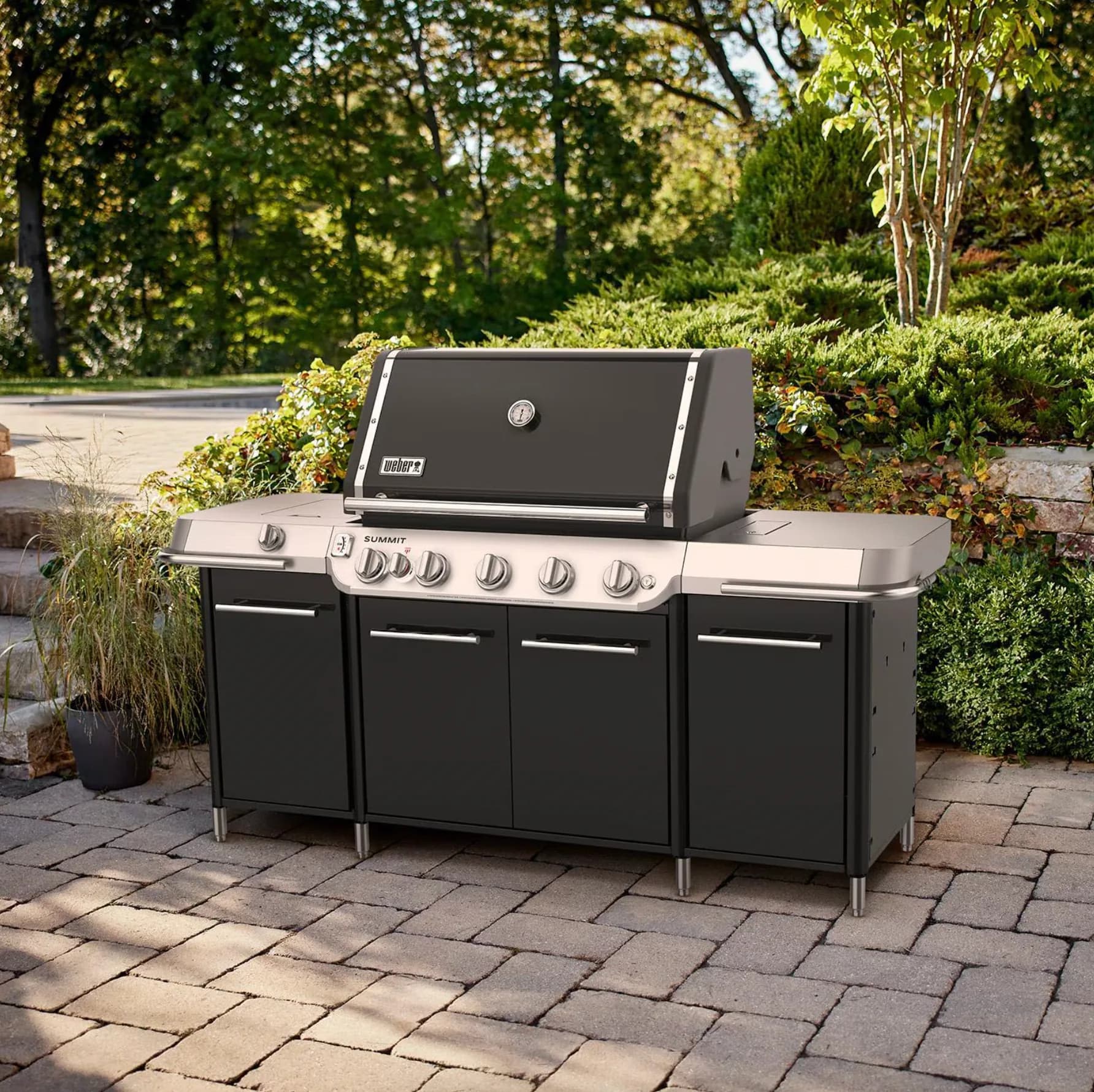
Updated October 2026. Weber's three gas tiers map cleanly to three buyers: first grill, family sweet spot, and serious entertainer. The confusion is in the model numbers — Spirit E-310 vs E-325, Genesis E-315 vs EX-335, Summit FS38 vs GC38 vs FS38X. This guide picks the right one for the way you actually cook, with real BTU-per-sq-in math, the full warranty-by-tier breakdown, and the one spec most buyers miss.
The 60-Second Answer
Spirit E-310 at $499 for a first grill or a small patio — 3 burners, 529 sq in cook surface, GS4 burner system, 10-year full-grill warranty. Genesis EX-335 at $1,349 for the sweet-spot family grill — 3 burners plus a dedicated sear burner, side burner, Weber Connect smart platform, and the upgraded cart. Summit FS38 at $3,899 for the serious entertainer — 6 burners, 10,600-BTU sear burner, side burner, rotisserie motor and spit as standard equipment, premium stainless. Three price tiers, three real buyers, no overlap.
Why This Guide Exists
Walk into any big-box store and you’ll see six Weber gas grills on the floor with price tags from $449 to $829. The dealer floor won’t show you Genesis above that. The flagship Summit tier — $3,899 to $5,299 — ships almost entirely through specialty dealers like us. Buyers end up researching Weber tiers without ever seeing them side-by-side.
The Spirit floor display is honest about what Spirit is: a reliable, entry-tier gas grill. It doesn’t tell you the Genesis EX-335 for $850 more adds a sear burner, side burner, and Weber Connect — three features the Spirit E-435 at the same burner count doesn’t touch. And it doesn’t tell you the Summit FS38 exists at all.
We sell every Weber tier. Here’s the honest breakdown of what each one is for in 2026 — model-by-model, with real stocked SKUs, real pricing, and the spec table nobody else publishes.
The Spec Table — All Three Tiers Side By Side
This is the table buyers ask for and almost never see printed. Every number here comes from Weber’s current 2026 spec sheets for the mid-size configuration in each tier (3-burner Spirit, 3-burner Genesis, 6-burner Summit) — the comparison most useful for a buyer sizing one grill up to the next.
| Spec | Spirit E-310 | Genesis EX-335 (Sx-335) | Summit FS38 |
|---|---|---|---|
| Price (October 2026) | $499 | $1,349-$1,399 | $3,899-$3,999 |
| Main burners | 3 | 3 + sear burner | 6 + sear burner |
| Main burner BTU/hr | 30,000 | 39,000 + 9,000 sear | 60,000 + 10,600 sear |
| Side burner | No | Yes, 12,000 BTU | Yes, 10,600 BTU |
| Main cook surface | 424 sq in | 513 sq in | 708 sq in |
| BTU per sq in (main) | 70.8 | 76.0 | 84.7 |
| Total cook (main + warming) | 529 sq in | 669 sq in | 924 sq in |
| Grate material | Porcelain-enameled cast iron | Porcelain-enameled cast iron | Stainless steel (9mm bars) |
| Flavorizer bars | Porcelain-enameled steel | Porcelain-enameled steel | Stainless steel |
| Rotisserie | Not included (add-on) | Not included (add-on) | Included (motor + spit) |
| Smart platform | iGrill compatible | Weber Connect built-in | Weber Connect (FS38X only) |
| Ignition | Electronic Crossover | Electronic Snap-Jet (per burner) | Snap-Jet (per burner) |
| Warranty — all components | 10 years | 10 years | 10 years |
| Assembled weight | 115 lb | 185 lb | 297 lb |
The three numbers worth reading twice: BTU per sq in (how hot the grill actually gets in practice), rotisserie included vs add-on (a $150 upgrade on Genesis, standard on Summit), and assembled weight (the single best proxy for build quality on a gas grill — Summit is 2.6x the Spirit).
Spirit — The $500 First Grill
Spirit is the right grill for a buyer who hasn’t owned a quality gas grill before and wants to know what the fuss is about. Four configurations are stocked: the Spirit E-210 2-burner for a small patio or balcony ($449), the Spirit E-310 3-burner ($499), the updated Spirit E-325 3-burner with the new chassis ($549-$599), and the 4-burner E-425 and E-435 with side burner ($679-$829).
What Spirit gets right at this price: Weber’s GS4 burner system is the proven heat-distribution design that keeps cooking consistent across the cook box without the hot spots common on competitor entry grills. Porcelain-enameled cast iron grates hold heat well and release stuck food cleanly after a short burn-off. The 10-year warranty on all components — lid, cook box, burners, Flavorizer bars, grates — is unmatched in the sub-$1,000 gas-grill category. The Spirit E-310 at $499 is the best value in the entire Weber line.
What Spirit gives up compared to Genesis: no sear burner on the 2 and 3-burner configurations, lighter cart construction, no built-in side burner except on the top Spirit E-435, no Weber Connect smart platform. If you grill chicken, burgers, and the occasional pork tenderloin on weeknights for a family of four, none of those omissions matter.
One honest downside: Spirit’s cart is lighter than Genesis. Rolling the grill across a textured concrete patio or over paver gaps is noticeably less smooth. If the grill lives in one spot year-round, this is a non-issue. If you move it on and off a covered patio weekly, Genesis feels better.
Genesis — The $900-$1,750 Family Sweet Spot
Genesis is where Weber’s engineering gets interesting. The current 2026 Genesis line covers three sub-tiers: the base Genesis E-315 at $899-$949 (3-burner, no sear, no smart), the Genesis EX-335 smart grill at $1,349-$1,399 (3 burners + sear burner + side burner + Weber Connect), and the 4-burner flagship pair of Genesis E-435 at $1,599-$1,649 and Genesis S-435 stainless at $1,699-$1,749.
The single biggest Genesis-over-Spirit upgrade is the dedicated sear burner on EX-335, E-435, and S-435. Rated at 9,000-13,000 BTU depending on model, it’s a high-density infrared-style burner behind the right side of the cook grate that lets you crust a ribeye at 650°F while the main burners stay at a lower finishing temperature. If you cook steak more than twice a month, the sear burner is a real quality-of-life upgrade — not a marketing feature.
The Weber Connect smart platform on EX-335 adds multi-point meat probes, cook-progress alerts, finishing-time predictions, and remote temp monitoring from your phone. The hardware under the hood is otherwise close to the E-315. If you’re a hands-off cook or do a lot of smoke / low-and-slow pork shoulders and briskets, EX-335 earns its $450 upcharge over the base E-315. If you cook by eye and don’t trust phone-based temperature probes, the E-315 at $899 does the same meat.
For buyers choosing between Genesis and Spirit, we gave a longer breakdown in our Weber Spirit vs Genesis guide — short version: Genesis if you entertain more than twice a month and want the sear burner, Spirit if the budget is tight and the sear burner is a nice-to-have.
In my experience selling Weber for 15 years, the mistake buyers make at this tier is skipping Genesis because the Spirit E-435 at $829 looks like it has similar features at a lower price. The Spirit E-435 has a side burner but no sear burner, no Weber Connect, and the lighter Spirit cart. If any of those three Genesis features matter to how you actually cook, don’t compromise down to Spirit — the Genesis EX-335 at $1,349 is a different grill.
Summit — The $3,900-$5,300 Serious Entertainer
Summit is the honest flagship. Six configurations are stocked for 2026: the freestanding Summit FS38 E ($3,899), the stainless Summit FS38 S ($3,999), the built-in Summit SB38 S for outdoor kitchens ($4,399), the Summit GC38 grill centers with side-cabinet storage ($4,899-$4,999), and the Wi-Fi-connected Summit Smart FS38X S flagship ($5,199-$5,299).
Every Summit ships with a dedicated rotisserie system (motor, spit rod, forks), a 10,600-BTU sear burner, a 10,600-BTU side burner, and 9mm stainless steel cooking grates — the thickest grate stock in the Weber line. The main burner tubes are heavy-gauge stainless, the Flavorizer bars are stainless (not porcelain-enameled steel), and the cook box is stainless-clad. Summit is the only Weber tier where the premium build is standard, not an upgrade.
The 708 sq in main cook surface fits 24 burgers at a cookout or two whole brisket flats side-by-side for a Saturday smoke. The 924 sq in total with the warming rack handles sides and finishing. The rotisserie takes a 20-lb turkey or a whole prime rib without reconfiguring. This is a grill designed for a buyer who hosts 10-plus people at a time, not just a bigger Genesis.
Where Summit stops being worth it: if you’re a weeknight-grill family of four, Summit is 2.9x the price of Genesis EX-335 for cooking you don’t do. The sweet spot for Summit is the household running one or two big cookouts a month plus regular weekend grilling for 6-8. For a family of three cooking burgers twice a week, Genesis is the right call.
The built-in Summit SB38 S deserves separate mention. If you’re planning an outdoor kitchen island, the SB38 is Weber’s first serious built-in offering at this feature level — stainless construction, flush-mount design, rotisserie included. It competes directly with the entry-tier Hestan, Coyote, and Lynx built-ins at a lower price. We cover the stainless-grade decision in our 304 vs 430 stainless steel guide — short version: Summit uses 304 stainless on the Flavorizer bars and 9mm grates, which is the right grade for a built-in that lives outside year-round.
Which Weber Should You Actually Buy — The Real Decision Tree
Here’s the picking logic we walk buyers through on the showroom floor, condensed.
Pick Spirit E-310 at $499 if: this is your first quality gas grill, you cook for 4 or fewer, your patio is tight, and the sear burner is a nice-to-have not a need-to-have. 90% of first-time Weber buyers belong here.
Pick Spirit E-435 at $829 if: you want a 4-burner Spirit with the side burner but can’t stretch to Genesis. The side burner is useful for sauces, sides, and boiling corn without going inside.
Pick Genesis E-315 at $899 if: you want the Genesis cart and build quality but don’t need the sear burner or Weber Connect. The cleanest Genesis buy for traditionalists.
Pick Genesis EX-335 at $1,349 if: you cook steak monthly, you want the smart-grilling probe system, and you entertain 6-8 regularly. The best overall Weber for the average serious home cook.
Pick Genesis E-435 or S-435 at $1,599-$1,749 if: you need a 4-burner Genesis with the sear + side burner, usually because you’re cooking for 8-10 regularly or want the extra real estate for finishing + resting zones.
Pick Summit FS38 at $3,899 if: you host 10-plus people monthly, you want the rotisserie as standard, and you cook enough on the grill that the 6-burner cook box and premium stainless construction earn out over 10 years.
Pick Summit Smart FS38X at $5,199 if: you want the Summit FS38 feature set plus Wi-Fi connectivity, remote temperature monitoring, and the Weber Connect app ecosystem on the flagship platform.
Pick Summit Kamado S6 at $2,399 if: you want ceramic charcoal cooking at the Weber quality level — different cooking category entirely, not a gas Summit replacement. Great for low-and-slow smoke and 750°F+ pizza.
The Information Nobody Else Publishes
Three things we see every Weber comparison get wrong online, worth correcting here.
The warranty is actually 10 years on everything now. Older Weber guides still cite the historical breakdown — 10 years on lid and cook box, 5 years on burners, 5 years on grates, 2 years on igniters. Weber unified the warranty to 10 years on all components (lid, cook box, burners, Flavorizer bars, grates, igniter, enamel) across current Spirit, Genesis, and Summit as of model year 2024. If a comparison tells you Spirit burners are only covered for 5 years, that comparison is at least two years out of date.
BTU alone is useless — BTU per sq in is the real spec. Weber Spirit at 30,000 BTU over 424 sq in main grate = 70.8 BTU per sq in. Weber Genesis EX-335 at 39,000 BTU over 513 sq in main = 76.0 BTU per sq in. Weber Summit FS38 at 60,000 BTU over 708 sq in main = 84.7 BTU per sq in. Target 70-plus for weeknight grilling, 80-plus for high-heat searing. Competitor grills marketing 60,000-plus BTU on 300-sq-in grates (200 BTU per sq in) are not better — they’re just overburning.
Weber doesn’t do field fuel conversions, and never has. The natural-gas and propane versions of every Spirit, Genesis, and Summit model are different factory SKUs. Order the fuel type you want at purchase. Converting after shipment voids the warranty and isn’t supported by Weber at any price. Check your gas line before ordering.
What To Buy With Your Weber
Three accessories pay for themselves inside the first year of ownership. First, a fitted Weber Premium Grill Cover — $89 for Spirit, $99 for Genesis, $119 for Summit. The cover is the single biggest variable in Weber longevity. Second, a Weber iGrill or Weber Connect probe set — if you have anything but a Summit Smart or Genesis EX-335 (which include it), add the probe system for $40-$80. The jump in cooking accuracy on anything over 15 minutes is substantial. Third, replacement Flavorizer bars every 4-5 years for Spirit and Genesis (stainless upgrade available), every 7-8 years for Summit stainless. Expect $55-$80.
Browse the full lineup — Spirit, Genesis, Summit, and Summit Kamado — on our Weber brand hub, or compare against the full carried range of 3-burner, 4-burner, and 6-burner grills on freestanding gas grills. If you’re cross-shopping Weber against Bull, Napoleon, and Coyote at the mid-tier, the best natural gas grills 2026 guide is the right next read.
Honest Downsides Across The Lineup
Weber Genesis and Summit premium configurations (S-435, EX-335, FS38, FS38X) are MAP-locked by Weber. Expect no serious discounting outside the Memorial Day, July 4th, Labor Day, and Black Friday sales windows. If you’re not in a rush, waiting for a holiday sales window saves $150 to $500 at the Summit tier.
Weber’s parts pipeline for 10-plus-year-old Genesis I and Spirit II models is thinning. If you’re buying a used older Weber on Craigslist, confirm the specific replacement burner, Flavorizer bar, and igniter kit for your model is still stocked before investing in a restoration. Current Spirit (300-series, 2022-plus) and Genesis (300-series + 400-series, 2022-plus) parts are abundant and will be for at least a decade.
Weber’s customer service is the strongest in the gas-grill category, but hold times during peak grilling season (April through June) run 20-40 minutes. If you have a warranty claim, file it off-season — November through February — if possible.
What To Confirm Before You Order
Confirm your fuel type (NG vs LP) and verify your gas line pressure. Not field-convertible. Confirm whether you need the sear burner (EX-335, E-435, S-435, FS38, FS38X) or the Weber Connect smart platform (EX-335, FS38X) — both are real upgrades at their respective tiers, but neither is necessary for a casual weeknight cook. Order the fitted Weber cover with the grill, not later. Register the warranty within 30 days of delivery to lock in the 10-year coverage window.
Frequently Asked Questions
Which Weber grill should I buy?+
What's the actual difference between Weber Spirit, Genesis, and Summit in 2026?+
Is the Weber Summit worth the price over a Genesis?+
Weber Spirit E-310 vs E-325 — what's the difference?+
Does the Weber Summit still exist as a gas grill in 2026?+
How long does a Weber grill last?+
Can I convert a Weber grill between natural gas and propane?+
Products & brands in this guide
Related reading
Reed — Reed writes the buying guides at BBQs.com — fifteen years selling and installing built-in grills means the picks here are what we'd actually put in our own outdoor kitchen.