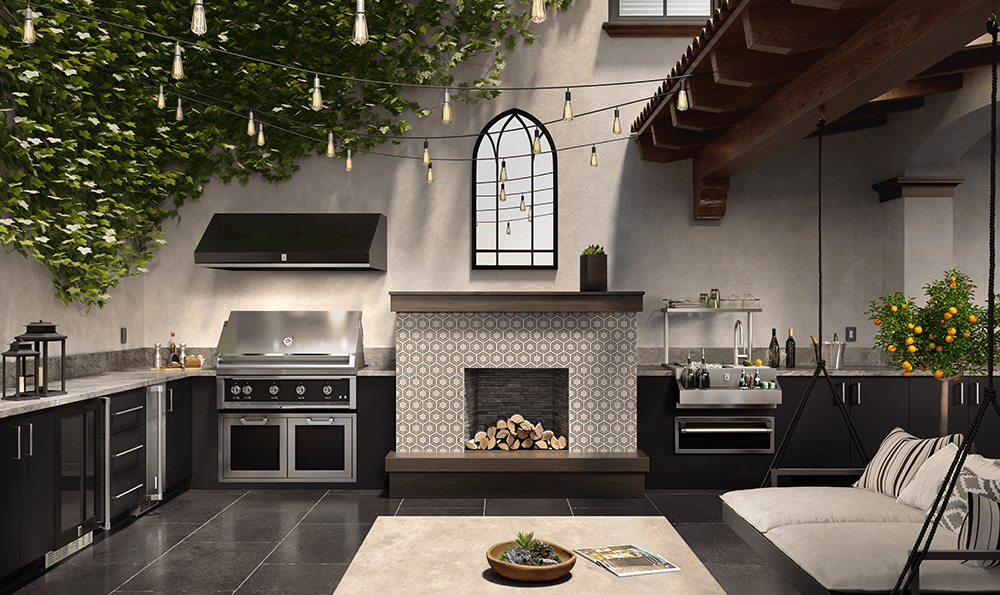
The Best Natural Gas Grills of 2026
By Reed · Published September 2026

Ten years of specifying and installing natural gas grills has narrowed our recommendation list to eight. These are the picks that hold up under real use — coastal humidity, freeze-thaw winters, weekly cook cycles, families cooking on them for a decade. Ranked by price tier, with honest trade-offs and where each one lands versus the alternatives.
How to Pick a Natural Gas Grill in Three Steps
Before you compare brands, decide three things: size (30, 32, 36, or 42-inch based on how many people you cook for), install type (built-in dropped into a masonry chase or freestanding on a cart), and fuel commit (natural gas needs a plumbed line to your house; propane runs off a portable 20-lb tank). Everything else — burner count, BTU rating, finish tier — follows from those three.
For most families cooking two to four times a week, a 30 or 32-inch four-burner in the $1,500 to $3,000 range hits the sweet spot. Below $1,500 you compromise on stainless grade and burner longevity. Above $5,000 you’re paying for craftsmanship, aesthetics, and warranty length — cooking performance is essentially flat from $3,000 to $10,000 on any respectable brand.
Entry Tier ($800–$1,800): Weber Genesis + AOG T-Series
Weber Genesis SX-435 is the default recommendation for anyone who wants a solid gas grill without stepping into premium outdoor-kitchen territory. Four burners at 39,000 total BTU, iGrill 3 smart thermometer integration built in, sear zone burner, cast-iron grates. Aluminum and stainless construction with a 10-year lid and firebox warranty. About $1,600 on cart, $1,300 for the tabletop version. Cooks two families a decade of weekly meals without complaint. The reason Weber owns the mainstream: real-world reliability across millions of installs.
American Outdoor Grill (AOG) T-Series 30-inch is the step-up option for shoppers who want full 304 stainless without paying Bull or Hestan prices. Three cast-brass burners at 45,000 BTU total, rotisserie burner, interior halogen lights, warming rack. Built in California by the same company that owns Fire Magic (RH Peterson). Lifetime warranty on burners and cooking chamber. About $1,700 for the built-in version. Practically identical to a Bull Angus at the burner-and-chassis level — the delta is accessory ecosystem and outdoor-kitchen integration.
Mid Premium ($2,700–$4,500): Bull Angus, Summerset Sizzler Pro, Coyote C-Series, Aspire
This is where the majority of considered outdoor-kitchen buyers land. All four grills below are 304 stainless throughout, all four carry lifetime burner warranties, all four cook at high heat with proper heat retention. The differences are meaningful but not enormous — you buy based on the brand ecosystem you want your full kitchen matched to.
Bull BBQ Angus 30-inchat around $3,000 is our most-recommended pick in this band. Four 15,000-BTU stainless burners with a rear infrared burner for rotisserie cooking, cast-brass valves, full-width warming rack, backlit LED controls. Bull’s outdoor-kitchen integration is the deepest in the market — matched refrigeration, storage, side burners, and accessories all in the same 304 stainless finish language. If you’re planning a full outdoor kitchen build, Bull is the easiest single-brand spec.
Summerset Sizzler Pro 32-inchat around $3,000 is the value alternative to Bull. Full 304 stainless from firebox to hood, spring-assisted hood, blue LED interior lighting, upgraded 14,000-BTU burners for 56,000 total. Southern California manufacturing means 1-3 week lead times and faster warranty parts. If Bull’s brand doesn’t matter to you and the outdoor kitchen is Summerset-spec throughout, this is the pick.
Coyote C-Series 36-inchat around $3,700 steps up with ceramic infrared sear zone (one of the few grills at this price that includes it), interior halogen lights, and a slightly heavier hood weight than Bull or Summerset. Made in the USA at Coyote’s facility. Coyote’s outdoor kitchen line is narrower than Bull’s (fewer refrigeration options in particular) but the grill itself is best-in-class at this price point for shoppers who prioritize the infrared sear.
Hestan Aspire EB36at around $4,500 is Hestan build quality at Aspire pricing. Same welded 304 stainless as the Hestan Deluxe (from the same California plant), same infrared rotisserie as standard, same 12-year warranty on the burners. The Aspire line trades the Deluxe’s 12-color painted finish for polished stainless only — meaningful $3,500 savings for buyers who don’t need the color options. Best-in-class metallurgy at this price point.
Top Tier ($5,000+): Bull Brahma, Hestan Deluxe
Above $5,000 you’re paying for handcraft, aesthetic customization, and warranty length. Cooking performance is essentially flat versus the mid-premium tier — a $5,000 grill and a $10,000 grill will both sear a steak identically. What differs is finish coherence, dealer network, and how long the warranty runs.
Bull BBQ Brahma 38-inchat around $4,200 is Bull’s flagship — five 15,000-BTU stainless burners, rear infrared rotisserie burner, dual halogen interior lighting, double-walled hood for heat retention. Full 304 stainless throughout, lifetime warranty on burners and firebox. It reads as a step above the Angus in construction weight and finish tier while staying in Bull’s outdoor-kitchen ecosystem — the same matched refrigeration, storage, and side burners drop in without brand mixing.
Hestan Deluxe GBR36 starts at $8,000 for the base stainless configuration and runs to $12,000+ in the 12 painted finishes Hestan offers (Prince, Tin Roof, Grove, etc.). Marine-grade 304 stainless, 12-year warranty across every part, cast-brass burners, dual-fuel infrared rotisserie. This is the top of the residential outdoor grill market — everything else at this price (over $10k) is either commercial-grade for restaurants or vanity-tier import (Rösle, Alfresco top-line).
Where to Skip: Grills We Don’t Recommend
Any four-burner grill under $600 uses aluminum or 430 stainless in structural areas — five-year replacement cycle at best. Anything with "commercial-style" in the marketing at a residential price point (typical Char-Broil, Kenmore) uses residential-grade construction with commercial-style graphics — durability doesn’t match the pitch. Grills without a US-facing warranty support office (any pure-import brand you can’t reach for a burner replacement) leave you with a five-year lifespan and no help when it fails.
The most common regret we see: buying a $1,200 to $1,500 unbranded grill from a home-improvement store thinking it’ll last as long as a Weber Genesis. It doesn’t — Genesis’s material and burner engineering are 5+ years ahead of anything at that price without the Weber name. Either commit to Weber at $1,600 or step up to AOG / Bull at $1,800-$3,000.
Built-In vs Freestanding: How to Decide
The cooking head is identical between built-in and freestanding versions of every premium grill. Built-in drops into a masonry chase or outdoor-kitchen frame with no cart; freestanding adds a stainless cart with wheels, side shelves, and lower storage. The cart adds $500 to $1,000 to the grill’s price.
Buy built-in if you have (or plan to build) a permanent outdoor kitchen island. Buy freestanding if the grill needs to move around, if you’re renting, or if you’re not committing to an outdoor-kitchen build. If you’re on the fence: the built-in head plus proper cabinetry usually reads better long-term than the freestanding cart, and it holds resale value better on the house.
What to Ask Before You Order
Confirm the cutout dimensionsagainst the manufacturer’s spec sheet — every brand publishes exact cutout width and depth, which are always 1-2 inches smaller than the grill’s outer dimension. Ordering the wrong cutout size is the most common installation mistake we see.
Confirm fuel typeat order. Natural gas and propane variants of the same model are built at the factory — they’re not field-convertible without a $100-$300 conversion kit and a plumber. If your gas line is stubbed in, order NG. If you’re running from a propane tank, order LP.
Confirm vent-hood clearance if the grill is going under any covered structure. Manufacturers publish minimum clearance to combustibles (typically 12-18 inches above the hood, 3-6 inches on the sides) and required insulation-jacket specs. Missing a clearance spec voids the warranty and can fail inspection.
Confirm lead time. Weber ships from stock in most markets. Bull, Summerset, and Coyote ship in 1-3 weeks. Hestan Deluxe in premium colors can run 6-14 weeks. If the outdoor kitchen is on a schedule, order the grill first.
Frequently Asked Questions
What's the best natural gas grill for most people in 2026?+
What size natural gas grill do I need?+
How many BTUs do I need in a natural gas grill?+
Is a Weber Genesis or a Bull Angus better?+
Can I convert a natural gas grill to propane?+
Do I need to run a gas line, or can I use the connection on my house?+
How long should a natural gas grill last?+
What about vent hoods for natural gas grills?+
Products & brands in this guide
Related reading
Reed — Reed writes the buying guides at BBQs.com — fifteen years selling and installing built-in grills means the picks here are what we'd actually put in our own outdoor kitchen.