Is Green Mountain Grills a Good Brand? A Retailer's Honest Take
By Reed · Published August 2026
Yes, Green Mountain Grills is a good brand, particularly for mid-priced WiFi-enabled pellet grills. The Daniel Boone Prime Plus and Trek are legitimately competitive with Traeger and Pit Boss in the $500 to $900 range, and GMG's Sense-Mate thermal control and Server-Mode WiFi are genuine engineering advantages at that price. Where GMG falls short is on the very top end. Build materials, warranty coverage, and long-term service reputation lag behind the premium tier. If you're cross-shopping a $900 GMG Jim Bowie against a $1,500 built-in Bull BBQ head or a $2,000 Coyote, the built-in wins on longevity, materials, and outdoor-kitchen aesthetics. But if the budget is under a grand and you want a pellet cooker that actually holds temp with an app that works, GMG earns the shortlist.
The Short Answer: Yes, With Caveats
Green Mountain Grills is a legitimately good brand for what it is: a mid-tier pellet-grill maker with above-average WiFi implementation, honest temperature control, and a fair price. It is not a premium brand, and it does not pretend to be. The steel is thinner than Coyote or Hestan, the burner and firebox warranties are shorter than the built-in category, and dealer coverage is thinner than Traeger.
For a homeowner who wants a capable smoker under $1,000, a tailgater who needs a portable pellet unit, or a first-time pellet buyer who does not want to spend Traeger Ironwood money, GMG is a smart pick. For someone building an outdoor kitchen or spending $1,500-plus on a cooker they expect to keep for 15 years, it is not the right tool for the job.
“GMG is good enough to earn a spot on your deck, and honest enough to admit it is not the last grill you will ever buy.”
GMG’s Best Products
The Trek Prime Plus is GMG’s portable, and it is the model most people should look at first. Roughly 219 square inches of cooking space, a 12-volt battery option so it runs off a truck outlet, and the same Sense-Mate thermal probe and WiFi as the full-size units. Real price sits in the $500 to $600 range. For tailgates, RV cooking, and camping, it is one of the more thoughtful portable pellet grills on the market.
The Daniel Boone Prime Plus is the volume seller. Around 458 square inches of grate, WiFi-enabled, peak temperature near 500 degrees, and the Prime Plus revision added a stainless lid, more insulation, and improved app stability. This is the model that competes directly with the Traeger Pro 575 and Pit Boss Pro Series, and on spec-for-dollar it holds up well.
The Jim Bowie Prime Plus scales the Daniel Boone up to about 658 square inches, adds a heavier build, and puts you in the $1,000 to $1,300 range. It is a capable large-family or party pellet grill. The Ledge is the newer entry-level model, meant to bring people into the ecosystem without the WiFi tier; it is fine, but the whole reason to buy GMG is the WiFi, so most buyers should step up to Daniel Boone.
The warranty gap is where GMG's mid-tier positioning shows most clearly. A Coyote Infinity Burner will outlast most homeowners; a GMG burner is a scheduled 5-year replacement.
Where GMG Falls Short
Steel gauge. GMG’s cook chambers use thinner stainless and painted steel than premium built-in brands. That is a fair trade at the price, but it shows up as more heat loss in cold weather and a shorter realistic lifespan outdoors uncovered. Rust on lid hinges, hopper lids, and around the pellet auger is a common 3-to-5-year complaint in owner forums.
Warranty. GMG offers a 3-year warranty on most current Prime Plus units. That is competitive with Traeger and Pit Boss, and it is honest for the price. It is not competitive with Coyote’s lifetime burner and cooking-grate warranty or the multi-year firebox coverage you get on premium built-ins. If you expect a cooker to outlast the mortgage, GMG is not that cooker.
Customer service is mixed. Warranty claims through direct-to-consumer channels can be slow, and parts availability for older models has been inconsistent. Buying from an authorized dealer helps a lot; buying from a big-box or marketplace listing puts you on your own.
WiFi reliability. The Server-Mode WiFi and the GMG app are better than they were five years ago, but the controllers still occasionally drop off the network after a firmware update or a router change. If flawless connectivity is a hard requirement, that is worth knowing before you buy.
How GMG Compares to Traeger and Pit Boss
At the $600 to $800 mark, GMG Daniel Boone Prime Plus versus Traeger Pro 575 is the honest matchup. Traeger has the better app, better dealer network, and stronger resale. GMG has slightly better temperature stability out of the box thanks to Sense-Mate, a peak temperature that runs a bit hotter for searing, and a lower street price for the same grate size. It is a real coin toss, and it usually comes down to which one is in stock at your dealer.
At the $500 to $700 mark, GMG versus Pit Boss Pro Series is a different story. Pit Boss undercuts everyone on price and gives you more square inches for the dollar. GMG gives you better fit and finish, a more accurate thermometer, and a more reliable app. For a set-and-forget smoker owner who cares about temperature accuracy, GMG is the better cooker. For a buyer who just wants the biggest pellet grill under $600, Pit Boss usually wins on paper.
GMG does not compete with Traeger Ironwood or Timberline, and it does not try to. Above roughly $1,500 in the freestanding pellet category, Traeger, Weber SmokeFire, and Recteq are the conversation.
When to Buy GMG Anyway
Budget is under $1,000 and WiFi is non-negotiable. Daniel Boone Prime Plus is the answer, full stop. You get real thermal control, a working app, and enough grate to feed six to eight people.
You need a portable. The Trek is one of the best portable pellet grills you can buy. RV, tailgate, deer camp, small patios: this is its lane.
You are a first-time pellet buyer who does not want to commit $1,500. GMG’s price of entry is honest, the learning curve is short, and if you decide two years in that pellet cooking is not for you, you have not overspent.
When to Skip GMG
You are building an outdoor kitchen. Standalone pellet grills, GMG or otherwise, do not belong in a stone or stucco surround. You want a built-in gas grill for the everyday cook, and if you want smoke, a dedicated built-in smoker or a Kamado insert. GMG has no built-in product that fits an outdoor-kitchen island.
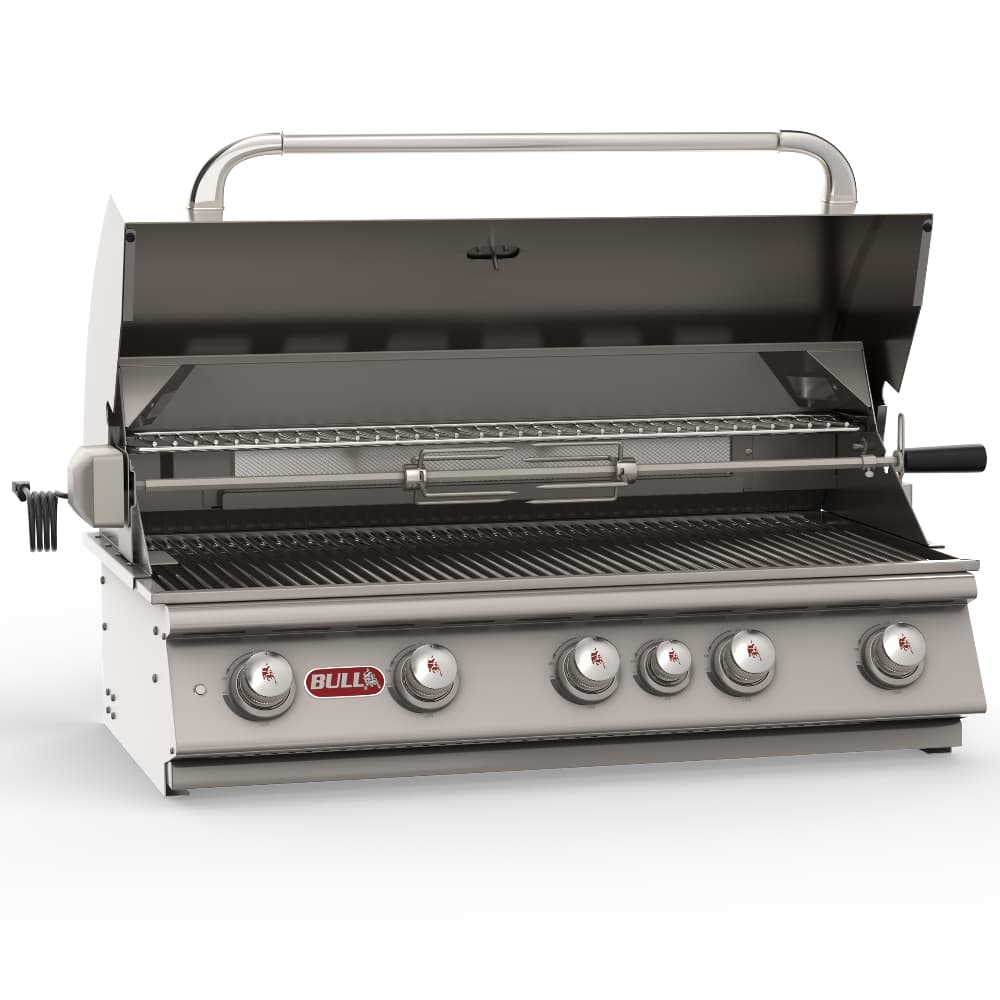
You cook for 10-plus people regularly and want one cooker to do everything. A 36-inch or 42-inch built-in gas grill from Bull BBQ, Coyote, or Hestan will handle volume, searing, and rotisserie in ways no consumer pellet grill can.
You want a cooker your grandkids will use. GMG is a 5-to-10-year cooker with reasonable care. Premium built-ins with stainless burners and lifetime warranties are 20-year cookers. If the plan is once-and-done, spend the money once.
The upgrade path when you've outgrown pellet — real 304 stainless, lifetime burner warranties, built to sit in an island.
The Premium Alternative
When customers outgrow their pellet grill, the pattern is consistent: they want faster searing, a bigger primary cook zone, and a build that lives outdoors uncovered without rusting. That is the built-in gas category, and it is where brands like Bull BBQ, Coyote, Hestan, and Summerset live.
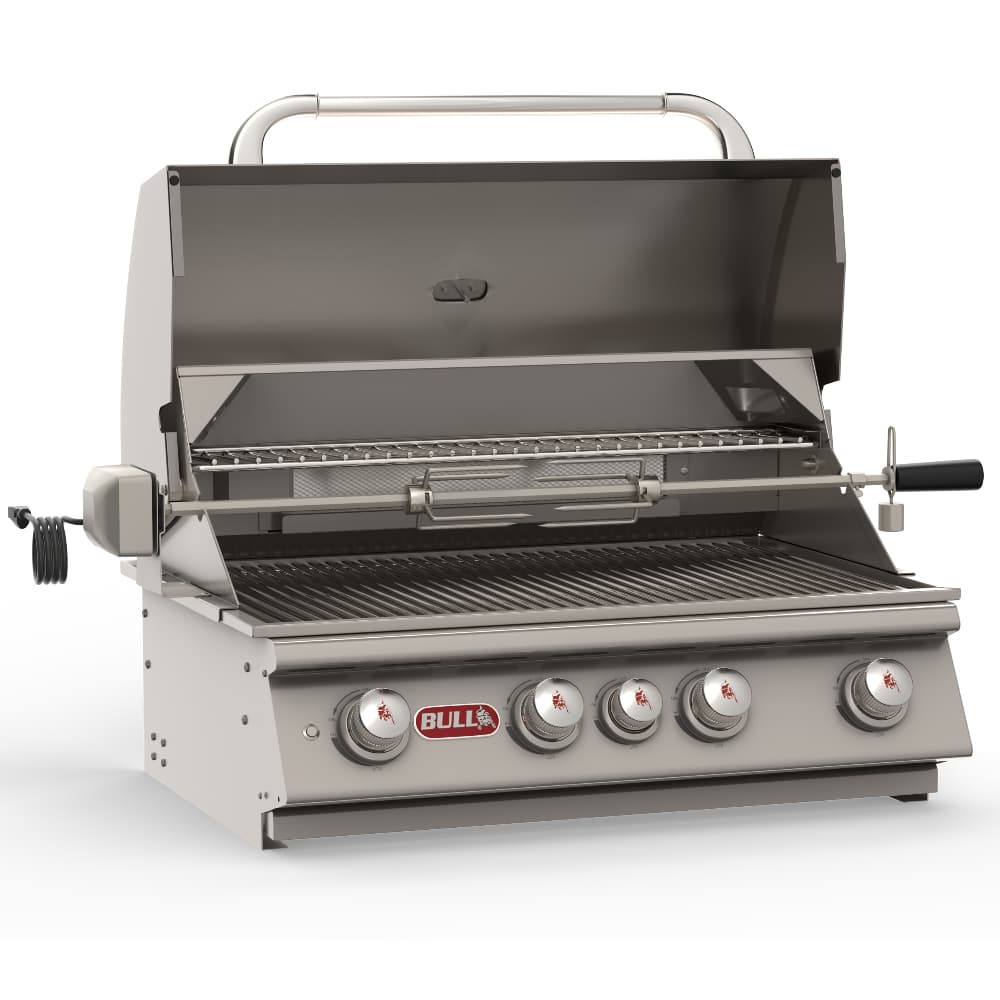
The trade-up story usually looks like this. Keep the pellet grill as the low-and-slow smoker, and add a built-in gas grill as the daily driver. A 30-inch Bull Angus with cast stainless burners runs in the same neighborhood as a Jim Bowie Prime Plus and comes with dramatically heavier construction, a stronger warranty, and the ability to drop into a permanent island. A 28-inch Coyote C-Series carries a lifetime warranty on the Infinity Burner and stainless grates, which is the kind of coverage that changes the math on total cost of ownership.
None of that makes GMG a bad brand. It makes GMG the right cooker for one phase of an outdoor-cooking life, and built-ins the right cooker for the next.
Frequently Asked Questions
What is Green Mountain Grills known for?+
Are Green Mountain Grills American made?+
GMG vs Traeger: which is better?+
What is the best GMG model?+
How long do Green Mountain Grills last?+
How is Green Mountain Grills customer service?+
Can you convert a Green Mountain Grill to natural gas?+
Are the WiFi features on Green Mountain Grills worth it?+
Products & brands in this guide
Related reading
Reed — Reed writes the buying guides at BBQs.com — fifteen years selling and installing built-in grills means the picks here are what we'd actually put in our own outdoor kitchen.