Best Electric Grills of 2026: Honest Picks for Apartments & HOA-Restricted Patios
By Reed · Published August 2026
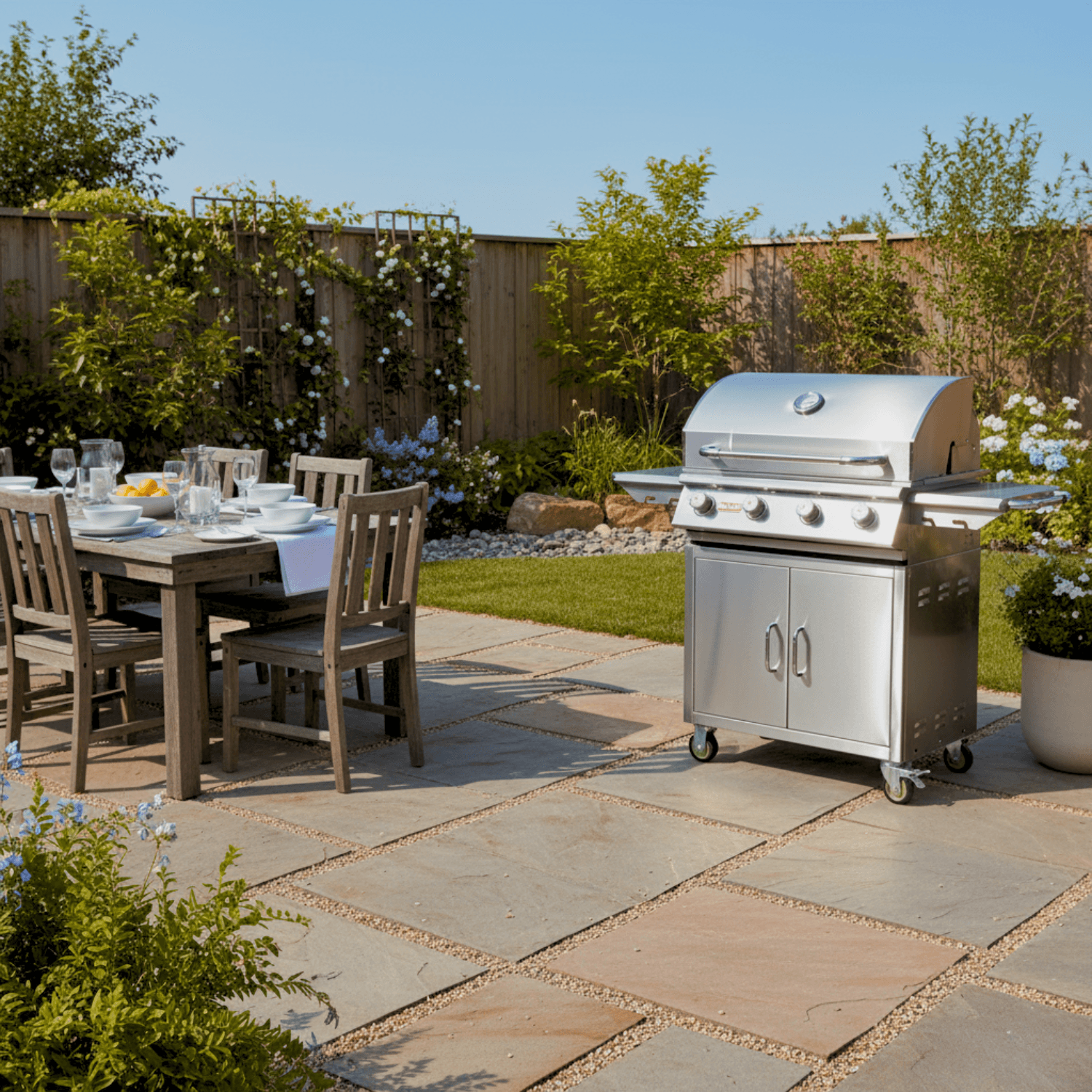
Most people shopping for an electric grill in 2026 are not choosing between propane and electric because they prefer electric. They are choosing electric because their HOA, landlord, or fire code will not let them run gas or charcoal on a balcony or covered patio. That is a real market and it deserves an honest answer. If you want the short version: the Weber Q 2400 is the best all-around electric grill for a condo balcony, the Coyote C1EL120SM is the best premium built-in for a covered outdoor kitchen, and the Kenyon Floridian is the best if you want something weatherproof you can leave outside year round. Below is why, and where each one falls short.
Why an Electric Grill in the First Place
Electric grills are not trying to beat a Weber Genesis or a Coyote S-Series on flavor. They exist because a lot of people literally cannot use fire on their property. Apartment leases, condo bylaws, HOA rules, and municipal fire codes routinely ban propane tanks and charcoal on balconies and inside garages. Some cover charcoal only. Some cover anything with an open flame. Read your rules before you spend a dollar on a grill.
If you are allowed to have a gas grill, get a gas grill. If you are not, an electric grill lets you cook outside, gets you real grill marks, and does not put your lease at risk. That is the trade. Anyone who tells you an electric grill sears like a 25,000 BTU burner is selling you something.
“If your HOA allows propane, buy propane. If it does not, a good electric grill is a real grill, not a consolation prize.”
Top Pick Overall: Weber Q 2400
The Weber Q 2400 is the electric grill we recommend most often, and it is not close. It runs on a standard 120V outlet, pulls 1,560 watts, and gets hot enough to actually mark a steak instead of steaming it gray. The cast aluminum body holds heat well, the porcelain-enameled cast iron grates are the same grates Weber uses on their gas Q line, and the whole thing is small enough to store in a closet during winter.
The catch: no side burner, no rotisserie, and the cord is short enough that most people end up buying a heavy-gauge outdoor extension. Plan for that. If your balcony outlet is more than 6 feet from where the grill will sit, budget another $30 for a proper 12-gauge outdoor cord.
Best for Apartments and Small Balconies
If your balcony is genuinely tiny, the Char-Broil Patio Bistro Electric is the honest pick. It has a pedestal base with a small side shelf, a lid that closes, and a footprint under two square feet. It will not sear like the Weber Q, and the grates are thinner, but it fits where the Weber does not and it is roughly half the price.
For a step down in size again, the George Foreman Indoor/Outdoor works on a table or a stand, splits apart for easy cleaning, and is the only pick here that also legitimately works indoors on a kitchen counter. It is a countertop appliance that happens to have a stand. Treat it that way and it will not disappoint you.
The Weber Q, Coyote, Hestan, and Kenyon electric grills all hit real searing temperature. Cheap electrics top out around 350°F and will steam a steak gray.
Best Premium: Coyote C1EL120SM Electric Built-In
Yes, Coyote makes an electric grill, and no, most people do not know that. The C1EL120SM is a 120V, 1,800-watt built-in electric grill designed to drop into a Coyote outdoor kitchen island right next to a Coyote gas grill, side burner, or refrigerator. Ceramic infrared burner underneath, thick stainless grates on top, full 304 stainless construction.
This is the electric grill for someone building a covered outdoor kitchen on a rooftop condo or a lanai where gas is off the table but the budget is not. Priced in the low four figures. If you are shopping in that range, also look at the Hestan Aspire Electric, which is a similar concept with Hestan’s typical fit and finish. Both are overkill for a balcony. Both are exactly right for a permanent covered outdoor kitchen where gas is not allowed.
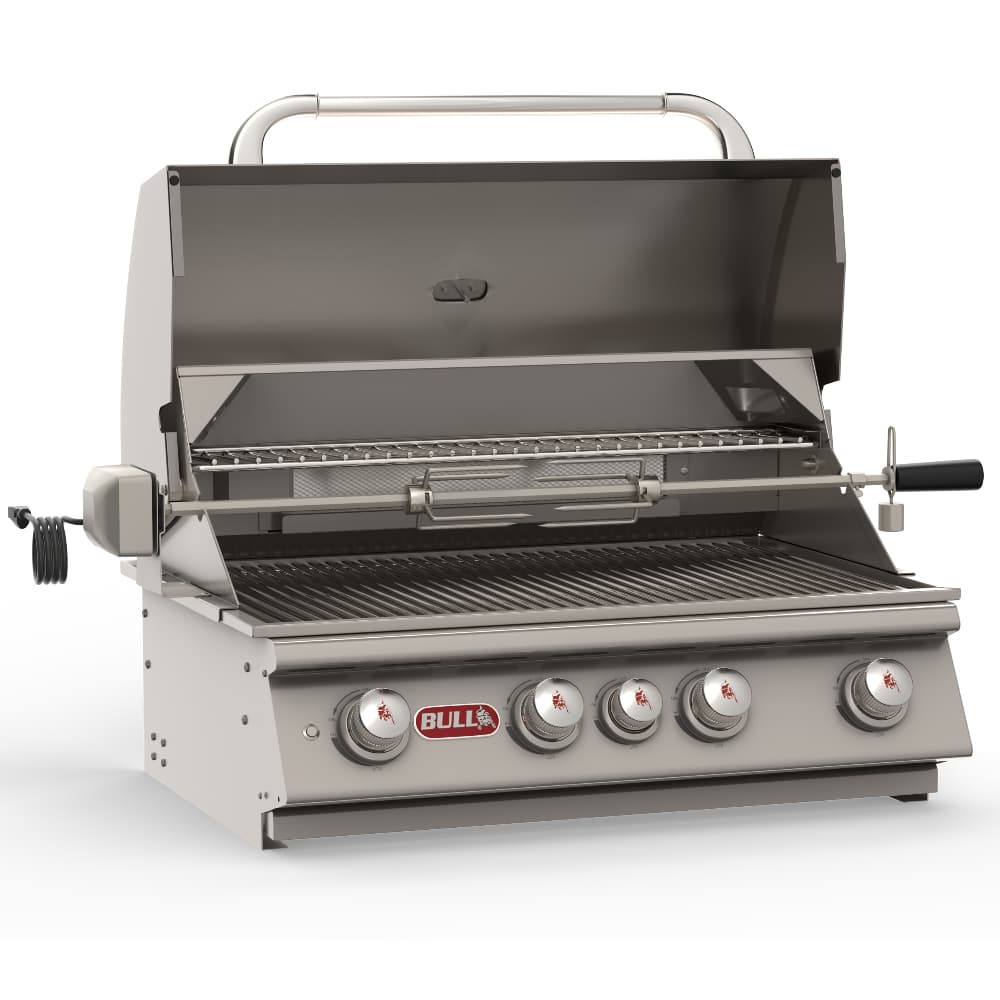
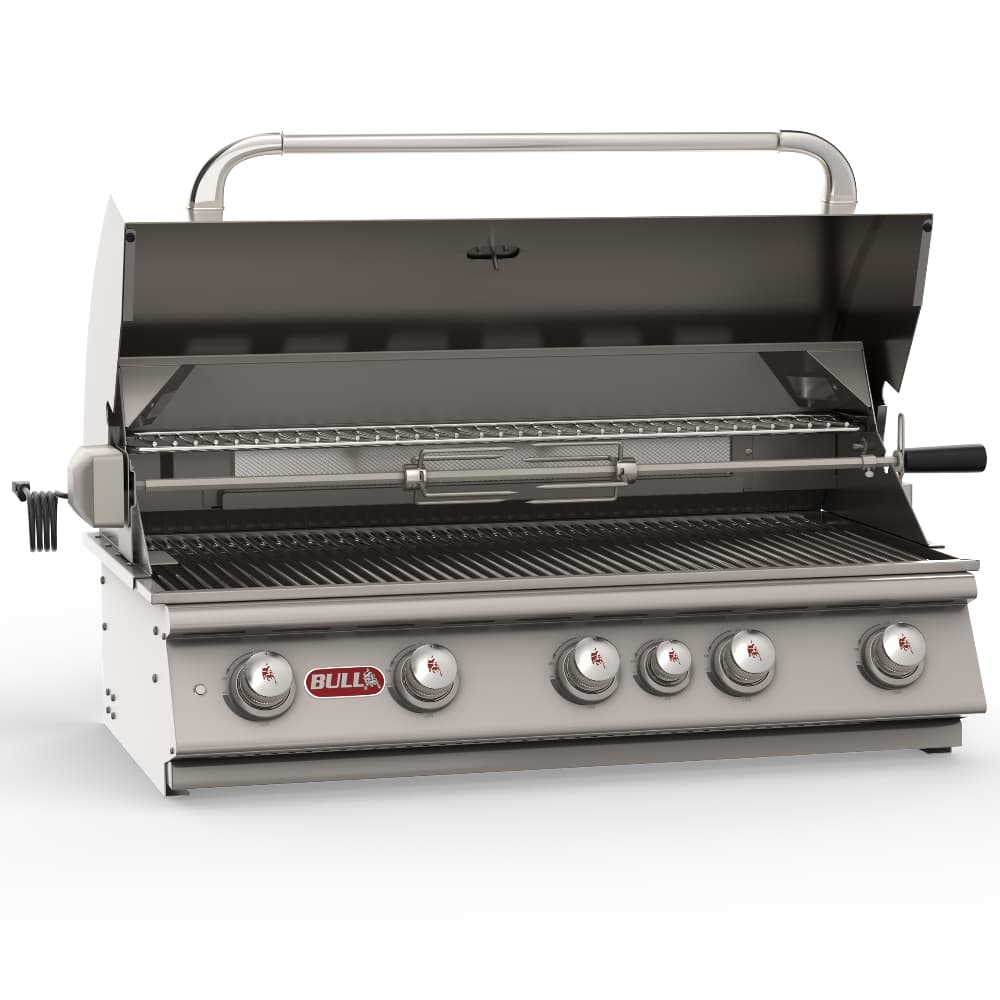
Coyote and Hestan build the premium electric grills that drop into an outdoor kitchen island — see the full lineup here.
Best Weatherproof: Kenyon Floridian
The Kenyon Floridian is the only electric grill on this list built to live outside in salt air and rain without a cover. It is manufactured in Connecticut, uses a fully sealed 1,300-watt element, and the entire unit is dishwasher safe once the element is removed. Boaters buy it for exactly this reason.
It works on 120V, it is not the hottest grill in the roundup, and cook times run about 15 to 20 percent longer than the Weber Q on the same food. What you are paying for is the ability to install it on a boat dock, a beach house rail, or a pool deck and forget about it.
Common Misconceptions About Electric Grills
Three myths cost people money on this category. First: electric grills do not sear. False for the good ones, true for the cheap ones. The Weber Q, Coyote, Hestan, and Kenyon all hit 500 degrees F or higher at the grate and will put a proper crust on a ribeye. The $79 special from a big box store will not.
Second: electric grills are safe indoors. Only the George Foreman is designed for indoor use. Running a Weber Q inside your kitchen is a fire and CO risk, do not do it.
Third: electric grills do not need seasoning or cleaning. They absolutely do. Grease drips onto the element, carbonizes, and starts smoking on the next cook. Wire brush the grates and wipe the drip pan every two or three cooks, same as any other grill.
When You Should Skip Electric and Buy Gas Instead
If your property allows propane, buy propane. A 26,000 BTU gas grill in the $400 to $600 range will out-cook every electric grill on this list for the same money, cook faster, and have real resale value. Electric grills make sense in exactly three situations: your HOA or lease prohibits open flame, you live in a jurisdiction that bans propane on balconies (New York City is the largest example), or you are outfitting a covered outdoor kitchen where a vented gas line is not going to happen. If none of those describe you, spend the money on a proper gas grill. We have plenty of those too.
Installation, Outlets, and What Nobody Tells You
Every electric grill in this guide runs on standard 120V household power. That is the good news. The bad news is that a 1,500 to 1,800 watt appliance pulls 12 to 15 amps, which is most of a standard 15-amp circuit. If your balcony outlet shares a circuit with the microwave or a space heater, expect tripped breakers.
Two rules to live by. One: use a 12-gauge, outdoor-rated extension cord if you need one at all, never the 16-gauge orange cord in your garage. Two: for built-in electric grills like the Coyote or Hestan, have an electrician run a dedicated 20-amp circuit to the island. It is a few hundred dollars once and it removes every future headache.
Frequently Asked Questions
Can an electric grill actually sear a steak?+
Are electric grills allowed on apartment balconies?+
Can I use an electric grill indoors?+
Do electric grills need a special outlet?+
How long does an electric grill take to preheat?+
Are electric grills more expensive to run than gas?+
Do electric grills give food that smoky grilled flavor?+
How long should an electric grill last?+
Products & brands in this guide
Related reading
Reed — Reed writes the buying guides at BBQs.com — fifteen years selling and installing built-in grills means the picks here are what we'd actually put in our own outdoor kitchen.