Aspire EB vs EBR: Built-In Grill Series Compared
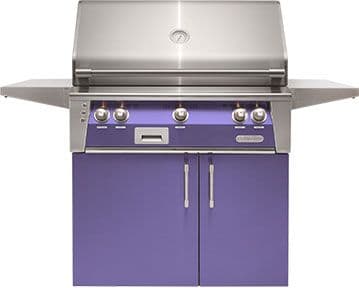
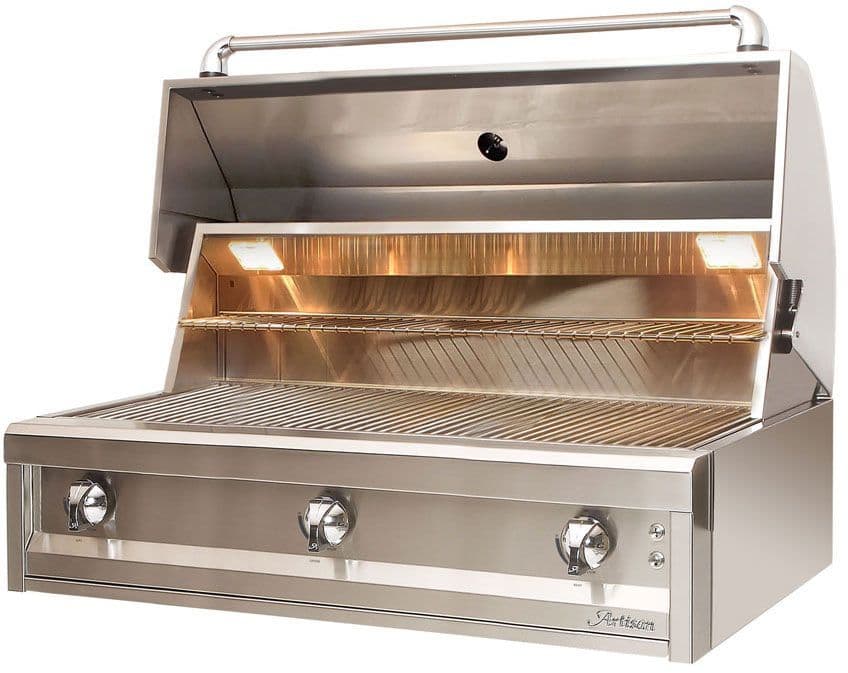
Aspire by Hestan ships two built-in grill series at every width (30, 36, 42-inch): the EB (entry-tier) and the EBR (with infrared rotisserie burner). The price gap between them is about 10-15% per width. The construction is otherwise identical — same 304 stainless cook box, same brass valves, same single-wall hood. The decision is purely about whether you rotisserie often enough to justify the EBR premium.
What the Rotisserie Burner Adds
The EBR's rotisserie burner is a dedicated infrared element mounted on the back wall of the cook box, above the main burners. It runs at 800-900°F at the radiant surface and delivers even browning across the entire spit length. Cooking via the rotisserie burner is fundamentally different from cooking over the main burners — the heat is radiant (no convection from below) and consistent across the spit (no hot/cold zones). Whole chickens, pork shoulder, racks of lamb, prime rib roasts — these come off a rotisserie burner with a more even crust and a more uniformly cooked interior than the same item turned by hand over the main burners.
How Often Rotisserie Cooking Actually Happens
This is the question that determines the EB vs EBR call. Households that rotisserie regularly (once a week, every other week) get clear value from the EBR — the infrared burner produces a cooking result the EB can't match. Households that rotisserie occasionally (a few times a year) often don't justify the $400-$700 premium; they could buy a rotisserie kit aftermarket for $150 and use the main burners. Households that never rotisserie save the money on the EB and get the same direct-grill performance.
Other Differences (Hint: There Aren't Many)
Beyond the rotisserie burner itself, EB and EBR share: 304 stainless cook box, brass valves, single-wall hood, stainless rod cooking grates, full-width interior light, smoker tray, flame tamers. Every other component is identical. There's no construction-quality upgrade going from EB to EBR — only the addition of the burner.
BTU Comparison
EB 30" 3-burner: 60,000 BTU (20,000 per main burner). EB 36" 4-burner: 80,000 BTU. EB 42" 5-burner: 100,000 BTU. EBR adds the infrared rotisserie burner at 18,000 BTU on top of the main burner output. The mains are identical across the two series.
Aftermarket Rotisserie as an Alternative
If you want rotisserie capability but don't want to pay the EBR premium, aftermarket rotisserie kits (Cuisinart, Mr. BBQ, and several Amazon brands) fit Aspire grills. The kit includes a motor, spit rod, forks, and counterweight. Cost: $80-$200 depending on capacity. Performance: cooks evenly across most main burner heat patterns but doesn't deliver the radiant-infrared crust quality the EBR's dedicated burner produces. For occasional rotisserie use, aftermarket is the right answer. For weekly use, the EBR's purpose-built burner is worth the difference.
Pricing
EB-30: ~$4,000. EBR-30: ~$4,500. EB-36: ~$4,800. EBR-36: ~$5,400. EB-42: ~$5,700. EBR-42: ~$6,500. The EBR premium runs $500-$800 across the line — small enough that for households that rotisserie at all regularly, the EBR is the right spec.
Decision Rules
Pick EBR when you rotisserie at least monthly or know you'll start once the grill is installed (whole chicken on Sunday is a common upgrade-driver). Pick EB when you've never rotisserie'd in your previous grills and aren't planning to start. The $500-$800 premium is small enough that most luxury buyers default to EBR even at uncertain frequency — it's the smarter spec for almost any kitchen that won't see exclusive direct-grill use.