Napoleon Prestige PRO 665 Review: Is the SIZZLE ZONE Worth It?
By Reed · Published November 2026
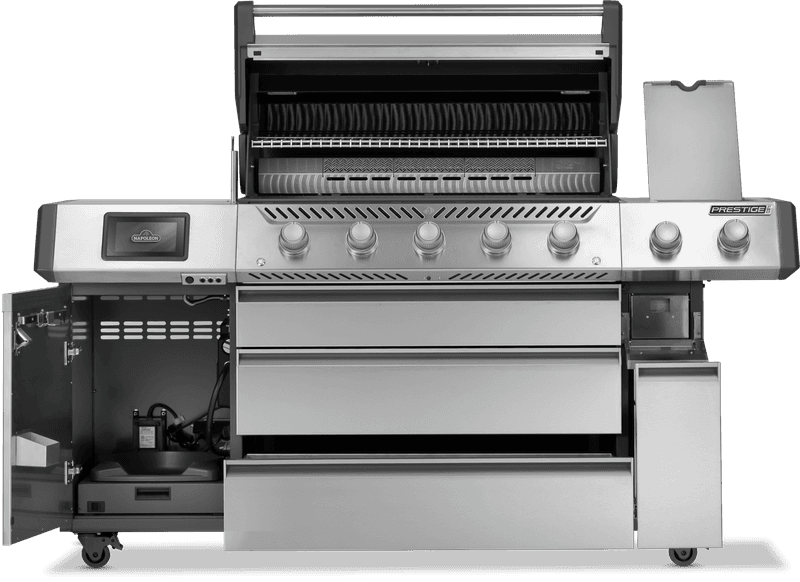
The Napoleon Prestige PRO 665 is the mid-premium flagship in Napoleon’s gas grill lineup — 665 sq in cook area, four main burners, an infrared SIZZLE ZONE side burner, and an infrared rear rotisserie burner. Street price runs $5,699 for the propane configuration with cart and SS finish. Here’s where it’s worth it, where it isn’t, and what shoppers usually miss when they compare it to Weber or the step-down Prestige 500.
Updated November 2026. The Prestige PRO 665 is the model most shoppers land on when they want a Napoleon but aren’t ready for the $8,000+ built-in Oasis setup. Sits one step below the Prestige PRO 825 at the top and one step above the Prestige 500 at the mid-tier. The SIZZLE ZONE infrared side burner, infrared rear rotisserie, and dual-ring JETFIRE burner geometry are what the price gap over Weber is actually paying for.
We carry the full Napoleon catalog on bbqs.com — the PRO 665 is covered here in freestanding cart trim with SS finish, available in LP or NG configuration.
What you actually get for $5,699
| Spec | Value | What it means in practice |
|---|---|---|
| Main cook area | 665 sq in | Comfortably cooks for 8 — two racks of ribs plus veg |
| Main burners | 4 × stainless | Each burner independently zoned for direct/indirect |
| Infrared SIZZLE ZONE | ~1,800°F ceramic | Side burner for 90-second sears on steak |
| Rear rotisserie burner | Infrared | True rotisserie heat without burning the grates |
| Build origin | Barrie, Ontario | Still family-owned, since 1976 |
| Warranty | Lifetime structure + tiered parts | Longest in premium category |
The SIZZLE ZONE is the hero feature
Napoleon’s SIZZLE ZONE is a ceramic infrared side burner that hits around 1,800°F. For a 1.5-inch ribeye the right technique is 90 seconds on each side under full infrared, then pull to the main burners to finish to the shopper’s internal temp of choice. The crust that comes off the SIZZLE ZONE is what steakhouse-grade sears actually look like — a dark Maillard crust with no gray band under the surface.
Honest dealer take: the SIZZLE ZONE earns its keep for shoppers who grill steak more than once a month. For shoppers who mostly do burgers, chicken thighs, and veg on weeknights, the main burners do that work better and the SIZZLE ZONE will sit unused. If the primary use case is weeknight dinners for a family of four, the Prestige 500 is probably the smarter buy.
Rear rotisserie — the feature Weber doesn’t offer
The PRO 665’s infrared rear rotisserie burner is the feature gap over Weber Genesis. Rear infrared cooks a chicken or roast on the spit without charring the exterior — because the heat source is behind the meat, drippings fall away from the flame instead of flaring up. A 4-pound whole chicken finishes in about 70 minutes, bronzed and juicy, with no babysitting past setting the spit and starting the burner.
Where the Prestige PRO 665 falls short
App ecosystem. Napoleon’s app is functional but a step behind Weber Connect for polish, firmware updates, and recipe integration. Shoppers who want the best-in-class connected-grill experience are buying Weber.
Built-in configuration lead time. The built-in trim of the PRO 665 is a 2–3 week dealer-order in most of the country — Napoleon’s built-in production runs are smaller than the freestanding carts. If the shopper has an outdoor kitchen install deadline, the freestanding cart is in stock year-round; the built-in isn’t.
Price to feature density. The step-up to Prestige PRO 825 is $2,000+ more for 160 extra sq in of cook space and one more burner. For most shoppers 665 is already more cook space than they’ll use on a Saturday — the 825 is the right pick only when the backyard regularly hosts 12+.
Napoleon Prestige PRO 665 vs the alternatives
vs Weber Genesis. Genesis is the volume premium at $1,500–$2,500. Three burners, no infrared, no rear rotisserie. If the budget caps at $3,000, Genesis wins on value, app, and accessory ecosystem. See the Weber Genesis buying guide for the full breakdown.
vs Napoleon Prestige 500. Prestige 500 is the same Napoleon build DNA at $3,999. Three burners, no infrared SIZZLE ZONE, no rear rotisserie on most trims. If the shopper wants the Napoleon lifetime warranty and Barrie build but doesn’t care about rotisserie or steak sears, Prestige 500 covers 80% of the use case for $1,700 less.
vs Napoleon Prestige PRO 825. The 825 adds one burner and 160 sq in of cook space for about $2,000 more. Only worth the step when the shopper is routinely cooking for 12+ or wants the bigger rotisserie capacity for whole hogs and multi-bird holiday cooks.
What we’d actually buy
If the budget is $5,000–$6,000 and steak is the use case: Prestige PRO 665. The SIZZLE ZONE is the feature that earns the price.
If the budget is $5,000–$6,000 and the use case is rotisserie-forward: still PRO 665 — the rear rotisserie infrared burner is the feature gap over every competing grill at this price.
If the shopper is on the fence between PRO 665 and Prestige 500: buy the Prestige 500 and bank the $1,700. The main-burner cook results are 95% the same. The remaining 5% is the SIZZLE ZONE and rear rotisserie — if the shopper isn’t sure they’ll use them, they probably won’t.
If the shopper is choosing between Napoleon and Weber Genesis at this budget: Napoleon wins on build, warranty, and feature density. Weber wins on app, accessory ecosystem, and resale value. Honest dealer answer: both are good. Pick on which feature set matches the actual Saturday cook.
Frequently Asked Questions
What’s the real difference between the Napoleon Prestige PRO 665 and Prestige 500?+
Is the SIZZLE ZONE infrared side burner actually worth it?+
What does the President’s Limited Lifetime Warranty actually cover?+
Where is Napoleon built?+
What’s the install footprint for a Prestige PRO 665?+
Prestige PRO 665 vs Weber Genesis — which should I buy?+
Products & brands in this guide
Related reading
Reed — Reed writes the buying guides at BBQs.com — fifteen years selling and installing built-in grills means the picks here are what we'd actually put in our own outdoor kitchen.