Coyote Outdoor · Maintenance
How to Clean and Maintain a Coyote Grill
A Coyote gas grill holds its finish for years if you brush the grates after every cook, pull the ceramic briquette tray and flame tamers every quarter, and keep water out of the RapidSear infrared burner. Plan on about 40 minutes for a deep clean, ten for the post-cook wipe — and add 15 more if you also own the C3C30 flat top, because griddle seasoning is its own job.
By Reed · Updated November 9, 2026
What you need
- Stiff stainless or brass grill brush
- Plastic putty knife or scraper (never metal on the cook box)
- Dish soap, warm water, and a soft sponge
- Microfiber cloths
- Non-chlorine stainless steel cleaner
- High-smoke-point oil (grapeseed, canola, or flaxseed for the flat top)
- Pipe cleaner or thin venturi brush
- Shop vacuum (optional, for ash and ceramic debris)
- Pumice stone or griddle screen (C3C30 flat-top owners only)
Step by step
Burn off the grates while the grill is still hot
After the last cook, close the lid and run every main tube burner on high for 10 to 15 minutes. The carbon turns to ash, which brushes off far easier than cooked-on grease. On SL-Series grills with the rear RapidSear infrared burner, leave the infrared OFF during burn-off — the ceramic emitter is engineered for short high-intensity sears, not long high-heat cycles.
Brush the grates with the grain
Let the grates cool to warm, not cold, and brush along the length of each rod rather than across. Coyote's signature cooking grate is a heavy-gauge stainless rod — a brass or stainless brush works, and heat-retained grates clean easier warm than they do cold. Replace the brush every season to keep stray bristles out of your food.
Pull the grates, briquettes, and flame tamers out
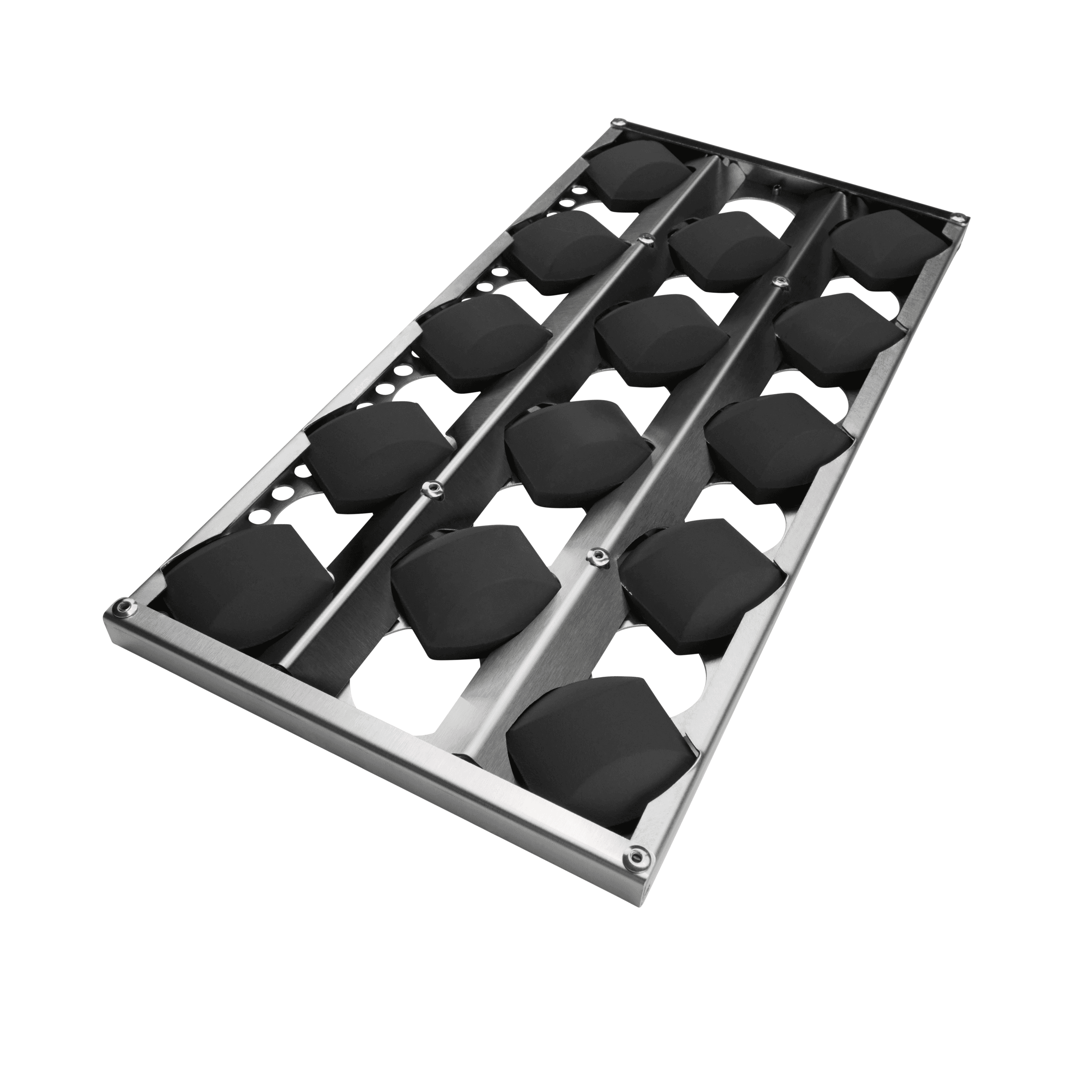
Lift the grates, then lift the ceramic briquette tray (the heat-control grid Coyote uses in place of standard flavor bars on most C and SL models) straight up and out. Wash the briquette tray and any stainless flame tamers in hot soapy water, rinse, and dry fully before reinstalling. Grease soaked into a ceramic briquette is a flare-up the next time you light the grill.
Vacuum or scrape the cook box floor
Scrape loose debris to the center of the cook box and vacuum or sweep it into the drip tray. Never spray water or degreaser into a warm cook box — the thermal shock can warp the stainless, and liquid that pools around the burner tubes rusts the orifices. Work dry, then wipe with a barely damp rag at the end.
Clean out the drip tray and empty the grease cup
Pull the drip tray from underneath, scrape it with a plastic putty knife, and wash with hot soapy water. Empty the grease cup into a sealed container. Coyote's drip-tray design catches most run-off in a single removable pan — the cleanup is one of the shorter deep-clean steps if you stay ahead of it. Old grease attracts rodents and is a fire risk; empty every few cooks, not once a season.
Brush the burner tubes and check the ports
With the grill cold, brush the main burner tubes lengthwise and clear any blocked ports with a pipe cleaner. Look inside each venturi with a flashlight — spider webs, insect nests, and food fragments all cause the weak or uneven flames behind most 'my Coyote is running cold on one side' calls. Coyote's support KB specifically calls out venturi blockage as the first diagnostic for uneven flame height.
Clean the RapidSear infrared burner (SL-Series only)
On the SL-Series, the rear RapidSear infrared burner has its own care routine: run it on high for 2 to 3 minutes with the lid closed to carbonize surface residue, then let it cool completely and dust it with a dry nylon brush. Never spray cleaner directly on the ceramic face. If the ceramic looks glazed with cooked-on grease, a full burn-off cycle (10 minutes on high, lid closed) will clear most of it.
Clean and re-season a C3C30 flat top
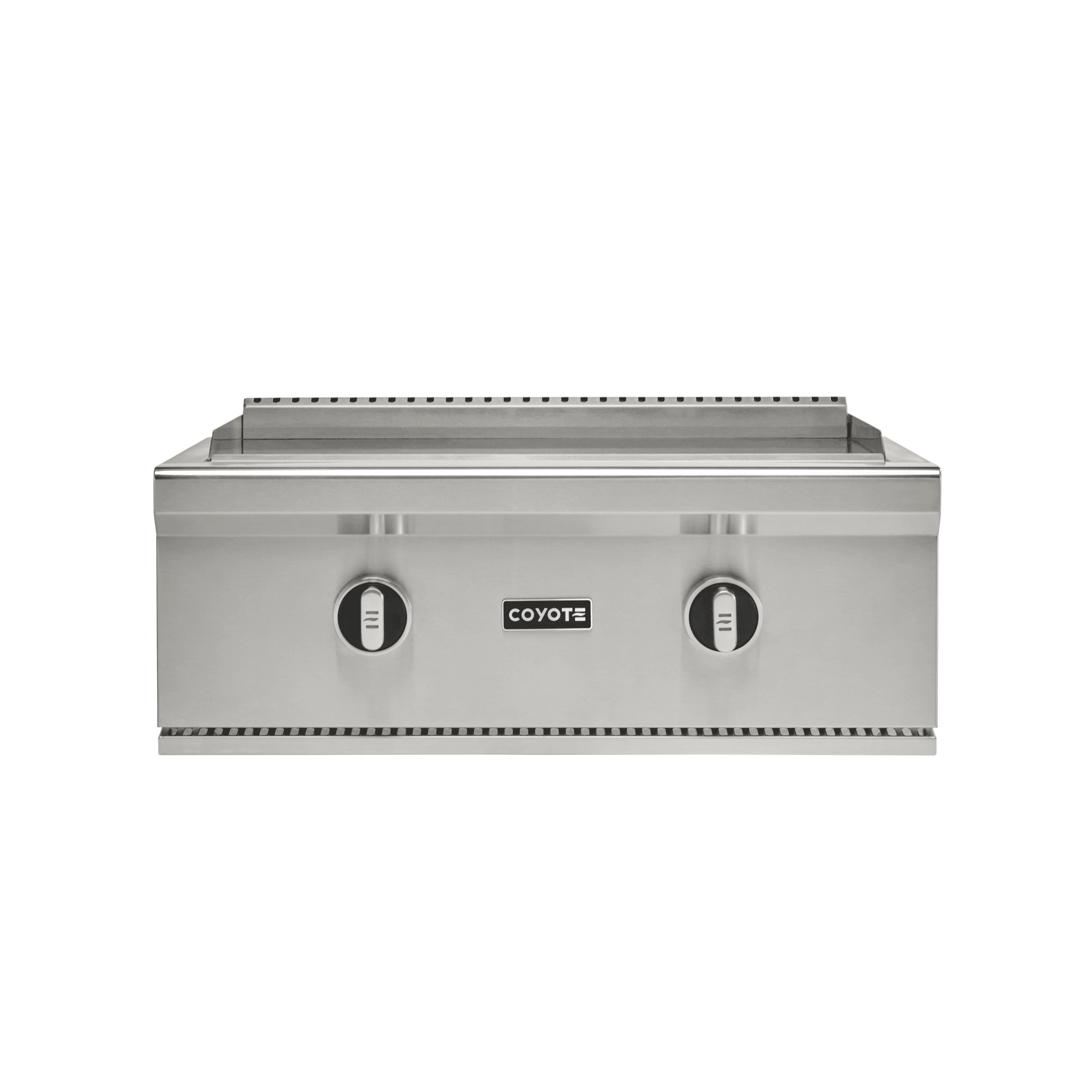
The C3C30 30-inch built-in flat-top griddle is Coyote's only flat top in the line and needs a cleaning routine closer to a commercial diner griddle than a conventional grill. While the surface is warm (not screaming hot), scrape debris to the rear grease channel with a bench scraper or griddle spatula. Wipe with a damp cloth, then re-season with a thin film of high-smoke-point oil — grapeseed and canola are the house picks because they polymerize into a slick dark patina without tackiness. Three thin layers beat one thick layer every time.
Wipe the exterior and polish the stainless
Finish with warm soapy water on the hood and front panel, then a non-chlorine stainless cleaner wiped with the grain. Coyote's hoods and front panels are 304-grade stainless, so a standard stainless polish works — but chlorine-based cleaners will pit the surface on contact. Dry with a microfiber to prevent water spots.
Common mistakes
- Hosing out a hot cook box. The thermal shock warps the stainless and drives water into the burner orifices, where it rusts. Let the grill cool, scrape debris out dry, and wipe with a damp rag — never a hose or pressure washer.
- Running the RapidSear infrared through a long burn-off. The ceramic emitter on the SL-Series rear burner is engineered for short-duration searing, not for the 15-minute high-heat cycle you use to clean the main burners. Burn off on the tube burners only; give the infrared its own brief 2 to 3 minute carbonize cycle instead.
- Soaping the C3C30 flat-top surface. Once the patina is seasoned in, soap strips the polymerized oil and you start from scratch. Reserve soap for a once-a-year reset. Daily cleanup is scrape + damp wipe + oil.
- Running a cracked ceramic briquette tray. A cracked ceramic briquette scatters shards that block burner ports and distort the flame pattern. Replace the full set rather than piecing it out — the ceramic ages uniformly and mixing new and old tiles causes hot and cold spots across the cook surface.
- Spraying degreaser on the ignition module. Coyote's electronic ignition modules sit behind the control panel on most C, CL, and SL models. Spray cleaner migrates through the knob gaps and shorts the ignitor. Spray onto the rag, not the grill, whenever you clean near the panel.
Hands-on tips
- Keep a dedicated pack of microfiber cloths for the grill — don't share with the kitchen, because cooking oils transfer between surfaces.
- Oil the stainless rod grates with a folded paper towel and a splash of high-smoke-point oil after every deep clean; it seasons the stainless and slows corrosion.
- Snap a phone photo of your burner and briquette-tray layout before you pull anything — reassembly is faster when you can see the venturi alignment on the valve stems.
- If the SL-Series ignitor stops clicking the rear infrared, try the knob a few times with the gas valve closed before calling it broken. Carbon in the electrode gap is a ten-second clean, not a service call.
- Keep a small shop vacuum in the outdoor-kitchen cabinet or garage — the fastest way to clear cook-box debris without water.
- C3C30 owners: three thin oil layers beat one thick one every time. Each polymerize cycle (10 minutes on medium-low after a wipe-down) builds the patina one layer at a time.
- If your grill lives near the coast, double the stainless-polish cadence. Salt air pits 304 stainless twice as fast as inland air, regardless of the maker.
Questions people ask
How often should I deep clean my Coyote grill?
Every three to four months for an everyday griller, or once a quarter plus a pre-season deep clean for a backyard cook. Quick post-cook brushing after every session covers the daily upkeep. The ceramic briquette tray wants a full pull-and-wash every 8 to 10 cooks because grease soaked into the ceramic is where flare-ups come from.
Can I put Coyote grill grates in the dishwasher?
The stainless rod grates can go in the dishwasher if they fit, but the SL-Series RapidSear ceramic burner cover and the ceramic briquettes should not — detergent damages the ceramic face. Hand-wash both.
What causes uneven flames on my Coyote burner?
The most common cause is a blocked venturi tube or burner port — spider webs, insect nests, or carbon buildup. Brush the tubes lengthwise, clear the ports with a pipe cleaner, and verify the venturi sits flush on the valve stem. A cracked ceramic briquette can also distort the flame above it; replace the full tray if you see cracks.
How do I season a Coyote C3C30 flat-top griddle?
Heat the griddle to medium, wipe on a very thin layer of high-smoke-point oil with a paper towel, and let it polymerize for 10 minutes until the surface darkens. Cool, wipe off residue, and repeat three times. The patina builds across the first 10 to 15 cooks; after that, daily care is scrape + damp wipe + light oil — no soap.
Can I clean the RapidSear infrared burner with cleaner spray?
No. The ceramic face is porous when cool, and spray cleaner soaks in and takes multiple burn-off cycles to boil out. Run a short 2 to 3 minute burn-off, let it cool completely, and dust with a dry nylon brush. If grease is cooked onto the ceramic, a full burn-off cycle (10 minutes on high, lid closed) clears most of it.
Was this guide helpful?
Shopping for Coyote Outdoor?
See Coyote Outdoor products