Fire Glass vs Lava Rock vs Fire Pit Media: Which Should You Pick?
By Reed · Published October 2026
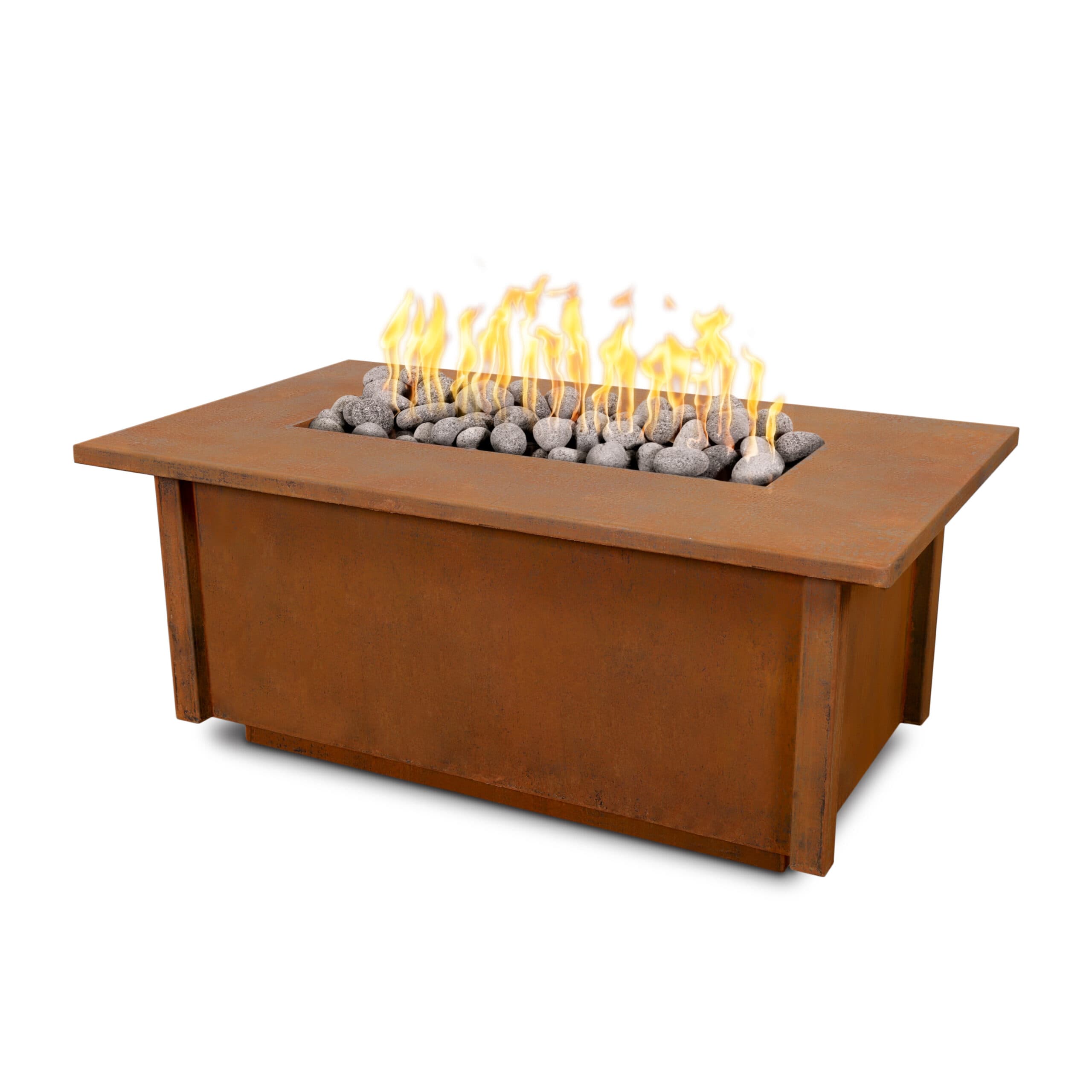
Pick fire glass when the fire feature is small, visible from above, and the look should read modern. Pick lava rock when the pit is big, the install is propane, and the budget cares about per-pound cost. Mix both for the best of both — lava rock below as a heat buffer and burner cover, fire glass above as the reflective surface shoppers see first.
Fire pit media is the layer of fire glass, lava rock, or lava stone that sits in the bowl above the burner ring. It is what the eye lands on when the pit lights, and it is the single cheapest upgrade shoppers can make to change how a fire feature reads. Updated October 2026.
We spec a lot of fire features here at FirePits.com, and the fire-glass-versus-lava-rock question comes up on nearly every install. The right answer depends on bowl size, fuel type, and the look the shopper is trying to hit. This guide walks through all three.
Why fire pit media matters
A bare burner ring over an empty pan reads industrial — the flame sits on top of a visible metal fixture and you can see every weld. Media covers the burner and gives the flame something to pass through. Lava rock absorbs and radiates heat so the flame reads warmer. Fire glass reflects light back through the flame so it reads brighter. Either one makes the pit look finished.
The practical reasons matter too. Media protects the burner pan from direct heat spotting. It diffuses propane and natural gas across the whole burner ring so the flame distributes evenly instead of licking up through two or three concentrated spots. And it prevents the burner from acting as a wind sail when a gust passes over the pit — the media weight holds the flame low and steady.
Fire glass — the modern, reflective pick
Fire glass is tumbled tempered glass sized between 1/4 and 3/4 of an inch. The two most common sizes are 1/4–1/2″ (sparkles more, moves more air) and 1/2–3/4″ (reads more substantial on video). Firegear’s 10-pound bags land in the 1/2–3/4″ range, which is the right default for a 24–36″ bowl.
Colors we carry: Firegear ships seven colors in the 10-pound format — crystal (clear), copper, black (standard and reflective), dark blue, light blue, and seabreeze (a blue-green teal). The reflective black bounces more light than the standard black and is the color most installs on hammered copper bowls land on. Prism Hardscapes also sells a general-purpose fire glass that fits their Tavola and Moderno series bowls specifically.
When fire glass wins: Bowls 36 inches and smaller, natural gas feeds (burns cooler, no heat-cracking risk), modern design brief, high-visibility installs where the pit is seen from a deck or balcony above. Also wins on nighttime photography — the reflection reads much better on phone cameras than lava rock does.
Lava rock — the natural, cost-effective pick
Lava rock is porous volcanic rock sized between 1/8 and 4 inches. It is cheaper per pound than fire glass, hides the burner better because it is irregular and opaque, and reads traditional. It is also the default on anything 48 inches and larger because the bulk discount on lava rock stays reasonable while fire-glass pricing scales with volume.
Sizes and colors: Lava Rock Direct carries the deepest selection on firepits.com — small (1/8–1/2″), medium (1/2–1″), large (1–2″), and XL (3–9″) in black, red, bronze, and grey-tumbled. The medium is the honest default for most installs. Small is for small burners (18″ and under) where larger rock would smother the flame. XL is for architectural fire features where the rock is a visible design element, not just a burner cover.
Lava stone (Firegear) vs lava rock (everywhere else): Firegear’s 1½–2″ Dark Gray Lava Stone is a slightly denser, more angular pumice than standard volcanic lava rock. It holds heat better and is quieter on first ignition because the trapped moisture in regular lava rock pops when it heats up. If the install is new and you want to skip the first-burn popcorn sound, pay the premium for Firegear’s stone.
The lava-under-glass sandwich
The best-of-both pattern we spec on 80 percent of installs: 1–2 inches of lava rock on the burner, then 1 inch of fire glass on top. The lava rock protects the burner from direct heat spotting, buffers propane heat before it reaches the glass, and hides the burner ring. The glass sits on top where the eye lands and does the reflective work. The shopper gets the modern look of glass and the heat performance of rock in one bowl.
This is also the ONLY recommended pattern for propane fire pits running fire glass. Propane concentrates heat at the burner more aggressively than natural gas, and glass installed directly on a propane burner cracks at the base inside the first 15 ignitions. The 1–2″ lava buffer takes the heat spike instead.
How much media do I need?
| Bowl size | Fire glass | Lava rock | Lava sandwich |
|---|---|---|---|
| 18–24″ | 15–20 lb | 15–20 lb | 10 lb rock + 10 lb glass |
| 24–30″ | 20–30 lb | 20–30 lb | 15 lb rock + 15 lb glass |
| 30–36″ | 30–40 lb | 30–40 lb | 20 lb rock + 20 lb glass |
| 36–42″ | 50–60 lb | 40–50 lb | 30 lb rock + 30 lb glass |
| 42–48″ | 60–75 lb | 50–60 lb | 35 lb rock + 35 lb glass |
| 48″+ | 75+ lb | 60+ lb | lava-rock-only is standard |
The quantities above are for a round or square bowl. Rectangular and linear fire tables need less media because the burner is a line, not a circle — subtract about 20 percent for a trough burner.
Fuel-type decision tree
Natural gas: fire glass is fine on its own. Natural gas burns cooler and more diffuse than propane, so the heat spike at the burner is lower and glass sits directly on the burner safely. 36″ and under: use glass only. 36–48″: the sandwich reads better than glass alone because glass alone at that size looks sparse. 48″+: lava rock only, glass gets prohibitively expensive at this volume.
Propane: always use at least 1 inch of lava rock on the burner. Fire glass on top is fine as long as the lava buffer is in place. The LP regulator pulse spikes heat on first burn and sustained use, and a direct-on-burner glass install will crack and ship shards into the gas flow over time.
Our picks on firepits.com right now
For a 30″ natural-gas bowl: a 10-pound bag of Firegear 1/2″ Copper Fire Glass over an existing burner, or Prism Hardscapes Fire Glass in the Tavola and Moderno pit specs. The copper color reads warmer than crystal under live flame, which is the look most residential installs want.
For a 36″ propane bowl: 20 pounds of Firegear 1–2″ Black Lava Rock on the burner, then 20 pounds of Firegear 1/2″ Crystal Fire Glass on top. The lava-under-crystal sandwich pulls the brightest nighttime reflection and the lava buffers the propane heat spike.
For a 48″ wood-adjacent fire feature: Lava Rock Direct’s Large Grey Tumbled lava rock in 50-pound bags. The tumbled finish matches architectural stone surrounds (travertine, limestone, bluestone) better than raw black lava rock, and the price per pound at bulk makes the fill feasible.
For an architectural statement feature where the media is the design: Lava Rock Direct’s XL 3–9″ Black. The large rock reads as a design element, not just a burner cover, and catches shadow at night.
Mistakes we see on install
River rock in the bowl. River rock explodes when it heats up. The trapped moisture turns to steam and the rock shatters. We’ve pulled river rock out of three customer bowls this year that had been installed by a landscaper who didn’t know. Use fire-rated media only.
Hardware-store glass. Not all ”fire glass” sold at big-box home centers is actually tempered. Cheap glass flakes and spalls at the surface after a dozen ignitions and the flakes float into the burner ports. Pay the extra for real brand-rated glass from Firegear, HPC Fire, or Prism.
Media covering the center ignition hole. On electronic ignition and spark-to-pilot burners there’s a small opening in the center for the ignitor. Burying it under 2″ of media kills ignition reliability. Keep the center hole clear — the burner diagram in the owner’s manual shows exactly where it is.
Not shaking reflective glass before install.Reflective glass ships in bags with the coating all oriented the same way (gravity in the packing line). Shake the bag before you pour so the coating randomizes. Otherwise you can end up with a bowl of glass that reads either over-reflective or dull depending on the shipping orientation.
Frequently Asked Questions
What is the difference between fire glass and lava rock?+
How many pounds of fire glass or lava rock do I need?+
Can I use fire glass with propane?+
Does fire glass burn away?+
Can I mix fire glass colors?+
What goes on top — fire glass over lava rock, or lava rock over glass?+
Products & brands in this guide
Related reading
Reed — Reed writes the buying guides at BBQs.com — fifteen years selling and installing built-in grills means the picks here are what we'd actually put in our own outdoor kitchen.