Pit Boss
Wood-fired flavor at a price your neighbor can swing.
90 Pieces
Categories
Shop Pit Boss by category


The Story
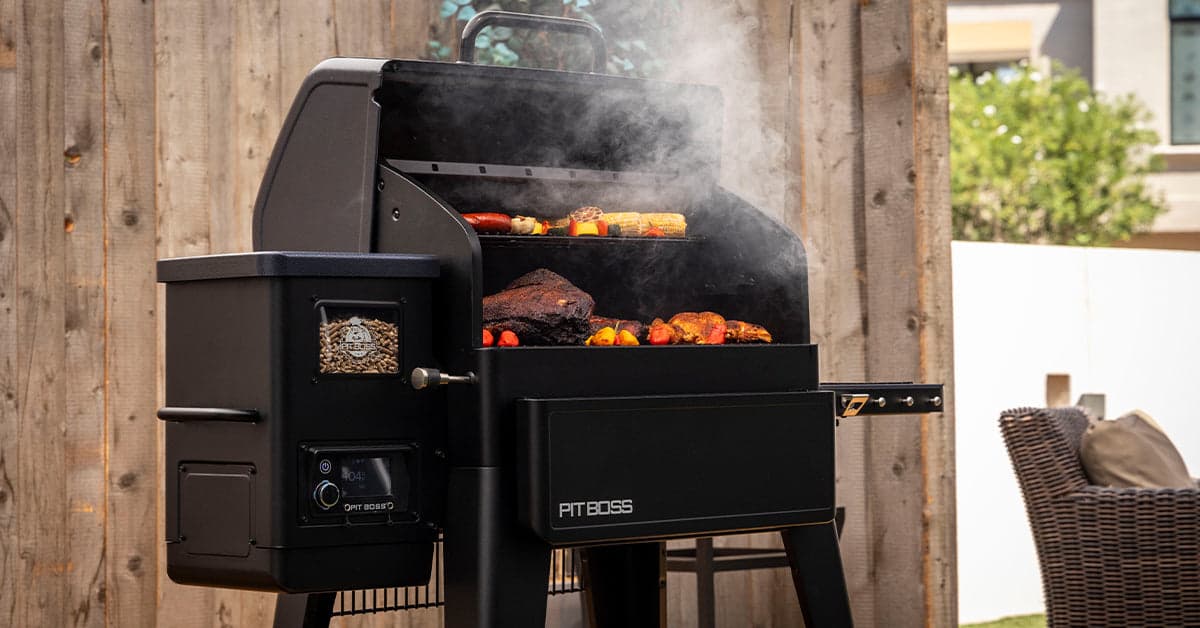
Pit Boss built its name on one idea — real wood-pellet flavor that doesn't cost like a Hestan. The Pro Series and Navigator lines sit in the $500-$1,500 range and give you the same pellet-fired, convection-cooked results the premium rigs are famous for, with Smart Combustion controls dialing in the temp as hard as any dealer-tier grill.
Our catalog covers the whole lineup: the entry-level Austin XL, the mid-tier Pro Series 850 / 1150 / 1600 Elite PSE, the top-end Navigator 1200 and KC Combo (pellet + propane in one cart), vertical smokers, and the Ultimate griddle series. If it's a competition-grade pellet grill under $2k, there's a Pit Boss built for it.
Pit Boss ships direct from a Dallas-area distribution center with Prime-tier lead times — most SKUs leave the dock in 48 hours and land in a week. Backed by a 5-year hopper + burn-pot warranty.
Catalog depth
50+ grills, griddles & smokers
Price range
$139 – $1,499
Lead time
48 hours to dock
Warranty
5 years
Design Principles
What Pit Boss Cares About
01
Real wood-pellet flavor
100% hardwood pellets fire the burn pot — same wood-fired taste the premium pellet rigs sell for 3x the price.
02
Smart Combustion control
PID + auger-controlled pellet feed holds the set temp within ~15°F across the whole cook. No babysitting.
03
Mass-market pricing
Pro Series under $1,000. Navigator with Wi-Fi app control under $1,500. Entry-level Austin XL under $600.
04
Direct-fire + convection modes
Slide-plate flame broiler lets you swap between low-and-slow smoke and 500°F direct-sear in seconds.
Questions
Frequently Asked About Pit Boss
Are Pit Boss pellet grills worth it compared to Traeger?
At the same price point, Pit Boss gives you more cooking area and a direct-flame searing option (slide-plate flame broiler) that Traeger doesn't. Traeger's app ecosystem is more polished; Pit Boss wins on hardware per dollar.
Which Pit Boss model is best for a first-time pellet-grill buyer?
The Pro Series 850 is the volume pick — 849 sq in of cook space, Wi-Fi via Smoke IT app, slide-plate flame broiler, under $700. The Austin XL is cheaper but drops the Wi-Fi; the Navigator 1200 is the step-up pick if you want double the capacity.
How often do Pit Boss grills need pellets refilled?
The hopper on a Pro Series 850 holds ~21 lbs — enough for a 12-14 hour low-and-slow cook at 225°F, or ~6 hours at 450°F sear temps. Larger Navigator models carry 32 lbs.
Can I use any brand of wood pellets in a Pit Boss?
Yes — Pit Boss works with any food-grade hardwood pellet. Pit Boss's own competition-blend pellets run $0.80/lb and are the most consistent, but Traeger, Lumber Jack, Camp Chef pellets all feed cleanly.
Continue


