Memphis Elite vs Advantage vs Pro: Which Memphis Should You Buy
By Reed · Published November 2026
Memphis makes three current pellet grill tiers that most buyers end up cross-shopping: the 26-inch Advantage entry platform, the 28-inch Pro prosumer step-up, and the 39-inch Elite flagship. If you are standing between two of them trying to decide whether the jump is worth it, the question is almost never about the controller or the wi-fi — both of those are the same across the line. It is about cook area, materials, and how your backyard actually cooks. This is the three-way comparison Memphis does not publish on its own site, written against the way the lineup gets used in the field.
The short answer first. Pick the Advantage if the budget is tight, you cook for four or fewer, and the grill is going to live under a cover between cooks. Pick the Pro if you want premium 304 stainless construction without flagship pricing, or if the grill is going into an outdoor kitchen built-in that needs to fit a 29-inch cutout. Pick the Elite if you cook for a crowd, if you want the largest single-cook capacity in the Memphis line, or if the install is the centerpiece of a serious outdoor kitchen. The rest of this comparison walks the three decisions in that order.
The side-by-side matrix
Everything that matters in one place, then we unpack each line below.
Cook area: Advantage 468 square inches on the 26-inch cabinet. Pro 564 square inches on the 28-inch cabinet. Elite 834 square inches on the 39-inch cabinet. In practical terms, the Advantage holds three full racks of ribs cut in half, the Pro holds four full racks, and the Elite holds a full packer brisket plus three racks of ribs at the same time.
Material grade: Advantage 430 stainless steel on the housing and cooking components. Pro 304 stainless steel throughout. Elite 304 stainless steel throughout. The 304 grade has higher nickel and chromium content, resists corrosion more aggressively in coastal or high-humidity installs, and holds its finish longer under the UV and salt-air load that outdoor grills live under.
Temperature range: 180 to 650 degrees across all three tiers. The low end matters for cold-smoke style cooks on cheese, salmon, and bacon; the high end matters for the reverse-sear window on steaks. Every current Memphis grill hits the full range — the difference between tiers is not the envelope, it is how much food you can put inside it.
Controller: ITC3 — the third-generation Intelligent Temperature Control — across the current-production Advantage, Pro, and Elite. Dual integrated food probes, per-probe target alerts, wi-fi with the Memphis app, cleaner low-end regulation in the 180-to-225 zone, and a brighter display than the 2021-model controllers.
Hopper capacity: Advantage 20 pounds, Pro 20 pounds, Elite 24 pounds. For a low-and-slow cook holding 225 for 12 hours, every tier consumes roughly 1 to 1.5 pounds per hour, so the Elite’s 24-pound hopper runs a full brisket cook without a mid-cook refill while the Advantage and Pro will need a top-off around hour 14. Not a deal-breaker — the hopper lid opens to a wide mouth and the refill is a 10-second operation.
Freestanding or built-in: Advantage freestanding only. Pro freestanding or built-in. Elite freestanding or built-in. The built-in units ship as drop-in modules with no cabinet base, sized for specific cutouts: the Pro built-in needs a 29-inch wide cutout, the Elite built-in needs a 40-inch wide cutout, and both need a minimum of 24 inches of depth with code-compliant clearance to combustibles.
Warranty: 10 years on the stainless steel housing against burn-through and corrosion, 3 years on the controller and electrical, 1 year on consumable wear items. The 10-year housing figure applies equally across all three tiers and is the category-leading number — most pellet grills ship with 3-year housing coverage at best. The warranty does not separate Advantage from Pro from Elite.
Advantage vs Pro — the material grade jump
If you are choosing between Advantage and Pro, the question is whether 304 stainless steel is worth roughly a $1,000 price delta over 430 stainless steel in your install conditions. In a dry, inland backyard with a cover between cooks, both grades will last 10 to 15 years and hold the Memphis warranty equally. In a coastal install within five miles of salt water, or in a southern humid climate, or on an open deck without a cover, 304 stainless pays for itself in year 5 — the 430 unit will show rust spots on exposed fasteners and the areas around the firepot by then, while a 304 unit holds a clean finish into year 10.
The other case for Pro over Advantage is whether a built-in configuration is on the table. The Advantage is freestanding only. If any version of the outdoor kitchen conversation involves a stone or masonry island — even three years from now — the Pro built-in is the smarter buy today because it can drop into that island later; the Advantage cannot be retrofitted into one.
Cook capacity is the one place the Advantage holds its ground. At 468 square inches it is only 96 square inches smaller than the Pro — roughly one full rack of ribs worth of real estate. For a household of two to four people, the Advantage cook capacity is genuinely sufficient; the step up to Pro is about materials and build, not cooking volume.
Pro vs Elite — the capacity jump
If you are choosing between Pro and Elite, materials are off the table — both are 304 stainless, both carry the same warranty, both run the same ITC3 controller. The only question is cook area and the physical size of the install.
The Elite’s 834 square inches versus the Pro’s 564 square inches is a 48 percent capacity increase. In practical use, that is the difference between cooking for 8 people from a single rack configuration and cooking for 14 people from a two-rack configuration without crowding. If you host large backyard gatherings — twelve-plus people for a brisket-and-ribs cookout — the Elite earns its price in the number of cooks before you need to swap racks mid-run, in the ability to hold a full packer brisket plus pork butts plus ribs at once, and in the second-rack real estate that lets you hold finished food warm on the top shelf while a new item finishes on the lower grates.
If the household cooks for six or fewer, the Elite is more cabinet than you need. The Pro is the right-sized tool for that use case: 304 stainless, ITC3 controller, full temperature envelope, 20-pound hopper, available freestanding or built-in. For most residential outdoor kitchens, the Pro built-in is the default pick because the 29-inch cutout fits into standard 36-to-42-inch island modules more cleanly than the Elite’s 40-inch footprint.
One edge case where the Elite wins even for a small household: if the build is the Fully-Assembled 7 Ft. Outdoor Kitchen Island with the Elite 39-inch — Memphis sells the island and grill as a packaged unit — the Elite is the center of a complete kitchen build that includes storage, prep counter, and drawer towers. For that single installation scenario, the Elite fits the package and the Pro does not.
Where Beale Street and Elevate fit
Memphis makes two other current-production pellet grills that sit in between the three tiers this article focuses on. Beale Street is a 26-inch, 430 stainless, freestanding-or-built-in model that bridges Advantage (freestanding-only) and Pro (304-stainless). It is the right pick if you want a built-in configuration at the Advantage price point and you are comfortable with 430 stainless in your install conditions. Elevate is a 30-inch, 430 stainless, freestanding-or-built-in model that adds cook area to the Beale Street platform without stepping up to 304 stainless — right for a household that needs a little more capacity than the Advantage but is not ready to spend for the Pro. Both run the ITC3 controller and carry the standard Memphis warranty.
If you pulled up this article trying to decide between the flagship and the entry, Beale Street and Elevate are worth knowing about so you do not feel like the lineup forces a false three-way choice. The Elite, Pro, and Advantage are the three most-cross-shopped tiers, but the full Memphis lineup has five current models with overlapping use cases.
Pellet consumption and real cost per cook
Every current Memphis grill burns roughly 1 to 1.5 pounds of pellets per hour at 225 degrees for a low-and-slow cook, and 2 to 3 pounds per hour at 400 degrees and above. The Memphis-brand 20-pound bags run in the $20 to $24 range depending on the wood species, so a 12-hour brisket cook at 225 consumes 12 to 18 pounds of pellets and costs between $12 and $22 in fuel. That is comparable across Advantage, Pro, and Elite — the larger cabinet of the Elite does not translate into meaningful incremental pellet burn because the insulation and wall mass scale with the cabinet.
The pellet flavor profile is the same across the line. Any of the Memphis-brand 20-pound bags — apple, cherry, hickory, maple, mesquite, oak, pecan — run cleanly in all three controllers. Pellet storage matters more than the grill tier: keep the bag sealed and dry or the wood swells and jams the auger. That is a universal pellet-grill note, not a Memphis note.
Accessories and cover compatibility
Memphis publishes brand-specific covers for every tier. The Advantage 26-inch cover fits only the Advantage freestanding footprint; the Beale Street 26-inch cover is a different cutout that accommodates the Beale Street cabinet. The Elite covers are sized specifically for the 39-inch flagship and come in two versions — one for the 2021 generation and one for the current ITC3 models, because the handle geometry changed between generations. Buy the cover that matches both the model and the generation of the grill.
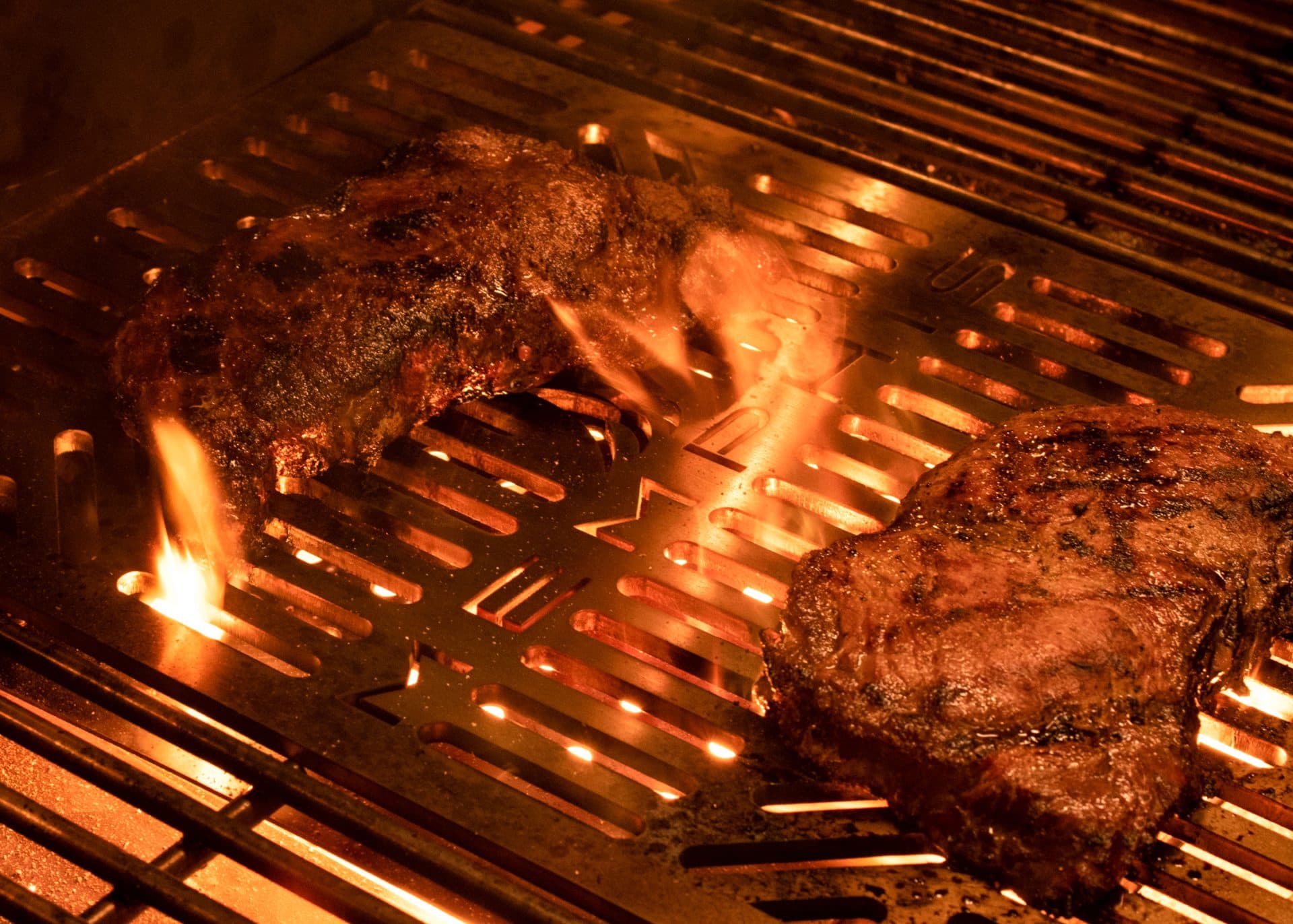
The Direct Flame Flavorizer Insert is the one shared accessory that works across Advantage, Pro, and Elite. It replaces the heat deflector plate above the firepot, exposes the grates to direct flame, and turns the grill into a true sear station for the final 2 minutes of a reverse-sear cook. It is $150-ish and adds the one capability pellet grills are historically weak at. Buy it with the grill, not later.
Which Memphis should you buy
If your cooks are small — a household of two to four, weekly chicken thighs, occasional ribs — the Advantage is enough grill for the use case and the price gap down from the Pro is real money. Buy it if the install is dry, inland, and will see a cover between cooks.
If you want premium materials and the install might go built-in someday, buy the Pro. The 304 stainless construction is the one specification that compounds over 10 years in humid or coastal conditions, and the built-in Pro drops cleanly into the most common outdoor-kitchen island cutouts. Most outdoor-kitchen builds that end up with a Memphis pick the Pro built-in.
If you cook for a crowd or the build is the flagship of a serious outdoor kitchen, buy the Elite. The 834 square inches of cook area is the largest in the Memphis line, the 39-inch cabinet is the size pros build around, and the Elite is the model with the longest tenure on the competitive pellet circuit. You pay for it, and if your use case needs it, it earns the price. If your use case does not need it, the Pro does everything the Elite does on a smaller stage.
Products & brands in this guide
Reed — Reed writes the buying guides at BBQs.com — fifteen years selling and installing built-in grills means the picks here are what we'd actually put in our own outdoor kitchen.