Corten Steel Fire Pit Rust Timeline: What Year 1, Year 5, and Year 10 Patina Actually Look Like
By Reed · Published November 2026
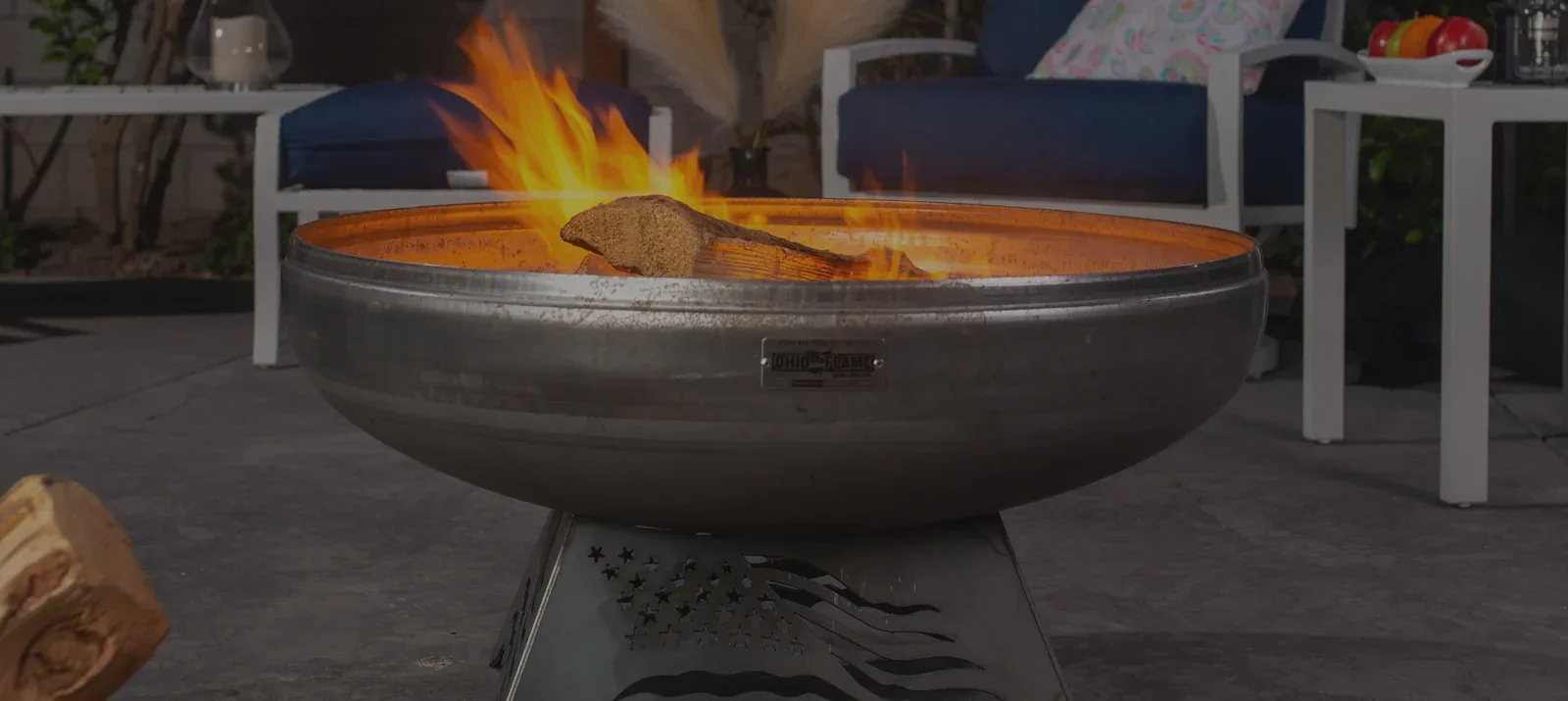
A Corten steel fire pit is engineered to rust — then stop. The buyer anxiety on these pieces is almost always the same question: will it fall apart? Short answer, no. Longer answer, here is exactly what the surface looks like at year 1, year 3, year 5, and year 10, which climates change the timeline, which brands we actually stock, and when a rust pattern means you have a real problem instead of a correctly-aging piece.
What is actually happening when Corten rusts?
Corten is a trade name for ASTM A588 weathering steel. The alloy mix — mostly carbon steel with small additions of copper, nickel, chromium, and phosphorus — changes how the metal responds to moisture. On a normal carbon-steel surface, oxidation keeps eating inward until the piece is paper-thin. On a Corten surface, the first layer of rust that forms is denser, bonds more tightly to the parent metal, and physically blocks moisture from reaching the steel underneath. The reaction slows, then nearly stops. That is the whole point of the alloy, and it is why a 10-year-old Corten fire pit looks almost identical to a 3-year-old one.
The timeline breaks into three phases. The first 2 to 4 weeks are the browning phase: a dull gray mill-finish piece shifts to a uniform orange-brown as the surface oxidizes in a loose, soluble first layer. Months 2 through 12 are the maturation phase: the first layer compacts into the denser oxide that actually protects the metal, and color deepens from bright orange to a darker rust-brown. Years 2 and beyond are the stable phase: color stops changing, the surface stops shedding loose rust, and the piece enters its permanent state. Most owners describe the look at year five as the look the piece will have forever.
Year 1: tiger-striping and loose oxidation
First rain hits the piece and the whole bowl shifts within 24 to 48 hours. By day three the surface reads as mottled orange over the original steel gray. By week two the piece looks fully brown but streaked — a pattern called tiger-striping where rainwater runs down the vertical surfaces and carries loose iron oxide with it. This is normal. Some buyers panic here because the streaking looks dramatic. It resolves itself.
By month three the loose particles stop rinsing off and the streaks begin to blend into a more uniform coat. The piece still bleeds rust color onto a concrete patio if there is heavy rain — this is why installers who care about their clients lay a decorative gravel ring or a flagstone pad under new Corten pieces for the first year. After month 12 the rust stops bleeding entirely, and any residual staining on the concrete fades within another season.
Year 3: uniform patina, stable surface
By the end of year three the piece has reached what the industry calls a stable oxide layer. Color is uniform rust-brown with slightly darker patches where water pooled during rain. The surface no longer sheds rust onto anything that touches it. The tiger-striping has blended into a continuous finish that reads as intentional — because it is. Run a finger across the bowl at this point and it comes off clean. That is the test every Corten owner waits for. From year three onward the metal does not change materially.
Year 5: the “frozen” look
Year five is where the long-term character of the piece shows up. The rust-brown deepens slightly into a warmer chestnut tone. The areas where flame hits the bowl interior have a darker, almost black-brown ring around the burn zone — on wood-burners this is charred carbon buildup over the oxide layer; on gas pieces it is a combination of soot and heat-cycled oxidation. Both are purely cosmetic and sit above the structural metal. Any wear patterns from year five are the ones you will live with.
Year 10: wear vs structural integrity
A decade in, the external surface has not changed meaningfully since year three. What has changed is the wear pattern on high-touch areas — the rim where logs rest on a wood-burning piece develops small chips and divots in the oxide layer, which re-rust and heal within a season. The burner tray on a gas piece shows heat-cycle fatigue in the form of hairline surface cracks that stay cosmetic. If you move the piece to a new patio at year 10, the parent steel underneath is still structurally sound in nearly every case. The exceptions are pieces that were left bowl-up in standing water through a winter (ice expansion can crack welds over a decade) or pieces installed in direct soil contact without elevation.
Which environments change the timeline?
Humid climates compress the whole timeline. In the Gulf Coast or Pacific Northwest, the 4-week browning phase finishes in 10 to 14 days and the year-three stable surface is reached by month 18. The piece ends up in the same place faster. Desert climates stretch the timeline the other direction — the browning phase can take 8 to 12 weeks because the metal needs intermittent moisture to progress. Owners in Arizona or Nevada sometimes mist the piece with a hose daily for two weeks to kickstart the oxidation to the pace they want.
Coastal salt air is the only environment that materially changes the end state. Chloride in the air forms a different oxide structure than the standard weathering reaction — a looser, flakier layer that does not self-limit the same way. Corten pieces within half a mile of salt water need to be elevated off the deck surface, kept bowl-down when not in use, and inspected for pitting every year. A coastal Corten piece will still last a decade or more, but the surface reads differently than an inland piece: patchier, with more variation between protected and exposed areas.
Acid rain exposure is largely a non-issue on residential pieces today. Industrial regions had this concern in the 1980s when sulfur-dioxide emissions were much higher, but current atmospheric chemistry in the US does not accelerate Corten corrosion in any measurable way. Snow burial is fine — Corten under a snowpack oxidizes the same way it does in the open, just more slowly. Do not leave a snow-filled bowl to melt into standing water through spring, which is a different problem.
Ohio Flame vs The Outdoor Plus — what we actually sell
We stock Corten pieces in two very different directions. Ohio Flame builds solid-steel wood-burning pieces in Dayton, Ohio, cut from 1/4-inch plate with lifetime structural warranty on the bowl. The Patriot Series is the archetypal Ohio Flame piece — an American-flag cutout base under a 36-inch bowl, meant to patina evenly and last through weather we have not seen yet. The Liberty Series offers the same 36-inch bowl on either a curved sculptural base or an angular modern base. All three are wood-only. Gas conversion is not supported and we would not recommend it; the design integrity of the piece is in the bowl geometry.
The Outdoor Plus builds gas Corten in a completely different posture — architectural fire pit tables and rectangular pieces sized for outdoor rooms rather than backyards. The Cabo, Regal, and Unity series run 40,000 to 190,000 BTU on either natural gas or propane, in 48-inch to 72-inch footprints, and every piece ships in matched sizes so a design plan can stay inside one family. Corten gas pieces patina differently than wood-burners because the burner stays hot and sheds moisture — the center of the vessel can lag the exterior by 6 to 12 months before catching up. By year three the whole piece is uniform.
Price position: Ohio Flame runs roughly $1,600 to $2,800 for the wood-burning pieces. The Outdoor Plus runs $4,500 to $12,000+ depending on size, ignition type, and whether the piece is a standing fire pit or a full fire pit table. The two brands are not really competitors — they solve different installations. A wood-burning Ohio Flame is the right call when the piece sits in a backyard and gets used around the seasons. The Outdoor Plus is the right call when the fire pit is an architectural element of a patio design and needs to turn on with a key valve.
When should you actually worry?
Signs that mean you have a real problem rather than a cosmetically aging piece: a visible hole or paper-thin spot anywhere on the bowl (press a knuckle gently and feel for flex — never do this on a hot piece), a weld seam that has opened or shows a hairline gap running longer than half an inch, a bowl that no longer holds its shape when loaded with wood, or a burner tray with cracks deep enough to show daylight through them. These failures are rare in the first decade on any reputable Corten piece but they do happen — almost always on pieces that spent winters filled with water that froze and expanded.
Signs that mean you have a correctly-aging piece and should do nothing: tiger-striping in the first year, uneven patina between flame-contact areas and the rest of the bowl, orange-brown runoff onto adjacent concrete in the first year, darker rings where water pools when it rains, surface roughness you can feel but not dig a fingernail into, and small chips where logs or tools strike the rim. All of these are normal, expected, and part of what you paid for.
Maintenance myths worth killing
The three pieces of bad advice we hear constantly: seal the piece to protect it, oil the surface to deepen the patina, and polish off the rust annually to keep it looking new. All three are wrong. Sealing blocks the chemistry that makes Corten work. Oiling attracts dust and creates a sticky surface that catches dirt and looks blotchy. Polishing destroys the stable oxide layer and restarts the whole year-one oxidation process every time — the piece never reaches a stable surface because you keep scrubbing it off.
The three things that actually help: elevate the piece off the ground so moisture can drain and air can circulate (every Ohio Flame and Outdoor Plus piece ships with a base that does this already); keep the bowl covered during stretches of non-use so it does not collect standing water; and in the first year, lay a sacrificial pad under the piece — gravel, flagstone, or a dedicated fire pit mat — so the inevitable rust runoff does not stain the main patio. After year one the runoff stops and the pad can come up.
The bottom line
Corten steel fire pits are engineered to rust fast, then stop. By year three the piece has reached its permanent surface. By year five it looks the way it will look for the next decade. The failure modes that scare buyers — rust-through, structural collapse, catastrophic wall thinning — do not happen on a correctly-installed, correctly-stored piece from a reputable manufacturer in the first 10 years. Pick a piece that fits the installation (wood-burning for backyards, gas for architectural patios), accept that year one will look alarming for about six months, and then enjoy a piece that will outlive most of the backyard furniture around it.
If you want a wood-burning piece that patinas evenly and carries a lifetime structural warranty, the Ohio Flame Patriot Series or Liberty Series are the picks. For a gas Corten fire pit table that anchors a patio design, start with the Outdoor Plus Regal 48 or Unity 48 and scale from there. Browse the full Corten catalog on the Ohio Flame brand page or the The Outdoor Plus brand page, and if cold-weather use is on your mind, our winter-rated fire pits guide pairs well with this one. If the install site is on a slope, start with our fire pit for a sloped yard guide first — pad, terrace, and portable strategies all affect which Corten piece fits before the rust timeline even matters.
Products & brands in this guide
Reed — Reed writes the buying guides at BBQs.com — fifteen years selling and installing built-in grills means the picks here are what we'd actually put in our own outdoor kitchen.