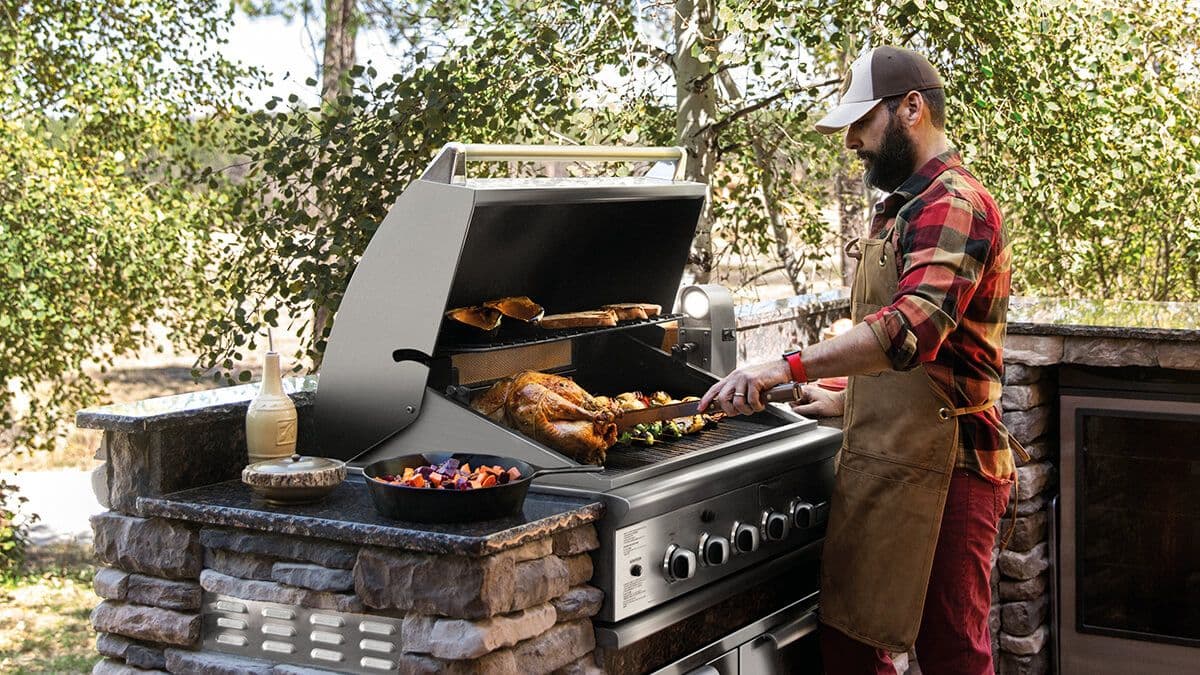
DCS by Fisher & Paykel Brand Guide: Series 7 vs Series 9
Short answer: DCS by Fisher & Paykel is the pick if cooking performance is the deciding factor. Restaurant-equipment heritage (Dynamic Cooking Systems was a commercial kitchen brand for 25 years before Fisher & Paykel acquired it), full 304 stainless throughout, dual ceramic infrared sear system that pushes 1000°F at the surface, and a Series 9 model that's arguably the best built-in gas grill made by anyone. Premium money, premium product.
DCS sits in a different category than most premium grills. The brand was founded in 1989 making commercial restaurant equipment — that DNA is still in every weld and burner. Fisher & Paykel (the New Zealand appliance company that also owns the F&P kitchen line) acquired DCS in 2004 and has kept the commercial-spec construction language intact. You can see it in the details: hospital-grade hinge construction on the hoods, fully welded one-piece fireboxes, the kind of seam quality you only see when the engineers' first job was making something a restaurant chef wouldn't yell about.
Series 7 vs Series 9 — the only real DCS decision
DCS makes two built-in grill series. Both are exceptional. Series 9 is the flagship — what you spec when you want the best the brand makes. Series 7 is the simplified version — most of the construction, slightly less burner tech, $1500-2000 less per size class.
Series 7 (30", 36", 48"):
U-shaped 304 stainless burners (25,000 BTU each on 36")
Single ceramic infrared sear burner (one zone)
Smart Beam™ halogen interior lights
Cooking surface: 304 grates, V-shaped to channel drippings
Total BTU: 86K (36")
Series 9 (30", 36", 48", 60"):
U-shaped 304 stainless burners + DUAL ceramic infrared (front + rear sear zones)
Pleated zone burners with finer flame control
Charcoal smoker tray integration
Rotisserie + back IR burner
Total BTU: 96-104K (36")
The dual-ceramic-infrared system on Series 9 is the headline feature. Most grills have ONE infrared burner (typically a rear-mounted rotisserie heater). Series 9 has two — one in front specifically for searing — both running 18-20K BTU through ceramic infrared elements that radiate directly to the food rather than heating air around it. Surface temps hit 1000°F+. A 1.5-inch ribeye gets a restaurant-grade crust in 90 seconds per side.
Build quality details
DCS publishes the wall-thickness of their housings (most brands don't). The Series 9 firebox is 16-gauge 304 stainless. For reference, most premium grills run 18-20 gauge — every two-number step down in gauge is roughly 25% thicker steel. The hood is a fully welded one-piece — no joint seams, no thermal-cycling failure points. Hinges are commercial-spec stainless with sealed bushings (not the open spring-and-pin design that seizes after 5 years in coastal air).
The burner system uses a unique pleated design — the burner tube has corrugations that create more surface area, distributing heat more evenly across the cooking zone. It's a small thing, but the practical impact is no hot/cold patches on the grates.
The Fisher & Paykel kitchen-suite ecosystem
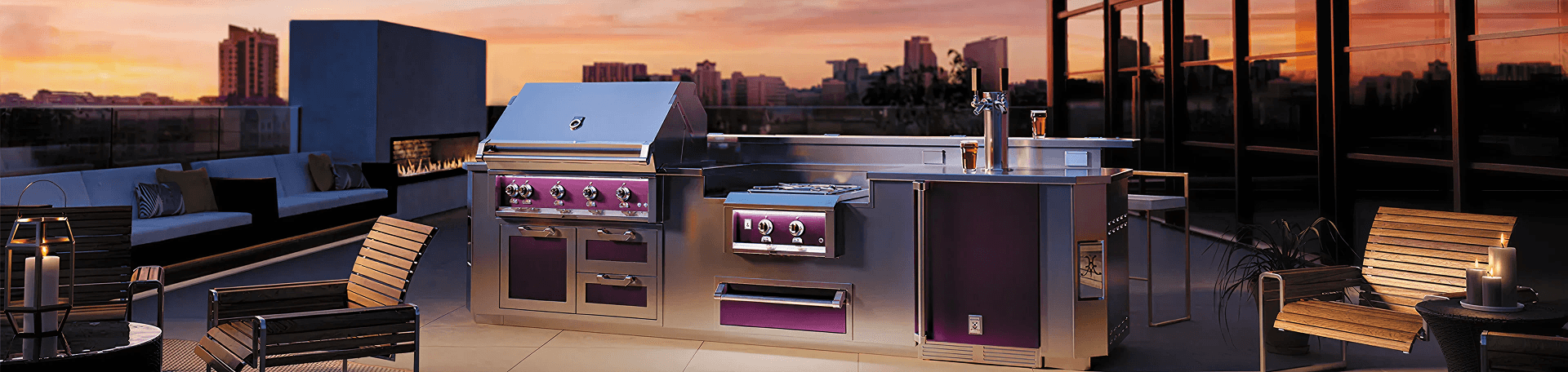
If you're already running F&P appliances inside (the integrated column refrigeration, induction cooktops, CoolDrawer freezer drawers), the DCS outdoor line is designed to visually match. Same handle hardware, same brushed-stainless finish, same control-dial knob design. DCS also makes outdoor refrigeration, beverage centers, ice makers, and warming drawers in 24" and 30" units that drop into the same outdoor-kitchen run as the grill.
This matters more than people expect. A Series 9 grill next to a Bull side burner next to a Sub-Zero outdoor fridge looks like three different products. A Series 9 + DCS outdoor fridge + DCS beverage center looks like a commercial line.
DCS Series 9 specs (36" reference)
Total BTU: 104,000 (4 grilling burners @ 25K + dual IR sear @ 16K + back IR rotisserie @ 18K)
Cooking area: 638 sq inches primary + 184 sq in warming rack
Hood: Welded one-piece 304 stainless, internal halogen Smart Beam lighting
Grates: 304 stainless, V-channel design
Cutout: 35-13/16" W x 23-3/4" D x 9-1/2" H
Warranty: Lifetime on burners, frame, and grates; 5 years on electrical (ignition, valves, lights)
Warranty (the real coverage)
DCS's warranty is structured commercial-grade:
Burners (U-shaped + IR): lifetime
Frame and firebox: lifetime
Cooking grates: lifetime
Valves: 2 years
Electrical (ignition, lights): 1 year
Labor: included for the first 2 years (most premium brands cover parts only)
The 2-year labor coverage is unique in the segment and worth $400-800 in real terms if you ever need a warranty service call.
DCS vs Bull vs Hestan — where it wins
Compared to [Bull](/journal/bull-bbq-brand-guide), DCS wins on sear performance (dual IR vs single), wall thickness (16-gauge vs 18-gauge typical), and the F&P appliance-suite ecosystem. Bull wins on price and US-manufacturing transparency. For a backyard family kitchen, Bull is usually the better value. For a serious-cook centerpiece grill, Series 9 is the better tool.
Compared to [Hestan](/journal/hestan-outdoor-brand-guide), DCS wins on burner technology (dual ceramic IR vs Hestan's twin-tube Trellis) and on commercial-spec construction. Hestan wins on visual design — the Marquise color finishes are in a different category entirely. If you want jewelry, Hestan. If you want a tool, DCS.
Picking the right DCS for your build
Series 7 30" or 36": Premium build, value-conscious. Pairs well with Bull or Coyote refrigeration in mixed-brand kitchens.
Series 9 36": The DCS pick for most serious home cooks. Right size for households of 4-8. Sear performance that no other 36" gas grill matches at any price.
Series 9 48" or 60": Estate-scale builds. The 60" is functionally a small commercial line — 5 main burners + dual IR sear + back IR rotisserie + integrated smoker. If you regularly host 12-20 people and want a single grill that handles it, this is the answer.
FAQ
Where are DCS grills made? Huntington Beach, California. Fisher & Paykel keeps the manufacturing in the US for the outdoor line specifically — the F&P kitchen appliances are made in New Zealand and Thailand, but DCS outdoor is California-built.
Is the price difference between Series 7 and Series 9 worth it? For someone who'll sear regularly — yes. The dual-IR system on Series 9 is a meaningful upgrade. For a casual griller who lights it up twice a week for burgers, Series 7 is enough.
How does DCS handle the salt-air problem? Better than most. The 16-gauge 304 stainless is more corrosion-resistant than the 18-20 gauge construction on most competitors. We've seen DCS grills in oceanfront installs hit 12-15 years with basic care. That said, no grill is salt-immune — cover when not in use, rinse the housing seasonally.
Can I get DCS in LP? Yes, both Series 7 and Series 9 ship LP- or NG-configured from the factory. Field conversion is possible but requires a DCS-certified tech (the orifices are model-specific).
How does it compare to Wolf or Lynx? Wolf is functionally similar construction (Wolf outdoor is also commercial-heritage) but uses a slightly different burner system — both are credible alternatives at similar money. Lynx is the closest direct competitor on price/spec but generally lighter wall construction. We've had more long-term-survival reports out of DCS and Wolf than Lynx in coastal installs.